-
by sayum
05 November 2026 11:47 AM







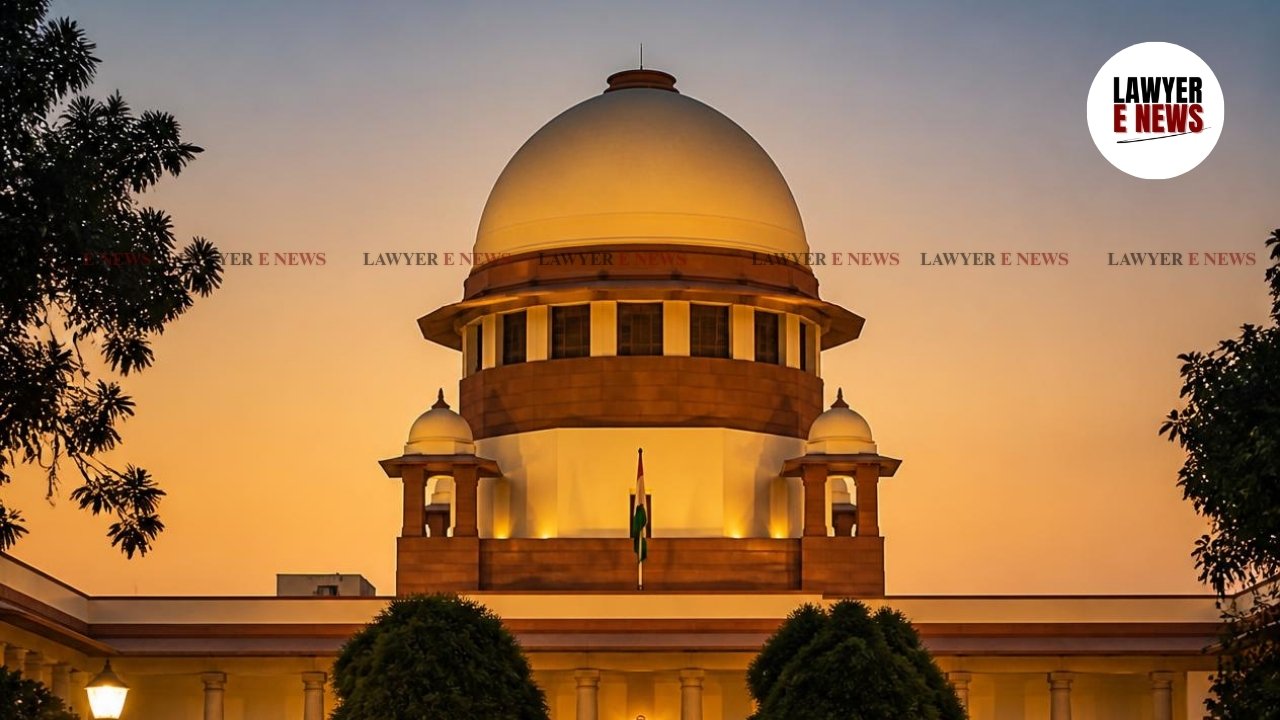
"The concept of 'equal pay for equal work' has no pertinence or relevance to be applied on this score. The question of breach of doctrine of equal pay for equal work does not arise. The High Court wholly misdirected itself in reasoning that the principle of 'equal pay for equal work' was violated and resultantly Regulation 7(2) was ultra vires Articles 14 and 39(d) of the Constitution," Supreme Court of India.
NEW DELHI — Holding that withholding pensionary emoluments during the tenure of re-employment on a constitutional post does not infringe the principle of "equal pay for equal work", the Supreme Court on November 4, 2026, set aside a High Court judgment that struck down the "pay minus pension" rule for the Chairman and Members of the State Public Service Commission. A Division Bench comprising Justice S.V.N. Bhatti and Justice N.V. Anjaria held that Regulation 7(2) of the Uttarakhand Public Service Commission (Conditions of Service) Regulations, 2004, framed under Article 318 of the Constitution of India, is intra vires and does not violate Articles 14, 16, 39(d), or the proviso to Article 318.
Lieutenant General (Retd.) M.C. Bhandari and a retired Provincial Civil Service officer were appointed as Chairman and Member, respectively, of the Uttarakhand Public Service Commission in 2006 after superannuating from their prior services. Their pay was determined by deducting their pension under the principle of "pay minus pension" pursuant to Regulation 7(2) of the 2004 Regulations and an Office Memorandum dated September 16, 2008. The Uttarakhand High Court declared Regulation 7(2) ultra vires Article 14 read with Article 39(d) of the Constitution and directed full reimbursement of the deducted sums, which prompted the State of Uttarakhand to approach the Supreme Court in appeal.
Whether the State of Uttarakhand was justified in law in fixing the salary of retired government servants appointed as Chairman or Member of the Public Service Commission by withholding their pension amount during their tenure under Regulation 7(1) read with Regulation 7(2) of the 2004 Regulations?
Whether deducting pension earned from prior government service violates the principle of "equal pay for equal work" under Article 14 read with Article 39(d) of the Constitution of India or alters service conditions to the appointees' disadvantage under the proviso to Article 318?
Whether appointees who accepted constitutional offices with knowledge of existing service regulations are precluded by the doctrine of estoppel and acquiescence from challenging those conditions subsequently?
Examining the constitutional scheme under Article 318, the apex court observed that the Governor is fully empowered to frame regulations determining the service conditions of State Public Service Commission members. The Bench noted that the norm of "pay minus pension" has been consistently applied across the country to retired civil and military officers re-employed in constitutional positions, including under the Union Public Service Commission Regulations.
Withholding of pension during the tenure of constitutional office does not amount to forfeiture of earned retiral benefits.
The Court underscored that Regulation 7(2) does not extinguish or permanently divest the appointees of their accrued pension rights. Clarifying the temporal nature of the deduction, the Bench highlighted that the pension is merely kept in abeyance during the term of office and revives once the appointee vacates the post.
"At the end of the tenure of the Chairman or, as the case may be, the Member, the entitlement to pension which was kept in abeyance would revive and the petitioners-respondent No.1 herein would get the pension deducted during the tenure of their chairmanship or membership of the Uttarakhand PSC. In other words, there is no withdrawing of the pension, it is only the withholding during the period when the posts of the Chairman or, as the case may be, the Member of the Uttarakhand PSC is held," the Court ruled.
Equal pay for equal work has no application to post-retirement statutory pay fixation.
The Bench rejected the High Court's conclusion that deducting pension from the fixed salary of the post violated Article 14 read with Article 39(d) of the Constitution. The Court explained that prior pension is an external retiral entitlement and factoring it in to compute post-retirement remuneration does not alter the work responsibilities or create unconstitutional parity issues.
Relying on its precedent in Gurmesh Prakash Bishnoi v. State of Haryana, the Court noted that a statutory embargo operates against drawing double benefits from public funds simultaneously. The Bench pointed out that allowing an appointee to draw the entire salary along with pension would generate an anomalous situation where their aggregate emoluments exceed the highest prescribed salary for the post.
Governor's determination was fully authorized and did not operate with impermissible retrospectivity.
Addressing the contention that the Governor's formal decision and the clarificatory Office Memorandum dated September 16, 2008 were issued subsequent to the respondents' appointments, the Bench held that the 2004 Regulations were already in force when the appointments were made. The Bench found that the Regulation did not mandate that the Governor's order be executed beforehand and concluded that the notification at best operated retroactively to regularize pay determination.
The Court scrutinized the government record notings produced by the State, observing that the Personnel and Finance Departments had processed the proposal in accordance with established rules before securing the Governor's formal approval under Regulation 7(2).
Candidates who accept appointment under known rules cannot turn around to challenge the service conditions.
Applying the principles of estoppel and acquiescence, the Supreme Court held that the respondents had accepted their appointments in 2006 with open eyes and conscious knowledge of the applicable 2004 Regulations. The Bench firmly disapproved of challenging the statutory rules at the fag end of their tenures after having availed all privileges of the office.
"One who participates in a game, cannot later challenge the rules of the game. It is well-settled by several judgments of this Court that a candidate, who participates in the selection process or a student who undergoes the examination is not entitled to subsequently question the norms and rules regarding conduct of the process of recruitment or the examination. Similarly, a Government servant or an employee, who accepts the post cannot afterwards be permitted to resile from or to agitate in respect of the service conditions and the service regulations attached to the post which he accepted," the Bench held.
Setting aside the High Court's judgments, the Supreme Court upheld the constitutional validity of Regulation 7(2) of the Uttarakhand Public Service Commission (Conditions of Service) Regulations, 2004 and the Office Memorandum dated September 16, 2008, thereby allowing both civil appeals preferred by the State of Uttarakhand.
Date of Decision: November 04, 2026