-
by sayum
05 November 2026 11:47 AM







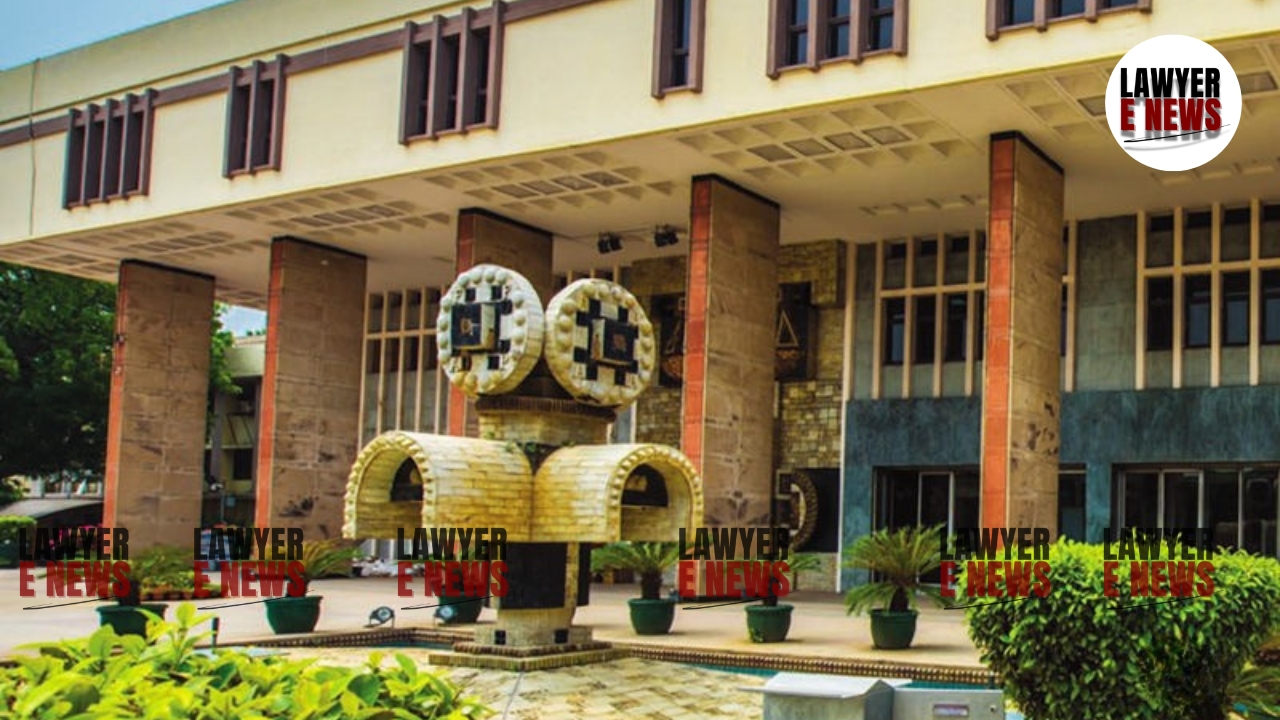
"No fifth person was there and a fictitious character by the name of Raju was introduced by the police officials to bring the case within the realm, scope and purview of Section 399/402 IPC." Delhi High Court, in a significant ruling dated August 24, 2026, held that a conviction for assembly and preparation to commit dacoity under Sections 399 and 402 of the Indian Penal Code, 1860 (IPC) cannot be sustained where the prosecution fails to establish the mandatory presence of at least five persons.
A Single Judge Bench of Justice Vimal Kumar Yadav observed that Section 391 IPC forms the foundational bedrock of Sections 399 and 402 IPC, remarking that the prosecution cannot conjure up a "fictitious character" merely to satisfy the statutory threshold of five accused persons required to constitute the offence of dacoity.
The prosecution had alleged that on August 26, 1999, a police raiding party surrounded Roshnara Park upon secret information and apprehended four men planning a dacoity, while a fifth associate named Raju allegedly escaped. The Trial Court convicted the appellants under Sections 399 and 402 IPC along with Section 25 of the Arms Act, 1959, sentencing them to five years of rigorous imprisonment in February 2004. Aggrieved by the conviction, the appellants approached the High Court challenging the veracity of the prosecution's narrative and pointing out the absence of the requisite five persons.
The primary question before the court was whether the appellants could be convicted under Sections 399 and 402 IPC in the absence of cogent evidence establishing the assembly and participation of at least five persons as mandated by Section 391 IPC. The court was also called upon to determine whether the uncorroborated recovery of arms from a public park, devoid of any independent witnesses, could sustain a conviction under Section 25 of the Arms Act.
Minimum Threshold Of Five Persons Is An Inviolable Prerequisite Under Section 391 IPC
The High Court began by examining the statutory architecture governing dacoity offences, emphasizing that Section 391 IPC must be read conjointly with Sections 399 and 402 IPC. The Bench noted that an assembly of five or more persons is an indispensable requirement for attracting these penal provisions.
The Court observed that dacoity in terms of Section 391 IPC requires five or more persons, and that automatically becomes an integral part of Sections 399 and 402 IPC. In the absence of a finding that five or more persons were involved, a conviction for dacoity or preparation thereof cannot stand in the eyes of law.
Placing reliance on the Supreme Court's ruling in Raj Kumar @ Raju v. State of Uttaranchal (2008) 11 SCC 709, Ram Lakhan v. State of U.P. (1983) 2 SCC 65, and Saktu v. State of U.P. (1973) 1 SCC 202, the Court reiterated that conviction of fewer than five persons cannot be sustained unless there is an unequivocal finding that five or more persons were indeed involved but some could not be identified.
"It is thus clear that for recording conviction of an offence of robbery, there must be five or more persons. In absence of such finding, an accused cannot be convicted for an offence of dacoity."
Prosecution Failed To Prove Concrete Preparation Beyond Mere Assembly
Addressing the evidentiary threshold required to demonstrate preparation, the Court held that the prosecution is obligated to show something more than the mere assembly of persons in a public area. The bench observed that the prosecution’s theory that a police head constable and secret informer overheard the secret planning in broad daylight was fundamentally implausible.
The Court noted that it is highly unusual that persons gathered in broad daylight in a crowded public park to plan a dacoity would discuss their plan loud enough for strangers to decipher. The Bench highlighted that criminals planning such offences would naturally conceal their design through coded or sign language rather than making their conversation audible to passersby.
"Not even ordinary individuals, leave alone a criminal or any sane person, would talk something of the nature attributed to the Appellants in the presence and hearing of unknown persons."
Contradiction In Police Testimonies Sounded Death Knell To The Case
The Court highlighted that the prosecution’s case suffered a fatal collapse due to internal contradictions regarding the fifth elusive accused, Raju, and Constable Arjun Singh. While key police witnesses claimed Constable Arjun Singh had chased the fleeing fifth suspect on the day of the incident, Constable Arjun Singh took the stand as PW-4 and testified that he was never part of the raiding party on August 26, 1999.
The Bench observed that this glaring contradiction completely demolished the prosecution's narrative, proving that Raju was merely a planted character created to satisfy the five-person requirement of dacoity.
The Court held that when the testimony of the recovery witnesses is juxtaposed with the testimony of Constable Arjun Singh, it knocks the bottom out of the prosecution’s case and turns the edifice sought to be raised by the police into rubble.
"The death knell has been sounded to the prosecution’s case so far as assembly and preparation is concerned by two elusive characters i.e. Raju... and Constable Arjun Singh."
Lack Of Independent Witnesses Renders Weapon Recoveries Suspect
Evaluating the conviction of appellant Maharam under Section 25 of the Arms Act for the recovery of a button-actuated knife, the Court expressed grave doubt over the seizure. The Court noted that despite the raid taking place in a busy public park in North Delhi, the police failed to associate a single independent public witness.
The Bench remarked that while joining public witnesses is not an absolute rule of law, in cases where possession of an illegal weapon is itself the substantive offence, the investigating agency has a heightened duty to ensure transparency and fair play.
Given that the testimonies of the police witnesses were riddled with fabrications regarding the fifth accused, the Court held that the uncorroborated recovery of arms could not be deemed clean or reliable, necessitating the complete discarding of the seizure evidence.
Setting aside the judgment and order on sentence passed by the Trial Court, the High Court acquitted all three appellants of all charges and directed the discharge of their bail bonds. The Bench reaffirmed that courts cannot sustain grave charges of dacoity preparation under Sections 399/402 IPC on artificial and concocted police narratives lacking the statutory threshold of five participants.
Date of Decision: 24th August, 2026