Retrospective Withdrawal Of Tax Exemption Valid But No Penalty Or Interest For Past Period: Supreme Court Inclusion Of Royalty, DMF & NMET In 'Sale Value' To Compute Mining Dues Is Not Arbitrary Or Ultra Vires: Supreme Court Retracted Confession Cannot Form Foundation Of Conviction Without Strong Independent Corroboration: Supreme Court "Denial Of Legal Representation Strikes At The Root Of Fair Trial": Supreme Court Quashes Death Penalty In 1996 Samleti Blast Case, Orders De-Novo Trial Meaningful Pre-Prosecution Opportunity Notice Under FERA Is Mandatory, Cannot Be Mere Notional Compliance: Supreme Court Keeping Accused In 'Suspended Animation' Indefinitely Violates Article 21: Supreme Court Quashes 23-Year-Old FERA Complaint Over Inordinate Delay Interlocking Settlement Clauses Must Be Read Harmoniously; General Obligation To Maintain Child Cannot Rewrite Consent Decree: Supreme Court General Obligation To Maintain Cannot Be Invoked In Execution To Rewrite Concluded Settlement Terms: Supreme Court Wrong Statement" Not Always A "False Statement": Supreme Court Quashes Perjury Prosecution Over Typographical Errors In Pleadings High Court Cannot Improve Lower Court's Defective Section 340 CrPC Order In Appeal Filed By Aggrieved Party: Supreme Court Supreme Court Slams MHA's 'Apathetic Pen-Pushing' And Misinterpretation Of UPSC Advice, Grants Relief To Retired CRPF Officer Tenant Cannot Dictate Landlord's Choice Of Premises, Subjective Choice Over Alternative Accommodations Must Be Respected: Supreme Court "One Man's Trash Is Another Man's Treasure": Supreme Court Says Landlord's Choice Of Accommodation Must Be Respected, Revisional Court Can't Reappreciate Evidence Non-Recovery Of Dead Body Not Fatal To Murder Conviction If Other Evidence Proves Guilt: Supreme Court Courts Cannot Import Limitation Period Into Special Statute If Legislature Has Refrained From Prescribing One: Calcutta High Court Drawing NDPS Samples At Spot Instead Of Before Magistrate Merely A Procedural Irregularity, Does Not Vitiate Trial: Supreme Court Expert Opinion Not Sole Consideration, JJ Board Must Independently Assess All Material During Section 15 Preliminary Assessment: Supreme Court Offence Under Section 302 IPC Is A 'Heinous Offence' Under JJ Act; Life Imprisonment Implied As Minimum Punishment: Supreme Court No Demolition Of Accused's Property For Two Years Following FIR To Check 'Retributive' Action: Allahabad High Court Admission Of 'Making' A Will Not An Admission Of Its 'Genuineness': Delhi High Court Refuses Partition Decree Based On Counsel's Statement Direct Section 156(3) CrPC Application Before Exhausting Police Remedies A 'Procedural Irregularity', Not Illegal: Bombay High Court Ex-Parte Decree Obtained By Suppressing Vital Facts Is Nullity; Executing Court Can Examine Fraud Under Section 47 CPC: Andhra Pradesh High Court Revenue Authorities Cannot Cancel Long-Running Jamabandi, Only Competent Civil Court Can Decide: Jharkhand High Court Agency Terminates On Principal's Death; Power Of Attorney Holder Cannot Execute Gift Deed Without Explicit Authority: Gujarat High Court Cheque Issued As Security Towards Loan Repayment Attracts Section 138 NI Act If Debt Exists On Presentation Date: Himachal Pradesh High Court NDPS Act | Prosecution Cannot Rely Solely On Co-Accused's Statement When No Contraband Recovered From Accused: Calcutta High Court Quashes Criminal Proceedings Trial Courts Obligated To Consider Applications For Service Of Summons Via Email If High Court Circulars Are Complied With: Karnataka High Court Photographs Showing Wife Wearing Jewellery 'Cut The Root' Of Her Claim That Husband Misappropriated Gold: Kerala High Court Section 138 NI Act: Blank Cheques Obtained Under Coercion Do Not Constitute Legally Enforceable Debt: Madras High Court Cannot Presume Future Publications Will Be Defamatory: Delhi High Court Vacates Gag Order Against 'The Wire' In Former Chief Secretary's Suit Wife Cannot Claim 'Victim Card' For Cruelty Over Character Aspersions When Unchallenged Findings Show Her In Adulterous Act: MP High Court Agent Personally Liable On Cheques If Undisclosed Principal Cannot Be Sued; Plea Of Police Coercion Needs Proof: Kerala High Court Section 217 CrPC Not A Mere Formality; Trial Court Must Judicially Decide Plea To Recall Witnesses Upon Alteration Of Charges: Madras High Court First Appellate Court Must Address Suspicious Circumstances Surrounding Execution Of Will; Adverse Inference To Be Drawn If Propounder Fails To Testify: Himachal Pradesh High Court Passing Contrary Orders On Identical Land Acquisition Cases Violates Public Policy, Equal Treatment: Madhya Pradesh High Court Municipal Authorities Cannot Adjudicate Title Disputes While Granting Building Permissions: Telangana High Court Statutory Insurance Companies Can’t Be Treated As Illiterate Litigants; Procedural Red Tape No Ground To Condone Delay: Orissa High Court Section 22 Hindu Succession Act Applies To Agricultural Land; Right Of Pre-Emption Is An Incident Of Succession: Supreme Court Proceedings Under Senior Citizens Act Extinguish On Death Of Applicant, Civil Remedies Apply For Property Disputes: Punjab & Haryana High Court Being A Woman Not A Ground For Bail In Heinous Crimes Against Minors: Gujarat High Court Rejects Bail In Flesh Trade Case Woman Not Entitled To Maintenance Under Section 125 CrPC If First Marriage Subsists; Illegitimate Child Entitled: Allahabad High Court Contract Workers Performing Same Duties As Regular Staff Entitled To Minimum Regular Pay Scale Under CLRA Rules: Bombay High Court Power Of Review Is To Correct Mistakes, Not Substitute Views Or Act As 'Appeal In Disguise': Kerala High Court Futile Exercise Of Jurisdiction To Proceed With Contempt For Violating Ex-Parte Order Once It Is Vacated On Merits: Karnataka High Court Threat To Force Wife Into Prostitution Strikes At Core Of Human Dignity: Gujarat HC Denies Anticipatory Bail In Abetment To Suicide Case Injured Victim's Testimony Carries Built-In Guarantee Of Truthfulness, Requires No Corroboration For Conviction: Allahabad High Court Section 138 NI Act Offence Can Be Compounded At Revision Stage Under Section 147 Read With Section 320 CrPC: Punjab & Haryana High Court Suit For Declaration Involves All Co-Owners; Limitation Plea Cannot Be Decided At Interlocutory Stage Of Impleadment: Telangana High Court Mother Claiming Financial Capacity To Get Child Custody Cannot Fasten Entire Financial Burden On Father: Allahabad High Court Invalidity Of One Ground Does Not Vitiate Entire Detention Order Under PIT NDPS Act If Other Grounds Are Sustained: Andhra Pradesh High Court Silence Until Pregnancy Detection & Lack Of DNA Evidence Casts Doubt On Prosecution Case: Calcutta High Court Acquits Father In POCSO Case Mere Proof Of Proper Dispatch Sufficient: Bombay High Court Says Trade Marks Registrar Need Not Prove Actual Delivery Of Renewal Notice Casteist Remarks Inside Private Office Without Independent Witnesses Do Not Attract SC/ST Act: Delhi High Court Private Property Transfer Not Void Under Section 64 CPC If Made Before 'Effective' Execution Of Attachment Warrant: Karnataka High Court Statement Under Section 164 CrPC Is Not Substantive Evidence, Cannot Be Sole Basis For Conviction When Victim Turns Hostile: Madras High Court Second Wife Not Entitled To Family Pension, But Children From Void Marriage Can Claim Share: Kerala High Court Legal Representatives Cannot Withdraw Admissions Made By Deceased Defendant By Filing Fresh Written Statement: Madhya Pradesh High Court Police Can Search & Seize Suspected Proceeds Of Crime Even Without Warrant Under Section 185 BNSS: Orissa High Court Mere Photographs With Co-Accused Don't Establish Intent To Commit Terrorist Act: Punjab & Haryana High Court Grants Bail Under UAPA Transfer Is An Ordinary Incident Of Service, No Employee Has A Vested Right To A Specific Posting: Punjab & Haryana High Court Accused Cannot Seek Quashing Of Case Under Section 528 BNSS While Suppressing Pending Non-Bailable Warrants: Telangana High Court

Passing Contrary Orders On Identical Land Acquisition Cases Violates Public Policy, Equal Treatment: Madhya Pradesh High Court

22 July 2026 2:09 PM

By: sayum


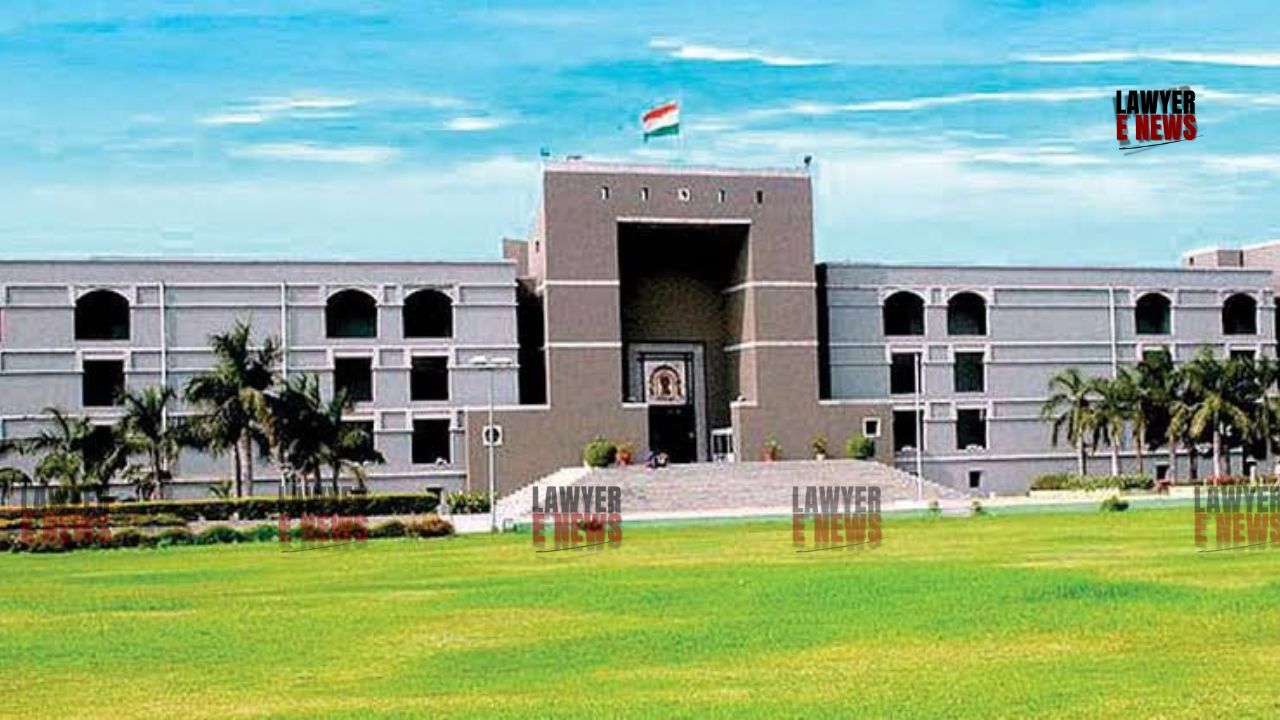
"Public policy of India established since beginning that all persons are to be treated equally passing two contrary orders on identical set of facts in a land acquisition proceeding is, in the considered view of this Court, in conflict with the public policy of India." Madhya Pradesh High Court, in a significant ruling, held that passing contrary orders on identical sets of facts in land acquisition proceedings conflicts with the fundamental public policy of India.

A single-judge bench of Justice Pavan Kumar Dwivedi observed that the State and its authorities are bound by the principle of equal treatment, setting aside a district court order that had dismissed the appellant's challenge against an arbitration award despite coordinate benches allowing identical challenges.

The dispute arose from the acquisition of land in village Khulkhurd by the National Highways Authority of India (NHAI) for the widening of National Highway No. 3. Several adjacent landowners, dissatisfied with the compensation awarded by the statutory arbitrator under the National Highways Act, filed separate applications under Section 34 of the Arbitration and Conciliation Act, 1996. While coordinate district courts allowed the applications of five similarly situated landowners and set aside their awards, the 11th District Judge, Indore, dismissed the present appellant's application on identical facts, prompting this appeal under Section 37 of the Act.

The primary question before the High Court was whether the district court could pass a contrary order rejecting a Section 34 application when coordinate benches had already allowed identical applications arising from the same acquisition notification. The court was also called upon to determine if such disparity in treatment by the State violated the public policy of India under the Arbitration and Conciliation Act, 1996.

Duty Of State Entities To Disclose Facts

The court took strong exception to the conduct of the National Highways Authority of India and its counsel during the district court proceedings. It was brought to the High Court's attention that out of eight similarly situated cases challenging the arbitrator's awards, five had already been allowed by different presiding officers.

Despite the same counsel representing the NHAI across all these matters, this crucial information regarding the allowance of identical applications was suppressed from the 11th District Judge who heard the present appellant's case. The bench noted that the State has a higher burden of fairness in judicial proceedings.

"Further, significantly in all cases same counsel for National Highways Authority of India was present, thus, in all fairness, the respondent/NHAI should have informed the court about the orders passed by the other presiding officer in identical cases of same survey number for same acquisition process."

Identical Facts Warrant Identical Treatment The High Court meticulously examined the records and noted that all acquired parcels of land were situated in the exact same village of Khulkhurd, with survey numbers located in close proximity to one another. The bench emphasised that the grounds raised by the landowners challenging the inadequacy of compensation were completely identical across all the Section 34 applications.

Addressing the NHAI's argument that parity cannot be automatically drawn in land acquisition matters and that the scope of Section 37 is strictly limited, the court clarified the broader mandate of equal justice. The bench observed that treating identically situated landowners differently strikes at the very root of established legal and constitutional principles.

Public Policy Demands Equal Application Of Law Reiterating the scope of judicial interference, the court noted that the jurisdiction under Section 37 of the Arbitration and Conciliation Act, 1996 is akin to the jurisdiction under Section 34, allowing the court to step in when an award or order breaches the fundamental policy of Indian law. The bench firmly established that equal treatment of citizens by the State forms a core component of this public policy.

"The public policy of India established since beginning that all persons are to be treated equally passing two contrary orders on identical set of facts in a land acquisition proceeding is, in the considered view of this Court, in conflict with the public policy of India."

Relief Granted To Appellants Consequently, maintaining consistency with the relief granted to the other landowners of the same village, the High Court decided that the present matter must also be reopened. The bench noted that the other landholders whose Section 34 applications were allowed had their matters successfully sent back to the arbitrator for fresh consideration.

Ultimately, the High Court allowed the present appeals and set aside both the impugned district court order and the original arbitral award dated January 29, 2014. The appellants were granted the liberty to re-agitate their claims before the arbitrator, with a specific direction that the fresh arbitration proceedings be concluded within eight months from the date of filing the claim.

Date of Decision: 20 July 2026

 

Latest Legal News