
-
by sayum
25 August 2026 12:32 PM







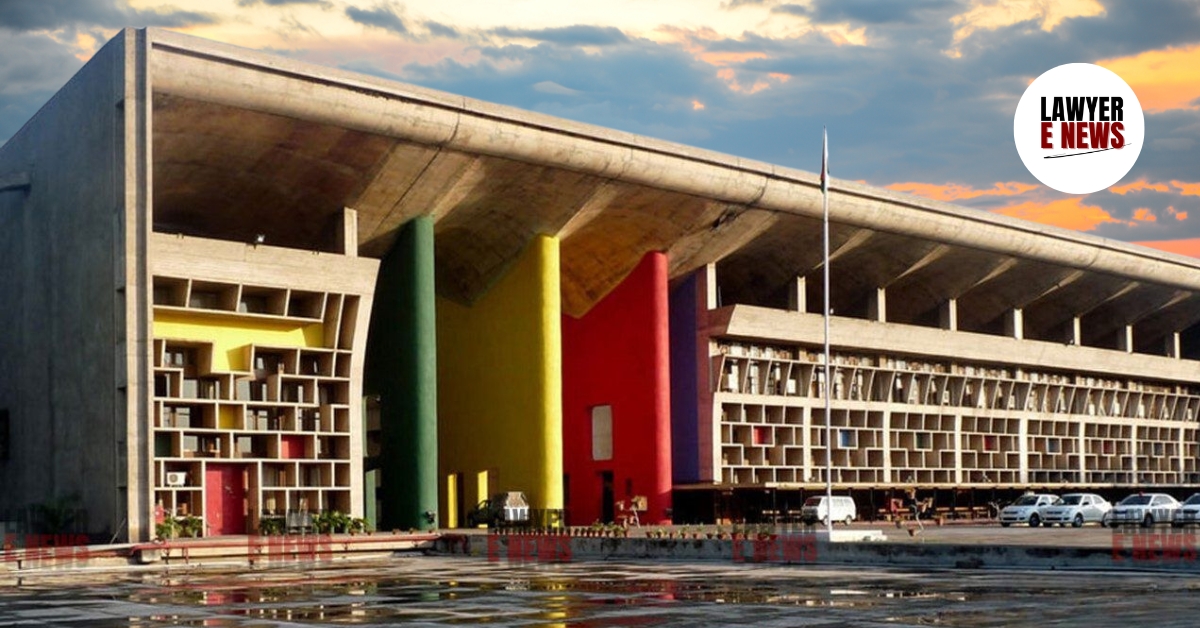
"Courts must not non-suit parties on mere technicalities, especially when the dispute involves crores of public funds" - In a significant ruling Punjab and Haryana High Court revisited the interplay between Order VIII Rule 1 of the CPC and Section 8 of the Arbitration and Conciliation Act, 1996, while setting aside a ₹15.69 crore ex parte decree against the State Procurement Agency. Justice Vikram Aggarwal observed that the striking off of the defence for delay in filing the written statement was legally unsustainable and remanded the matter for fresh adjudication on merits.
Dispute Over Custom Milling of Paddy: Judicial Spotlight on Losses to the State
The case arose from a custom milling dispute between M/s Gill Rice Mills and the Punjab State Grain Procurement Corporation Limited, where the Miller was allocated over 78,000 quintals of paddy for milling under the 2012–13 Custom Milling Policy. According to the Procurement Agency, not a single grain of milled rice was delivered to the FCI, resulting in a reported shortage of over 59,000 quintals and a subsequent criminal FIR under Sections 406 and 420 of the IPC.
In the wake of physical verification and official sealing of the mill premises, a civil suit for recovery was filed by the Miller in 2018, claiming dues of over ₹8.7 crore. In response, the Procurement Agency filed an application under Section 8 of the Arbitration Act, seeking referral of the matter to arbitration based on a valid arbitration clause in the Milling Agreement. However, without filing a written statement, the Agency’s defence was struck off by the Trial Court for not adhering to the 120-day limitation under Order VIII Rule 1 CPC, leading to an ex parte decree of ₹15.69 crore.
“SCG Contracts Judgment Applies Only to Commercial Suits”: Court Rebukes Misapplication of Law
The High Court categorically held that reliance by lower courts on the Supreme Court’s ruling in SCG Contracts India Pvt. Ltd. v. K.S. Chamankar Infrastructure Pvt. Ltd. (2019) was misplaced, as that precedent applies only to commercial disputes. Justice Aggarwal emphasized:
“The judgment in SCG Contracts (India) Pvt. Ltd. applies only to commercial suits. In non-commercial suits, Order VIII Rule 1 CPC is not mandatory but directory.” [Para 41]
Quoting the binding judgment in Desh Raj v. Balkishan, (2020) 2 SCC 708, the Court reiterated:
“In non-commercial disputes, the unamended Order VIII Rule 1 CPC continues to apply, which does not remove the discretion of the Court to condone delays in filing the written statement.”
It was noted that in this case, the delay was neither deliberate nor inordinate, and occurred during the pendency of the Section 8 application, which was filed before filing any substantive defence—a fact expressly permitted under the Arbitration Act.
“Filing Section 8 Application Before First Substantive Statement Is Valid”: Misconstruing Arbitration Law Leads to Erroneous Striking Off
The Court found grave error in how the Trial Court, the Appellate Court, and even the Coordinate Bench in the revision proceedings failed to appreciate the timing and legal effect of a pending Section 8 Arbitration Application.
Referring to the Supreme Court’s ruling in Rashtriya Ispat Nigam Ltd. v. Verma Transport Co. (2006) 7 SCC 275, the High Court clarified:
“Filing of a reply to an interim injunction application cannot be equated with filing of the first statement on the substance of the dispute under Section 8(1) of the Arbitration Act.” [Para 40]
Thus, the Procurement Agency had not forfeited its right under Section 8 merely by not filing a written statement while the application was pending. The delay was also limited and excusable in the circumstances.
“Courts Must Prefer Decisions on Merits, Especially in Matters Involving Public Money”
The High Court expressed serious concern over the tendency of courts to pass ex parte decrees in high-stake public interest litigations, particularly where crores of public funds are involved. Justice Aggarwal remarked:
“The Courts chose to decide the suit ex parte without keeping in mind that matters should normally be decided on merits and that parties should not be non-suited on mere technicalities.” [Para 49]
It was also highlighted that disputes between state procurement agencies and rice millers have become recurring litigation, leading to large-scale losses. The Court, while not speculating about motives, observed:
“The question that arises is whether such disputes are deliberately raised, or is there some fault in the policies, or is it a criminal meeting of minds aimed at misappropriating public money.” [Para 2]
Decree Set Aside, Matter Remanded to Trial Court for De Novo Hearing
Concluding that the Trial Court, Appellate Court, and the Coordinate Bench had all misapplied the law, the High Court allowed RSA No. 305 of 2021, dismissed RSA No. 199 of 2021, and disposed of CR-4288 of 2019, thereby:
“Since almost a decade has already elapsed since the filing of the suit, the trial Court is requested to make efforts to decide the suit within a period of one year.” [Para 56]
This judgment reinforces the principle of fair trial, affirms the directory nature of procedural law in non-commercial disputes, and brings clarity to the interplay between CPC timelines and arbitration applications. It serves as a caution against blind reliance on precedents without regard to the nature of the dispute and ensures that public interest is not compromised by procedural rigidity.
Date of Decision: October 28, 2025





