
-
by sayum
10 October 2026 6:05 AM







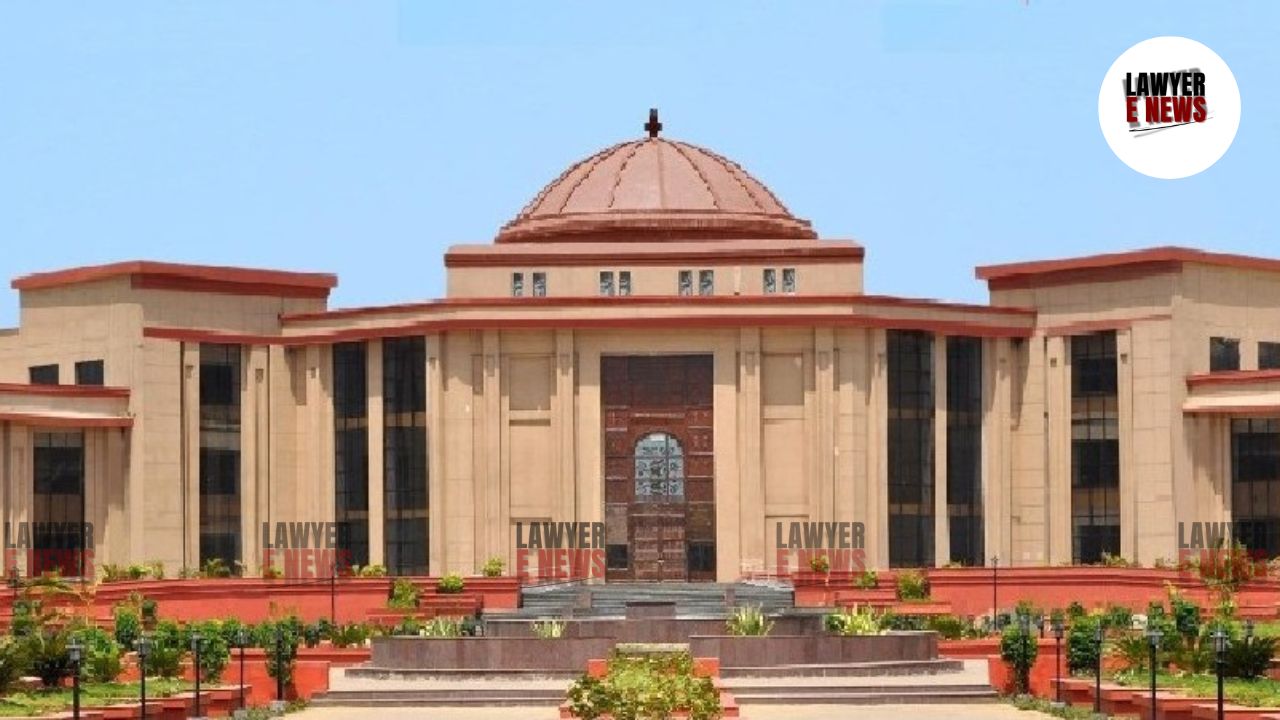
"The expression 'sufficient means' in Order 33 Rule 1 of the Code of Civil Procedure contemplates the ability or capacity of a person in the ordinary course to raise money by available lawful means to pay court fee." Chhattisgarh High Court, in a significant ruling, held that an applicant seeking to file a suit as an indigent person under Order 33 Rule 1 of the CPC carries the burden of proving that they lack sufficient means to pay the requisite court fees.
A bench of Hon'ble Shri Justice Ravindra Kumar Agrawal observed that mere assertions or the production of outdated documents are insufficient to discharge this burden, emphasizing that the court must assess the applicant's actual financial capacity at the time of the application.
Requirement of Present Financial Status
The case arose from a petition challenging a trial court order that rejected the petitioner's application to sue as an indigent person. The petitioner, who had initiated a suit for title declaration and compensation, claimed he lacked the funds to pay court fees. However, the trial court found that the petitioner failed to disclose his current profession, income, and expenditure, relying instead on an outdated BPL certificate from 2007-08.
Strict Burden of Proof on Applicant
The High Court affirmed that the "indigent person" status is not a status to be granted based on past economic conditions but must be established based on the applicant's current financial reality. The Court noted that while the petitioner claimed to be a landless agricultural labourer, he provided no cogent documentary evidence to substantiate his claim or his lack of resources.
Court Rejects Vague Financial Disclosures
The bench highlighted that the petitioner had failed to rebut specific objections regarding his residence and employment status at Bilaspur. By failing to disclose his actual income, expenditure, and savings, the petitioner did not provide the trial court with a transparent account of his finances, which is a prerequisite for seeking the waiver of court fees.
"Sufficient Means" Defined by Precedent - Court Adopts Supreme Court's View on Financial Capability
Citing the Supreme Court’s decision in Mathai M. Paikeday v. C.K. Anthony, the High Court reiterated that the assessment of "sufficient means" involves evaluating a person’s employment status, income, assets, and potential financial support from family. The Court clarified that the ability to raise funds by lawful means, even if not immediately liquid, is central to determining whether an individual qualifies as indigent.
No Dispensation Based on Future Outcomes
The petitioner argued that the court fee could be recovered from the decretal amount if his suit were successful. The High Court rejected this contention, ruling that the statutory requirements of Order 33 Rule 1 must be satisfied at the inception of the suit. A party cannot circumvent the mandatory payment of court fees based on the speculative possibility of a favourable judgment in the future.
Finality of Trial Court Inquiry
Regarding the procedural challenge, the Court observed that the trial court had sufficiently considered the documents and objections on record, thereby satisfying the inquiry requirements under Order 33 Rule 1A of the CPC. Finding no jurisdictional error or perversity, the Court dismissed the petition, maintaining that supervisory jurisdiction under Article 227 is not meant for re-assessing evidence when the lower court’s order is well-reasoned.
Date of Decision: 21 August 2026