-
by sayum
28 August 2026 2:11 PM







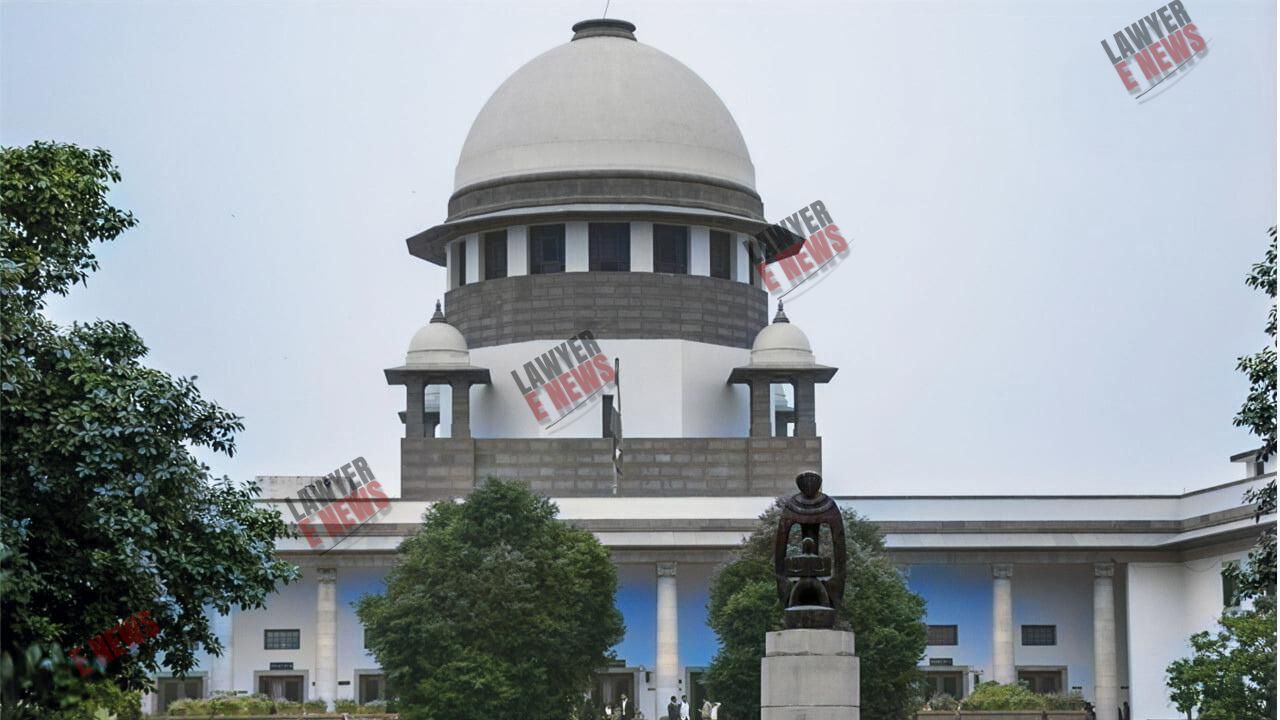
“Mastan Binding: Parameters Under Workmen’s Compensation Act Cannot Override Tribunal’s Findings in MV Act Claims” – Supreme Court of India delivered a critical verdict setting aside the Karnataka High Court’s order that had erroneously reduced compensation by invoking standards from the Workmen’s Compensation Act. The Apex Court emphatically held that once a claimant chooses to proceed under the Motor Vehicles Act, compensation must be adjudicated under that statute alone, and not by importing caps or calculations from the Workmen’s Compensation Act, 1923.
The Court restored the ₹19,35,400 compensation awarded by the Motor Accident Claims Tribunal, rejecting the High Court’s reduction to ₹10,41,022.
“Injury Under MV Act Must Be Compensated Under MV Act – No Shortcut via Workmen’s Compensation Caps”
The case involved a 23-year-old loader, Mohammed Masood, who suffered a life-changing injury on December 1, 2015, when the lorry he was travelling in collided with another vehicle. The result: below-knee amputation of his right leg, assessed at 85% disability.
The Tribunal, applying a monthly income of ₹9,000, multiplier of 18, and considering various heads such as pain and suffering, loss of future income, medical expenses and loss of marriage prospects, awarded a total compensation of ₹19.35 lakhs.
However, the High Court of Karnataka, on appeal by the insurance company, reduced the income to ₹8,000, citing that under the Workmen’s Compensation Act, 1923, that was the maximum permissible income.
The High Court went further and applied only 60% of that income (₹4,800) for computing loss of future income, invoking compensation standards from the Workmen’s Compensation Act.
“High Court Committed a Legal Error” – SC Upholds Autonomy of MV Act Claims
The Supreme Court found this approach legally untenable, holding:
“It was not permissible in law for the High Court to apply the parameters under Workmen’s Compensation Act, 1923 when the compensation was assessed and fixed by the Tribunal in a claim petition under Section 166 of the M.V. Act.”
The judgment invoked the authoritative precedent of National Insurance Co. Ltd. v. Mastan & Anr. [(2006) 2 SCC 641], where the Court had clearly held that:
“Section 167 of the 1988 Act statutorily provides an option to the claimant… [but] not both. Once the remedy under the Motor Vehicles Act, 1988 was elected… falling back upon the parameters under the Workmen’s Compensation Act was not permissible.”
Thus, the High Court’s application of Workmen’s Compensation ceilings to override findings of the MV Tribunal was an error of law.
“No Future Prospects? Can’t Complain Now” – SC Refuses to Entertain Claimant’s New Appeal Point
While the claimant also requested the Court to add 40% future prospects to his income as per the ruling in Pranay Sethi [(2017) 16 SCC 680], the Court declined, noting that:
“It would not be permissible for this Court to go into it… the appellant did not file any appeal to challenge the judgment and order of the Tribunal. It was the insurance company who approached the High Court.”
The Supreme Court thus limited its scope to correcting the High Court’s statutory misapplication, but refused to grant fresh enhancement in an appeal not filed by the claimant.
“The judgment and order of the High Court dated 23.01.2020… is set aside. The impugned judgment and award of the Tribunal stands restored.”
This ruling reinforces a foundational principle of accident compensation law: once a legal path is chosen, its statutory principles must govern the adjudication. Claimants cannot be penalized by importing thresholds from a statute they did not invoke, and courts cannot retroactively downgrade awards using inappropriate legal frameworks.
Date of Decision: September 26, 2025