-
by sayum
25 August 2026 6:19 AM







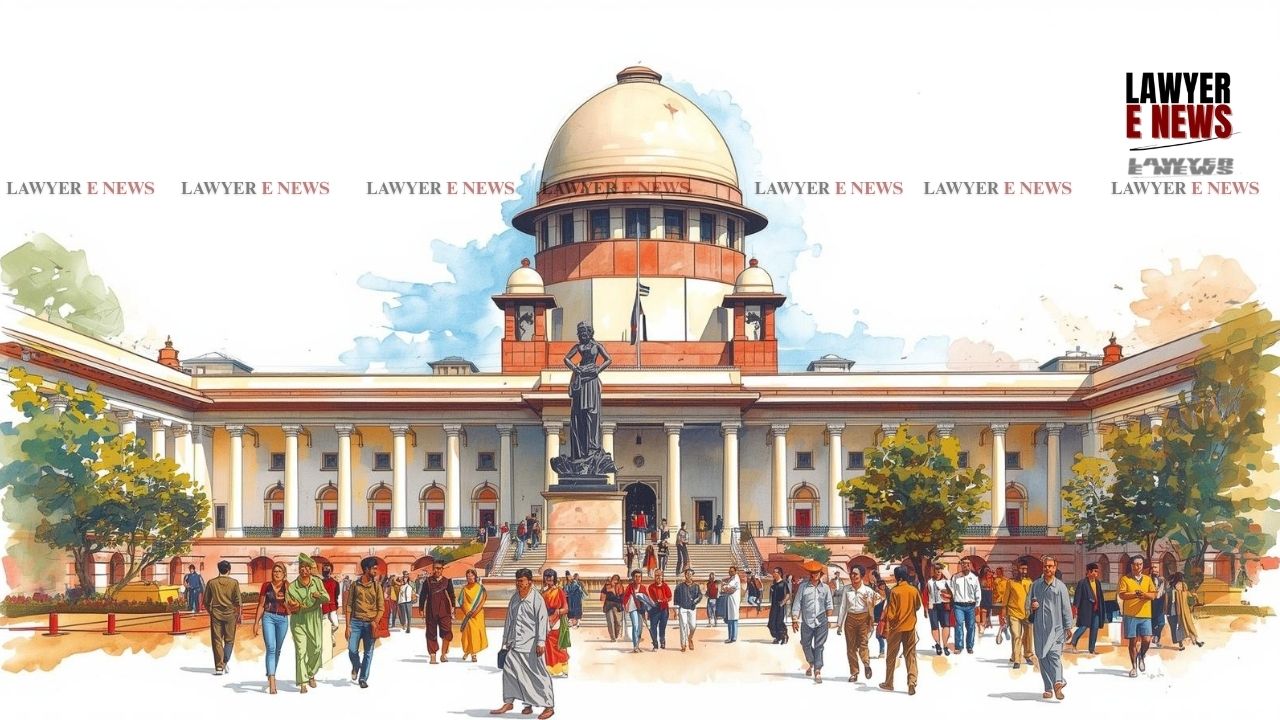
“The Public Prosecutor is duty-bound to act independently... the court must scrutinise whether withdrawal subserves the administration of justice or is sought to stifle it” – In latest judgment reiterating the constitutional duty of courts to prevent political misuse of prosecutorial powers, the Supreme Court dismissed a set of appeals filed by a former Uttar Pradesh MLA seeking quashing of multiple criminal proceedings after the State attempted to withdraw prosecution in violation of binding guidelines.
The case dealt with the invocation of Section 321 of the Code of Criminal Procedure, 1973 and its counterpart Section 321 of the Bharatiya Nagarik Suraksha Sanhita, 2023, through which the State had tried to withdraw pending cases under the Arms Act and serious offences of cheating, forgery and use of forged documents under Sections 420, 467, 468, 471 of the Indian Penal Code. The Court rejected the State’s approach and the appellant's claims, holding that no prosecution involving a sitting or former legislator can be withdrawn without prior leave of the High Court, as clearly laid down in Ashwini Kumar Upadhyay v. Union of India.
“The Consent of the Court Is Not a Rubber Stamp” – Judicial Scrutiny Essential in Prosecutorial Withdrawals
The Bench of Justice Sanjay Karol and Justice Nongmeikapam Kotiswar Singh held that the High Court had rightly declined to quash the prosecution, as no permission had been sought from the High Court to withdraw the cases, despite being mandatory post-Ashwini Kumar Upadhyay.
The Court reinforced the foundational principle that Section 321 CrPC is not a tool to serve political convenience, but a safeguard to ensure that prosecutorial discretion is exercised in public interest, and under judicial oversight. Referring to its earlier rulings in State of Kerala v. K. Ajith and Ram Naresh Pandey, the Court clarified:
“The Public Prosecutor must formulate an independent opinion before seeking the court’s consent... the court must be satisfied that the withdrawal is not an attempt to interfere with the course of justice for illegitimate reasons.”
Former MLA Facing Arms Act and Forgery Charges Sought Blanket Withdrawal Through Government Order
The proceedings arose from multiple FIRs registered in June 2007 against the appellant, who was at the time a sitting MLA, for alleged violations of the Arms Act, 1959 and fabrication of records under the IPC. Though the arms licence was later restored in 2012, the criminal proceedings had continued.
In 2014, the Government of Uttar Pradesh issued a detailed order recommending withdrawal of three such cases – Crime Nos. 654, 655, and 656/2007 – citing “public interest and interest of justice”. The Special Secretary, Government of U.P., conveyed the Governor’s approval to withdraw, and the Public Prosecutor filed an application under Section 321 CrPC on August 27, 2014.
However, the Trial Court refused permission, citing the lack of approval from the High Court as required after the Ashwini Kumar Upadhyay ruling. The trial court’s refusal was not remedied by the State, and the appellant approached the Allahabad High Court under Section 482 CrPC/528 BNSS, seeking quashing of the proceedings.
The High Court rejected all such applications on various dates in April–May 2025, and the matter reached the Supreme Court via Special Leave Petitions.
Withdrawal Mechanism Cannot Evade Constitutional Oversight
Refusing to interfere with the High Court’s order, the Supreme Court recalled its own decision in Ashwini Kumar Upadhyay v. Union of India, where a three-judge Bench had categorically held:
“No prosecution against a sitting or former MP/MLA shall be withdrawn without the leave of the High Court.”
The Court noted that this guideline applies not just to new prosecutions but also to all withdrawals sought after September 16, 2020, when the directive was issued. In the present case, though the initial withdrawal application was filed in 2014, the High Court was approached much later and no permission was ever sought from it, making the entire withdrawal process legally unsustainable.
“Good Faith Alone Is Not Enough – Reasons Are the Soul of Judicial Function”
Reinforcing the principle that prosecutorial independence cannot be substituted by executive fiat, the Court stressed that withdrawal under Section 321 is subject to judicial scrutiny, and the role of the Public Prosecutor is not to blindly execute the government’s desire.
Citing Sheonandan Paswan v. State of Bihar, the judgment observed:
“Good faith is one and not the only consideration. The court must also scrutinise whether an application suffers from such improprieties or illegalities as to cause manifest injustice if consent is given.”
The Court clarified that merely stating public interest or citing a government order is not sufficient. The Public Prosecutor must apply independent mind, disclose all reasons for withdrawal, and the court must record a reasoned satisfaction that withdrawal subserves justice.
High Courts Must Apply Judicial Mind When Permissions Are Sought for MLA/MP Prosecution Withdrawal
The Court made it clear that the same standards of judicial scrutiny apply equally to the High Courts when considering permission to withdraw criminal cases involving legislators. The judgment noted:
“The High Court, when considering such permission, must exercise its judicial mind… the reasons for withdrawal must be disclosed, and the application must be supported by the record.”
It reiterated that reasons are not a formality but a constitutional imperative, and that withdrawal must never become a political tool to rescue former lawmakers from lawful accountability.
No Procedural Shortcut Allowed in Prosecution Withdrawal for Legislators
The Supreme Court ultimately upheld the Allahabad High Court's refusal to interfere, finding no procedural infirmity or misapplication of law. It concluded that the appellant's plea was meritless in the absence of the mandatory High Court permission, and accordingly dismissed the appeal.
The Court, however, clarified that it had not expressed any opinion on the merits of the criminal charges, leaving all defences open to the appellant to raise at the appropriate stage, whether during trial or discharge proceedings.
Date of Decision: December 3, 2025