-
by sayum
29 August 2026 3:15 PM







“The King is under no man but under God and the Law.” - These were the words quoted by Justice S. Ratnavel Pandian at the very beginning of a judgment that, even three decades later, defines the legal architecture of criminal investigations in India. Delivered on November 21, 1990, in the now-legendary case of State of Haryana vs. Ch. Bhajan Lal, the Supreme Court’s verdict did more than just decide the fate of one politician accused of corruption. It carved out the boundaries between judicial intervention and investigative independence, while addressing a question that still plagues Indian democracy: Can politics be used as a shield against prosecution?
A Politically Charged Complaint
The origins of the case lay in the heartland politics of Haryana. Ch. Bhajan Lal, once Chief Minister of the state and later a Union Minister, found himself accused by Dharam Pal, a political opponent and Lok Dal candidate, of amassing vast assets disproportionate to his known sources of income. The complaint alleged benami land transactions, palatial homes, petrol pumps, shares in cinemas, and gold ornaments worth crores—an empire allegedly built during Bhajan Lal’s tenure as Chief Minister.
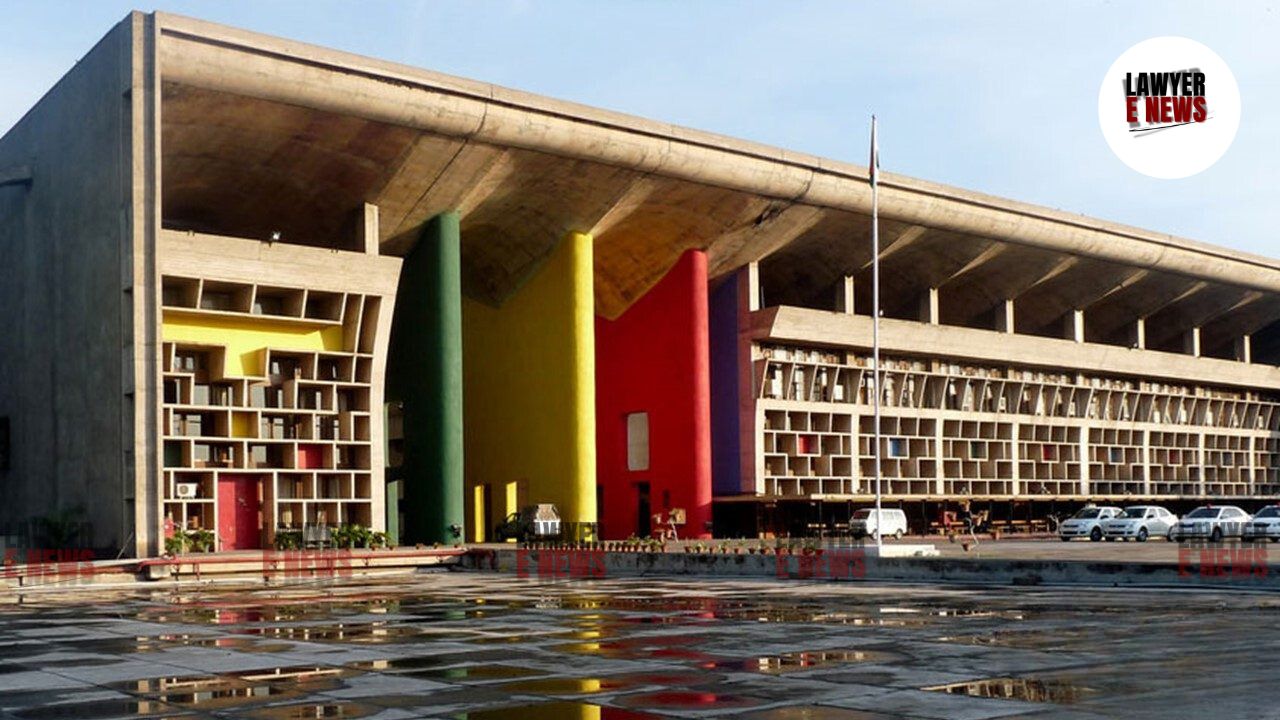
What followed was the registration of an FIR under Sections 161 and 165 of the Indian Penal Code and Section 5(2) of the Prevention of Corruption Act, 1947. However, the matter quickly escalated when the Punjab & Haryana High Court quashed the FIR entirely, suggesting it was born out of political vengeance, an attempt at character assassination, and a misuse of the criminal justice system.
The High Court even went so far as to express that “mutual respect should prevail between political adversaries,” invoking historical references like Porus and Alexander. In its final flourish, it awarded costs to Bhajan Lal and declared the allegations “imaginary and fantastic.”
Supreme Court Intervenes: “The Law Is Supreme”
The Supreme Court, however, had a very different view. In a sharply reasoned and deeply philosophical verdict, Justices Pandian and Reddy reminded the nation that “in our democratic polity... based on the concept of Rule of Law... the law is supreme.” The judgment stressed that no person, however powerful or high-ranking, is above the law, stating unequivocally: “Whoever he may be, however high he is, he is under the law.”
Refusing to allow political rivalry to eclipse the seriousness of criminal allegations, the Court restored the FIR. It noted: “Even assuming that there is political rivalry, the allegations in the complaint disclose the commission of cognizable offences. That is sufficient to trigger the legal machinery.”
Political Motive Cannot Trump Prima Facie Evidence
The judgment drew a sharp distinction between the motive behind a complaint and the substance of the allegations. “The mere existence of political vendetta,” the Court held, “cannot be the sole ground to quash an FIR where a prima facie case is made out.” It added that the police are statutorily obliged to register an FIR under Section 154 CrPC if the information discloses a cognizable offence.
The judges emphasized that “the truth or falsity of allegations is not the concern of the Court at the FIR stage.” In doing so, they censured the High Court’s approach of examining credibility and motives in a writ petition. “The High Court has no justification in riding its chariot over the track of investigation and obliterating the same,” observed the Court.
Birth of the “Bhajan Lal Categories” – A Landmark Legal Doctrine
But it was not merely the restoration of an FIR that made this case historic. The true legacy of the Bhajan Lal judgment lies in what followed—a legal doctrine so enduring that it continues to guide courts to this day.
The Supreme Court set out seven illustrative categories—commonly referred to now as the “Bhajan Lal Guidelines”—where the extraordinary power under Article 226 or Section 482 CrPC may be used to quash an FIR. Among these were cases where the allegations do not make out an offence even if taken at face value, or where legal bars prevent further proceedings, or where the complaint is a manifest abuse of process.
But the Court warned: “Quashing of FIRs should be an exception, not the rule. The power must be exercised sparingly, with great caution, and in the rarest of rare cases.”
This list has since become a judicial checklist used by every High Court and even the Supreme Court when confronted with quashing petitions. The ruling thus transformed case law into actionable doctrine, giving structure to an otherwise abstract and unrestrained power.
Police Cannot Investigate Without Proper Authority: Section 5A Breach
However, the judgment did not give a carte blanche to the police either. In a separate but significant finding, the Supreme Court held that the investigation conducted by the SHO was invalid, as it violated Section 5A of the Prevention of Corruption Act, which mandates that only officers of a certain rank—DSP or above—can investigate corruption cases.
The Court noted with concern: “The order of the SP delegating the investigation lacked proper reasoning and was mechanically passed.” It declared the entire investigation void, but allowed the State to start afresh through a competent, authorised officer.
Judiciary Must Not Play Detective – Nor Become a Political Referee
One of the judgment’s most powerful themes is its firm rejection of judicial overreach. It cautioned courts against assuming the role of investigator at the threshold stage. “The function of the judiciary and the police are complementary, not overlapping,” the Court reminded, echoing the words of the Privy Council.
Even more pointedly, it called out the High Court for overstepping constitutional boundaries, noting: “The High Court’s moralistic observations, and references to historical events, though poetic, were wholly unwarranted in a legal context.”
Still A Touchstone in 2025: The Lasting Impact
Even 35 years after it was delivered, the Bhajan Lal ruling remains one of the most cited decisions in Indian criminal law. It has been reaffirmed in later landmark cases such as State of Telangana v. Habib Abdullah Jeelani (2017) and Lalita Kumari v. Govt. of UP (2014), which emphasized that registration of FIR is mandatory when a cognizable offence is disclosed.
Law schools teach the Bhajan Lal guidelines as foundational principles. High Courts quote it in every significant quashing case. Policemen are trained to understand its implications on registration of cases. And litigants continue to rely on it to separate genuine prosecutions from targeted political harassment.
In the Court’s own words: “The canker of corruption, if not fought on all fronts, will destabilize and debilitate the very foundations of democracy.” The Bhajan Lal judgment stood then—and stands now—as a sentinel for both investigative integrity and judicial restraint.
State of Haryana & Others v. Ch. Bhajan Lal & Others
Bench: Justice S. Ratnavel Pandian and Justice K. Jayachandra Reddy
Decision Date: November 21, 1990