-
by sayum
26 August 2026 9:49 AM







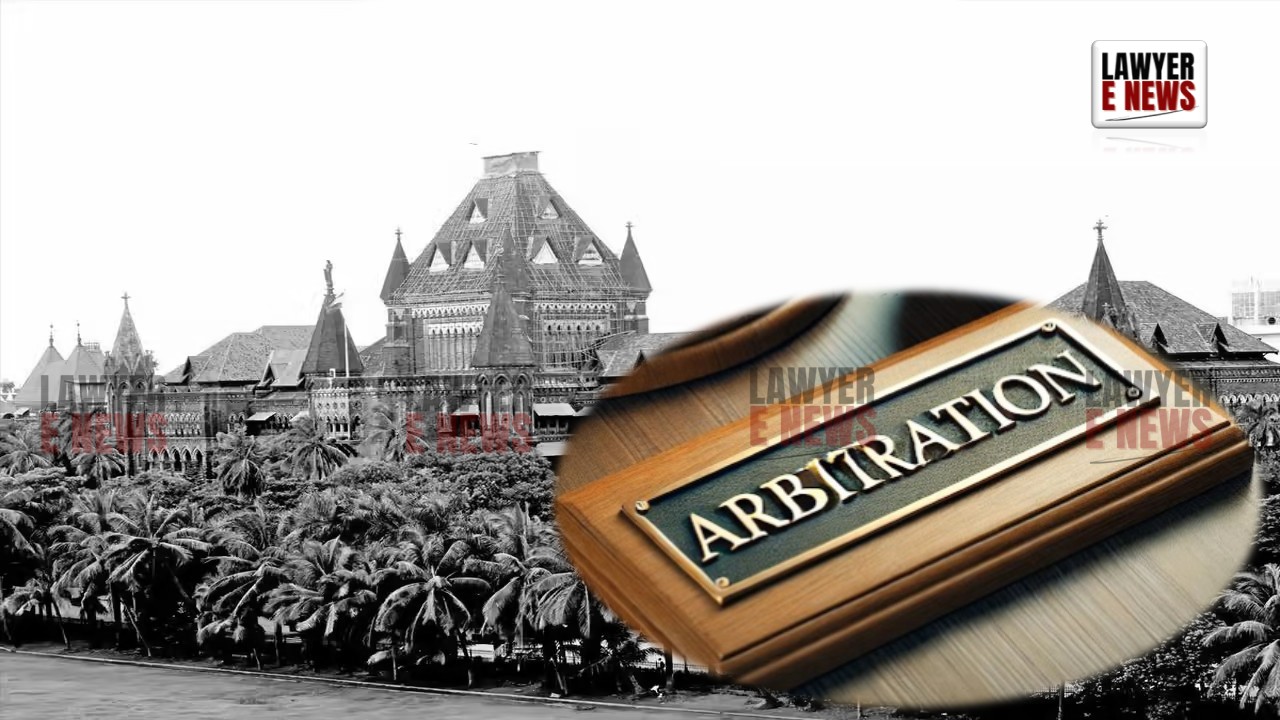
“Arbitral Tribunals Cannot Become Robinhoods Disguised as Arbitrators”— Bombay High Court setting aside concurrent awards passed by the IGRC, Arbitral Tribunal and Appellate Arbitral Tribunal that had directed the refund of brokerage worth ₹78.66 lakhs, despite holding that all trades executed in the investor’s account were authorised.
Calling out the arbitral approach as “panchayati justice” and foreign to the Arbitration and Conciliation Act, the Court held that “an arbitral tribunal cannot act as a Robinhood in equity by taking away lawful brokerage and gifting it to the investor merely because he suffered a loss.”
“No Breach, No Compensation—Law Does Not Permit Charity at the Expense of Contract”
The Petitioner, Nirmal Bang Securities Pvt. Ltd., had filed the arbitration petition under Section 34 of the Arbitration and Conciliation Act, 1996, challenging the award passed in favour of Shashi Mehra HUF, whose Karta is a senior Chartered Accountant. The arbitral fora had held that though the trades in question were executed with the investor's full knowledge and authority, the brokerage charged was excessive and should be refunded on equitable grounds.
The High Court called this reasoning “patently illegal”, holding that once the trades were found to be authorised, there was no legal basis to order the refund of brokerage.
“There is a fundamental flaw in the impugned award. The Arbitral Tribunal accepts the trades as authorised and still grants the investor relief on sympathetic and equitable grounds… this is legally impermissible,” the Court held.
“Investor Cannot Be Heard to Complain After Allowing Third Party to Freely Trade Using Login Credentials”
The dispute arose after the Respondent claimed unauthorised trades had taken place in his account, allegedly placed by one Mateen Attar, who was not an official representative of the broker. The Respondent, however, had willingly handed over his login credentials to Mateen, had received all SMS, email, and contract notes during the trading period, and did not raise a single protest until after suffering losses.
The Court found that the investor had confirmed trades via email and phone, knew of the trading activity, and even shifted his account to another broker through the same Mateen after the losses, thereby contradicting any claim of ignorance or coercion.
“Refunding Brokerage Despite No Violation Defeats the Fundamental Policy of Indian Contract Law”
Referring to Section 73 of the Indian Contract Act, the Court emphasised that compensation can be awarded only upon breach of contract. It held:
“Charging brokerage on authorised trades is not a breach of contract. It is a commercial entitlement arising from express agreement. The arbitral tribunals have acted without jurisdiction in awarding its refund.”
Further criticising the tribunals' reasoning that trades were “motivated to generate brokerage”, the Court held that such moralistic inferences have no place in arbitral adjudication, unless a breach of fiduciary duty or statutory violation is proved.
“Even if the broker had a profit motive, there was no violation of the terms of the contract or law. The arbitral tribunals erred in mixing morality with legal obligations.”
“Arbitration is Not a Platform for Equitable Redistribution—Contractual Law Prevails”
The Court observed that under Section 28(2) of the Arbitration Act, arbitrators are required to decide disputes in accordance with the terms of the contract and Indian law, unless parties specifically agree to be bound by equitable principles or ex aequo et bono, which was not the case here.
“Equity cannot override contract in arbitration. The arbitral tribunals have functioned like Robinhoods, taking away brokerage earned under contract to compensate the investor out of sympathy. This approach cannot be sustained in law.”
It added that while loss to an investor may evoke sympathy, it cannot form the legal foundation for taking away the broker’s lawful dues, especially when no fraud, manipulation, or unauthorised trading has been proved.
“Investor’s Own Negligence and Continued Association with Alleged Wrongdoer Weakens Entire Case”
The Court took serious note of the Respondent’s conduct after suffering losses. Instead of severing ties with Mateen, the Respondent allegedly continued associating with him and even shifted his account to another brokerage house with Mateen’s assistance. This, according to the Court, was inconsistent with any claim of being misled or manipulated.
“If the investor truly believed Mateen acted without authority and caused him losses, it is unfathomable that he would continue working with him. The claim is an afterthought, triggered by market losses.”
It held that in such cases, where the investor allows third-party access and fails to supervise or act diligently, he cannot invoke legal protection after the fact to recover losses or brokerage.
“Regulatory Lapses, If Any, Are for SEBI/NSE to Examine—Civil Remedies Must Follow Breach”
The Court clarified that even if the broker had failed in some regulatory compliance—such as verifying Mateen’s role or formal appointment—this cannot automatically translate into civil liability for refund in the absence of breach or fraud.
“Any regulatory non-compliance may invite SEBI or NSE action, but unless there is proven contractual or statutory breach causing loss, civil courts or arbitrators cannot impose refund liabilities.”
Awards Quashed, Brokerage Refund Set Aside, Funds Directed to be Returned to Broker
The High Court set aside the orders of the IGRC (14.01.2022), the Arbitral Tribunal (14.10.2022), and the Appellate Arbitral Tribunal (15.03.2023), and held that the Petitioner-broker is entitled to withdraw the amount deposited, with accrued interest.
It also clarified that the judgment does not prevent SEBI or NSE from initiating any appropriate regulatory proceedings against the broker, if necessary.
“The impugned awards suffer from patent illegality and are against the fundamental policy of Indian law… Once the trades are held to be authorised, and no breach is established, there is no question of refunding the brokerage.”
Date of Decision: 3 February 2026