
-
by sayum
28 August 2026 2:11 PM







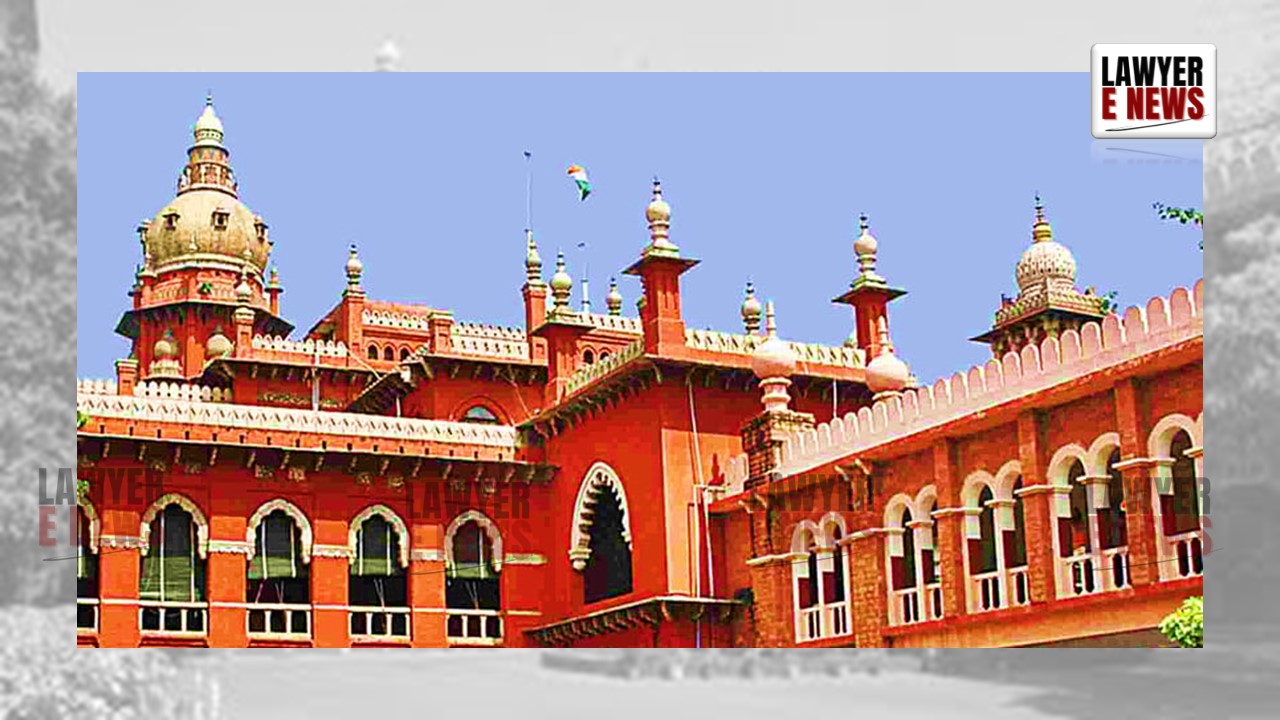
In a detailed and significant ruling Madras High Court decisively settled the rights flowing from a settlement creating life interest and vested remainder, while simultaneously rejecting a holographic Will for failure to comply with statutory mandates.
Justice Dr. R.N. Manjula held that a life estate holder cannot assume absolute ownership merely because the remainderman had been unheard of for decades. The Court further ruled that a Will allegedly executed “in the presence of the Universe” cannot bypass the mandatory requirements of attestation under Section 63 of the Indian Succession Act and Section 68 of the Evidence Act.
The Civil Suit for partition was allowed, declaring the plaintiffs’ 10/13th share, while the Testamentary Original Suit seeking Letters of Administration was dismissed.
“Mere Absence of the Remainderman Does Not Divest Title” – Court Upholds Sanctity of Settlement Deed
The dispute revolved around properties covered under a registered settlement deed dated 26.11.1962, which created life interest in favour of Y.E. Seshachari and absolute remainder in favour of his son Srinivasan. Srinivasan had been missing for over 30 years.
The son through the second wife contended that since Srinivasan never took possession and remained unheard of, the father in possession effectively became absolute owner and could validly execute a Will.
Rejecting this contention, the Court observed: “The very possession and enjoyment of the plaintiff’s father over the suit property itself is sufficient to come to the conclusion that the settlement deed dated 26.11.1962 has been acted upon.”
However, acting upon the settlement meant accepting it in entirety. The Court made it clear that selective acceptance was impermissible.
“The continual possession of Y.E.Seshachari cannot be construed as his absolute right unless it is either given by the absolute owner Srinivasan or through a decree of a court…”
The Court emphasized that title in Items 2 and 3 vested absolutely in Srinivasan by virtue of the settlement deed. His absence did not extinguish his title. Only a declaration of civil death during the lifetime of the life estate holder, followed by lawful devolution, could have altered the legal position.
Since the declaration of civil death was sought only after the death of Y.E. Seshachari, the Court reasoned that the life estate holder must be treated as having predeceased Srinivasan for purposes of succession. Consequently, the properties devolved upon the legal heirs of Srinivasan and not as absolute property of Y.E. Seshachari.
“A Will Written Before the ‘Universe’ Cannot Replace Statutory Attestation” – Holographic Will Held Invalid
The alleged Will dated 13.01.2008 was handwritten and unregistered. It contained overwriting in the date, insertions between lines, and referred to “Panja Bootham” (Universe) as witness.
The Court noted:
“From the contents of Ex.P1- Will, it is only seen that the testator has written the Will not in the presence of any human being but in the presence of ‘Panja Bootham’ (Universe) as a witness.”
Under Section 63 of the Indian Succession Act, a Will must be attested by two or more witnesses who have seen the testator sign and who sign in his presence. Section 68 of the Evidence Act mandates examination of at least one attesting witness.
In this case, an attesting witness was alive but not examined. Instead, his son was examined to identify the signature. The Court found this approach legally insufficient and emphasized the “best evidence rule.”
“Despite Kandasamy Achari was alive and was capable of speaking on this aspect, such a best witness has not been examined…”
The medical discharge summary produced to justify non-examination of another witness did not establish incapacity.
“Holographic Will Gets Presumption Only When It Is Free From Suspicion” – Court Declines Benefit of Presumption
The plaintiff relied on the principle that holographic Wills carry strong presumptive value. The Court acknowledged this proposition but clarified its limits.
“No doubt the holographic will has got the best presumptive value as to its genuineness, if it is proved that the whole of the Will is in the handwriting of the testator.”
However, where handwriting is disputed and suspicious features are apparent, the presumption does not arise.
“Only when the holographic Will does not appear to be suspicious, on the face of it, it can get the benefit of the best presumption.”
Given overwriting, absence of proper attestation, and non-examination of attesting witnesses, the Court held that the Will failed both in validity and genuineness.
Partition Granted – Intestate Succession Applies
With the Will held unproved, succession was governed by intestate principles. The plaintiffs established their entitlement to 10/13th share in the suit properties.
The Civil Suit in C.S. No. 373 of 2013 was allowed and a preliminary decree for partition was passed. The Testamentary Original Suit in T.O.S. No. 17 of 2015 seeking Letters of Administration was dismissed.
This judgment stands as a strong reaffirmation that statutory compliance in testamentary matters is mandatory, and that life estate holders cannot, by mere possession or assumption, convert limited interests into absolute ownership in derogation of vested remainder rights.
Date of Decision: 10/02/2026





