-
by sayum
26 August 2026 10:38 AM







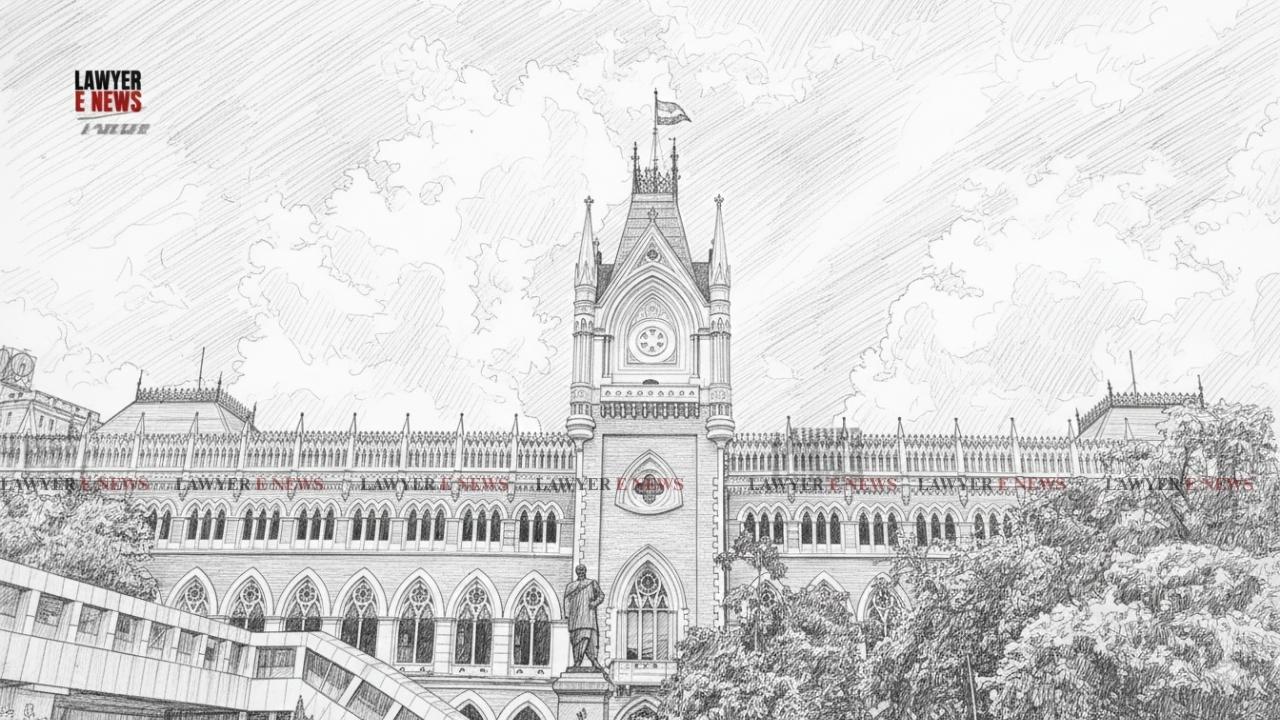
“Reasonable Cause” Under Commercial Courts Act Carries a Lower Threshold – In a significant ruling on procedural rigour in commercial litigation, the Calcutta High Court has clarified that Order XI Rule 1(5) of the Code of Civil Procedure, as amended by the Commercial Courts Act, 2015, does not impose an absolute bar on disclosure of additional documents beyond the prescribed stages. The Court held that even at the argument stage of an undefended suit, additional documents may be taken on record upon establishing “reasonable cause”.
Justice Aniruddha Roy allowed the plaintiff’s application seeking leave to disclose additional documents and to adduce evidence of a second witness. The leave was granted subject to payment of costs of Rs. 50,000/- to the Calcutta High Court Legal Services Committee.
Undefended Commercial Suit at Argument Stage
The suit was a commercial action wherein the defendant had forfeited its right to file written statement under the amended Order VIII Rule 1 CPC. The suit was accordingly marked as “undefended”. The plaintiff’s witness had completed examination-in-chief, and the defendant chose not to cross-examine.
At the argument stage, certain queries were raised by the Court regarding the basis of USD 24,000 claimed as detention charges and the comparative cost implications of loading cargo from Kolkata vis-à-vis Singapore.
In response, the plaintiff moved the present application seeking leave to disclose documents annexed as “C-1” to “F” and to file affidavit of evidence of a second witness, limited to those documents.
Order XI Rule 1 CPC Post-Commercial Courts Act
Justice Roy undertook a detailed examination of Sub-Rules (1) to (5) of Order XI Rule 1 CPC as amended.
The Court observed that Sub-Rules (1) to (3) impose a mandatory obligation on the plaintiff to disclose all documents in its power, possession, control or custody at the time of institution of the suit.
Sub-Rule (4) permits disclosure of additional documents within 30 days in case of urgent filing, subject to leave and declaration on oath.
Crucially, Sub-Rule (5) provides:
“The plaintiff shall not be allowed to rely on documents… not disclosed along with plaint… save and except by leave of Court and such leave shall be granted only upon the plaintiff establishing reasonable cause for non-disclosure.”
The Court held that the legislature consciously engrafted Sub-Rule (5), thereby indicating that there is “no absolute bar” even after the Sub-Rule (4) stage. Judicial discretion survives, provided reasonable cause is demonstrated.
Meaning of “Reasonable Cause”: A Liberal Threshold
The plaintiff explained that:
The Court relied on Agva Healthcare Pvt. Ltd. v. Agfa-Gevaert NV and noted that “reasonable cause” carries a lower threshold than “good cause” or “sufficient cause”. It further relied on Sudhir Kumar alias S. Baliyan v. Vinay Kumar G.B., wherein the Supreme Court held that at the stage of granting leave to place additional documents on record, the Court is not required to examine their genuineness.
Justice Roy emphasized:
“At this Order XI Rule 1 stage… the jurisdiction of this Court is limited to the extent whether to allow or not to allow these additional documents to be brought on record.”
The veracity and evidentiary worth of such documents would be tested at trial.
Right to Present Case as a Vested Right
The Court underscored that in adversarial litigation, “right to present its case by the plaintiff is a vested right.”
Importantly, the Court noted that no outer time limit is prescribed in Sub-Rule (5), and therefore, even at the argument stage, additional documents may be permitted if reasonable cause is shown.
The Court found the plaintiff’s explanation to be “just, cogent and reasonable”, particularly since the documents were sought to answer judicial queries raised during arguments.
Defendant’s Position in Undefended Suit
Although the defendant was represented by counsel, the suit having been marked undefended, the Court held that the defendant had no right of audience in the application.
However, balancing procedural fairness, the Court granted the defendant limited liberty to cross-examine the second witness strictly confined to the additional documents permitted to be disclosed.
Directions Issued
Allowing the application, the Court directed:
The plaintiff is permitted to disclose the documents annexed as “C-1” to “F”.
An Additional Judges’ Brief of Documents may be filed within the stipulated time.
The plaintiff is granted leave to file affidavit of evidence of a second witness within six weeks, restricted only to the additional documents.
The defendant is entitled to cross-examine the second witness, limited strictly to those additional documents.
The disclosure is subject to payment of Rs. 50,000/- as costs to the Calcutta High Court Legal Services Committee within two weeks.
This decision reinforces that while the Commercial Courts Act mandates strict disclosure discipline, procedural rigidity cannot override substantive justice. The Court has clarified that Order XI Rule 1(5) is a safety valve provision allowing courts to prevent injustice where reasonable cause is shown.
The judgment also reaffirms that courts, at the leave stage, are not to conduct a mini-trial on the authenticity of documents. That assessment belongs to the evidentiary stage.
For commercial litigants, the ruling is a reminder that while initial disclosure obligations are stringent, bona fide lapses supported by reasonable explanation may still be remedied—even at the argument stage—subject to judicial discretion and appropriate costs.
Date of Decision: 23 February 2026