
-
by sayum
21 October 2026 5:27 PM







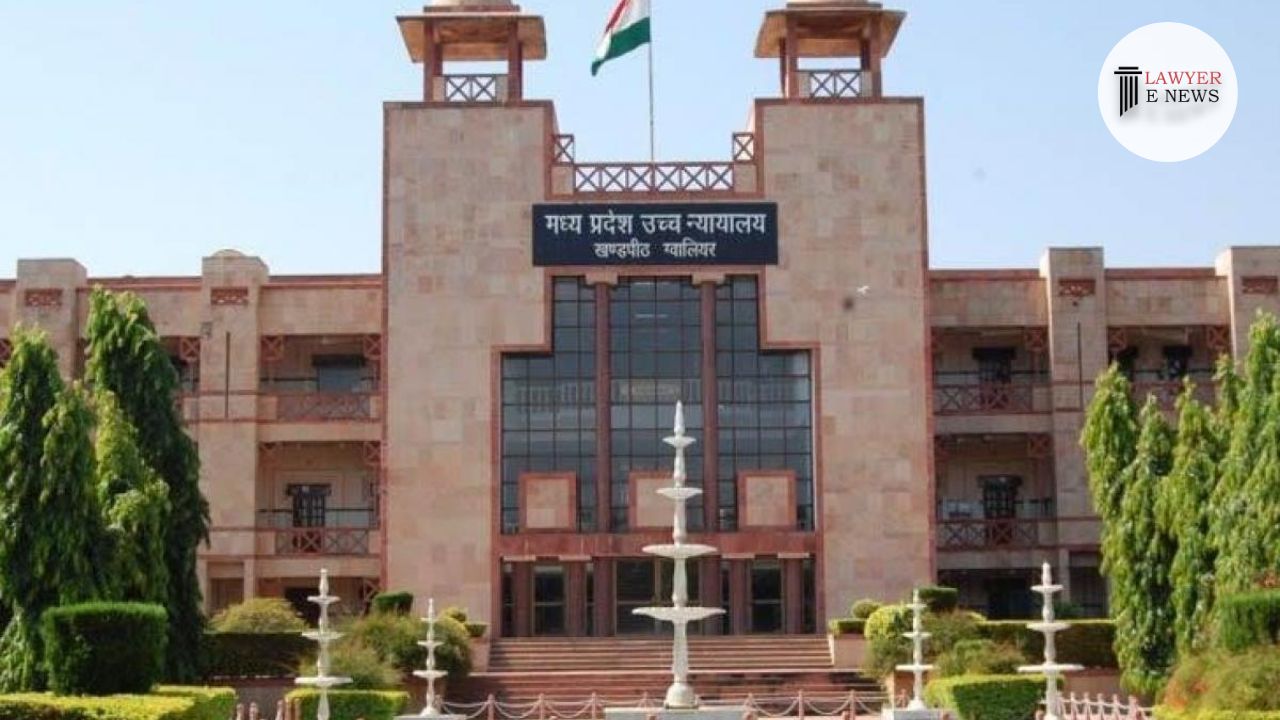
The accusations against the accused under the terms of the NDPS Act were recently overturned by the Madhya Pradesh High Court because they were based primarily on the testimony of a co-accused that was recorded under Section 27 of the Evidence Act.
Justice Nandita Dubey disregarded the contested order, pointing out that the trial court should depend on evidentiary law-compliant materials when drafting the accusations.
Although the Judge is not required to carefully evaluate the evidence that the prosecution proposes to introduce at the admission stage, he is expected to use his judicial judgement to assess the overall impact of the evidence and the documents produced, in order to determine whether or not a prima facie case against the accused is made out. As no inadmissible evidence or document may be used to frame the charge, it goes without saying that any such evidence and documents cited by the prosecution must be acceptable under the law of evidence.
The police stopped a truck transporting lots of ganja, according to the case's facts. The Petitioner was identified as the owner of the consignment by one of the co-accused in their statement. The lower court received the charge sheet from the investigative agency, and the petitioner was charged with offences under Sections 8, 20(b)(2c), and 29 of the NDPS Act. Angry, the petitioner sought the court to contest how the charges against him were framed.
The petitioner stated in court that the prosecution had no evidence showing that the illegal items that were seized belonged to him or that the infringing truck belonged to him. It was further stated that he was implicated in the alleged offence based on a co-confession accused's made in accordance with Section 27 of the Evidence Act. The petitioner claimed that the confession made in accordance with Section 27 was illegal under Section 25 of the Evidence Act as well as Sections 162 and 164 of the Criminal Procedure Code. Because of this, the petitioner claimed that the testimony of each co-accused could not be used against him in court.
The Court concluded after reviewing the arguments made by the parties and the documents submitted that, aside from the co-memorandum accused's statement, there was no other evidence, document, or seizure from the petitioner that could support a strong suspicion or link the present petitioner to the alleged crime.
The Court elaborated on the dos and don'ts for the trial court during the charge-framing stage, opining that the claims against the accused must be considered as a whole to assess whether or not a case is made out prima facie.
The Court is required to consider the entirety of the record and all accompanying documents before drafting a charge. Consideration of whether or not the case would result in a conviction does not need a careful analysis of the evidence. However, the Court must take into account and use its judicial mind to determine if the charges, considered collectively, will prima facie constitute an offence, and if so, whether continuing the proceedings will represent an abuse of the legal system that will result in unfairness.
The Court granted the petition after making the aforementioned observations, and as a result, the impugned order was reversed. The petitioner was consequently released.
KAMTA PRASAD
VS
THE STATE OF MADHYA PRADESH