-
by sayum
26 October 2026 4:04 PM







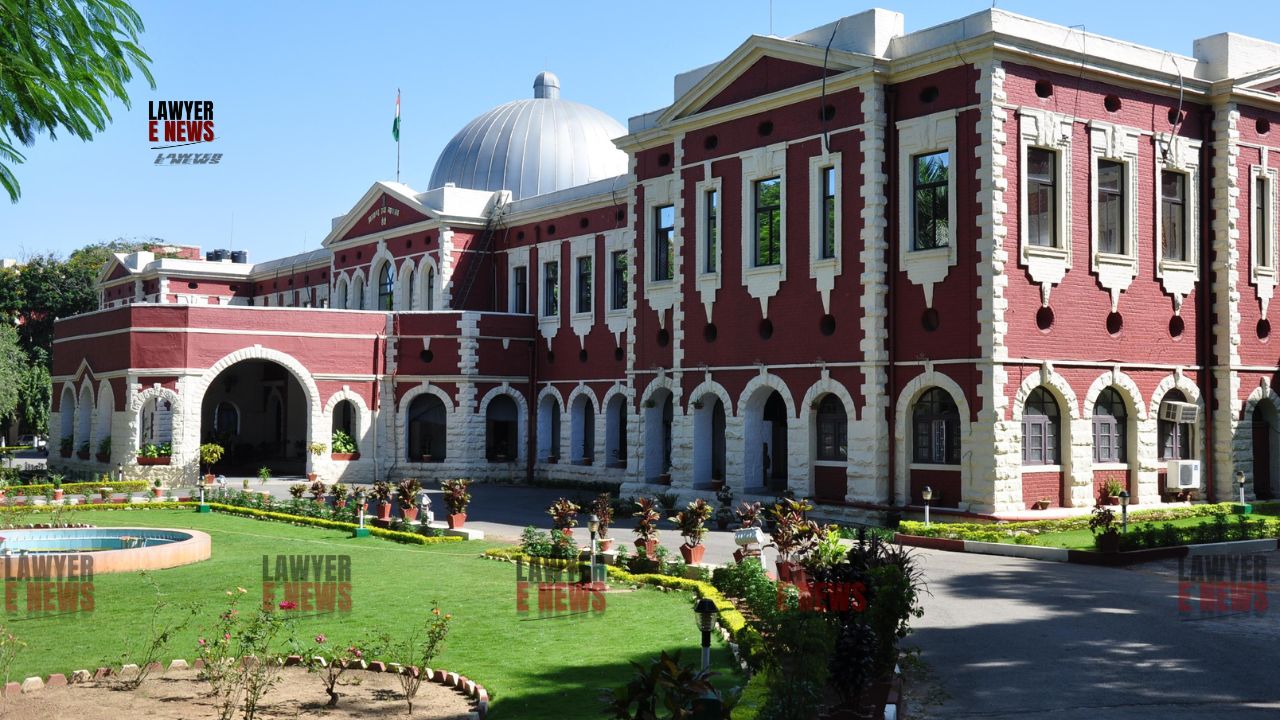
"Since pursuant to the impugned notice dated 16.09.2026, no further proceeding has been drawn by the Ranchi Municipal Corporation, Ranchi, it seems appropriate to direct the respondent No. 2 to draw a formal proceeding in this regard." Jharkhand High Court, in a ruling dated October 5, 2026, held that municipal authorities are legally obligated to initiate a formal proceeding and provide a reasonable opportunity of hearing to the concerned parties before taking coercive measures such as sealing a building for alleged violation of zoning regulations.
Justice Rajesh Shankar observed that the power to seal premises under the Jharkhand Municipal Act, 2011 and the Jharkhand Building Bye-Laws, 2016 cannot be exercised in an arbitrary or summary fashion.
The petitioners challenged a notice issued by the Ranchi Municipal Corporation directing them to cease commercial activities at their banquet hall, "Lake Garden," located in a residential area. The petitioners argued that they held a valid trade license issued in 2022 and were consistently paying holding tax at commercial rates. They further contended that under the 2016 Bye-Laws, community halls are permissible in residential zones, and the impugned notice was issued without due process of law.
The court was primarily tasked with determining whether the municipal authority could unilaterally seal a commercial premise in a residential area without conducting a formal inquiry. Furthermore, the court examined whether the issuance of a show-cause notice requires adherence to the principles of natural justice and statutory procedure before the execution of a sealing order under the Act of 2011.
Procedural Fairness in Municipal Actions
The court emphasized that the authority to restrict the use of a building must be exercised within the parameters of the statute. While the municipal corporation contended that the banquet hall violated residential zoning norms, the court noted that such a determination requires an adjudicatory process. The authorities cannot bypass the necessity of a reasoned order after hearing the affected parties.
Necessity of Formal Adjudication
The court observed that since the municipal corporation had not yet initiated a structured proceeding or afforded the petitioners a formal hearing, the immediate threat of sealing the building was premature. The bench noted that the existence of a valid trade license and the payment of commercial taxes created a presumption in favor of the petitioners that required a formal rebuttal through a due process of law.
Mandatory Opportunity for Representation
The court directed the Municipal Commissioner to issue a fresh notice to the petitioners and provide them an opportunity to present their side of the case. The ruling establishes that the right to livelihood and property cannot be curtailed by administrative fiat without allowing the owner or occupant to defend the legality of their operations.
Protection Against Arbitrary Sealing
The court specifically intervened to prevent the summary sealing of the premises pending the conclusion of the formal inquiry. By staying the coercive action of the corporation, the court ensured that the balance between urban planning regulations and the rights of the property owners is maintained through legal scrutiny.
The High Court disposed of the writ petition with a mandate that the Municipal Commissioner must initiate a formal proceeding regarding the use of the premises. Upon hearing the petitioners, the authority is required to pass a reasoned order in accordance with law. Until such a final decision is rendered, the court granted interim protection, restraining the Ranchi Municipal Corporation from sealing the building in question.
Date of Decision: 05 October 2026