-
by sayum
29 August 2026 9:28 AM







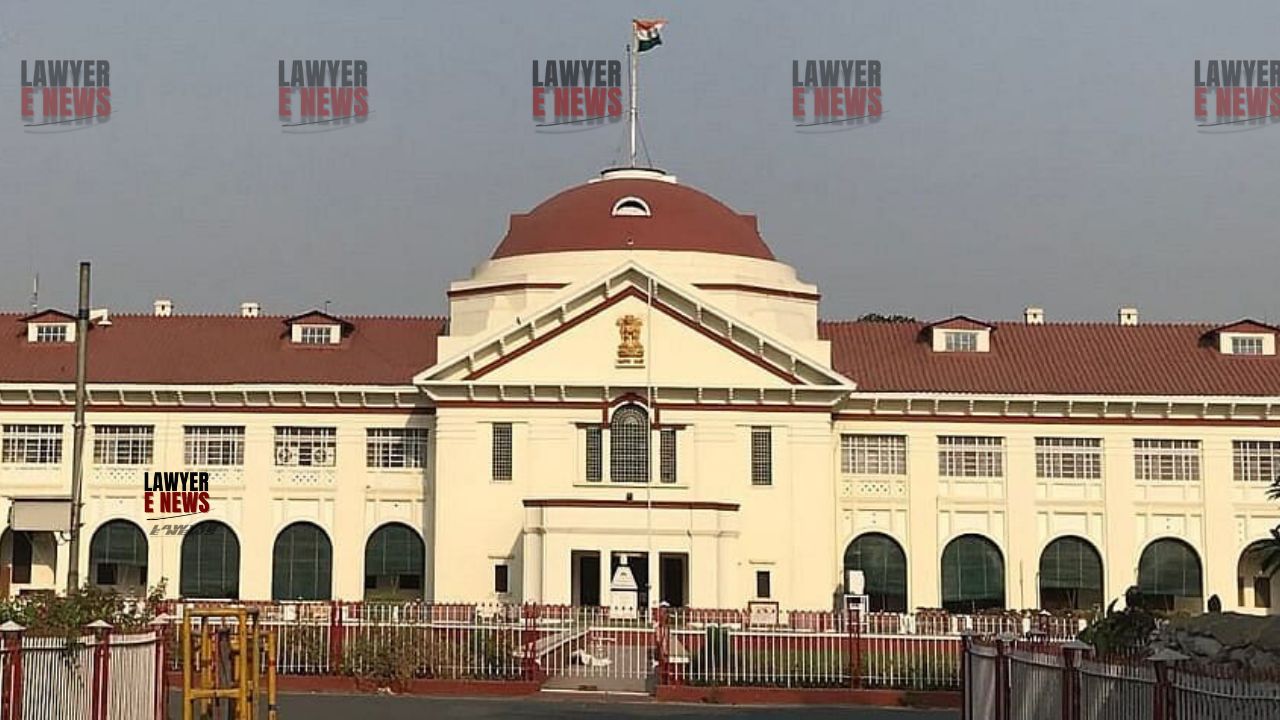
"Status of a Dissolved Marriage Is Non-Est—Declaration of Being 'Unmarried' May Not Per Se Be Fraud If Past Divorce Is Publicly Known" - In a decisive verdict dated 4th September 2025, the Patna High Court, through Justice Bibek Chaudhuri, quashed a maintenance order passed under Section 125 CrPC that had awarded ₹20,000 per month to a second wife, citing suppression of material facts, improper judicial assessment of income, and failure to comply with the Supreme Court’s binding guidelines in Rajnish v. Neha.
In the case titled Ravi Prakash Saxena v. Priyanka Rani, the Court ruled that “the impugned order suffers from impropriety and illegality in overlooking suppression of material facts, income of the parties, their source of income, their assets and liabilities and other similar factors.” The judgment emphatically reinstates the mandatory nature of disclosure affidavits in maintenance claims.
“No Set Formula—But Affidavit of Assets and Liabilities Is Not Optional in Maintenance Proceedings”
The original order under challenge was passed by the Family Court, Saran at Chapra on 24th May 2024, directing the petitioner-husband to pay ₹20,000 per month to the respondent-wife. The wife claimed she had suffered cruelty and harassment, including forced abortion, after transferring ₹40 lakhs of her earlier alimony (from a prior marriage) to the petitioner. She had also lodged a 498A and Dowry Prohibition Act complaint against him.
The High Court, however, faulted the Family Court for mechanically accepting her claim without applying the principles laid down by the Supreme Court in Rajnish v. Neha [(2021) 2 SCC 324], observing:
“Maintenance claims require disclosure affidavits of assets and liabilities, balanced assessment of needs and quantum based on factors like parties’ status, reasonable need and income... The impugned order lacks such transparency.”
The Court directed both parties to file detailed affidavits and ordered the Family Court to decide the case afresh after evaluating the actual financial capacity of both parties.
“Fraud Avoids All Judicial Acts—Suppression of Prior Alimony Receipt Is a Serious Breach of Equity”
The Court took strong note of the fact that the respondent-wife did not disclose her prior receipt of ₹40 lakhs as alimony from her first marriage in the affidavit filed during her second marriage. Though she claimed that the amount was handed over to the petitioner, the trial court found no proof of such transfer.
Justice Chaudhuri invoked the landmark ruling in S.P. Chengalvaraya Naidu v. Jagannath [(1994) 1 SCC 1], stating:
“A litigant who withholds a vital document in order to gain advantage... would be guilty of playing fraud on the court as well as the opposite party.”
Additionally, the Court cited Jasbir Kaur Sehgal v. District Judge, Dehradun [(1997) 7 SCC 7], noting that maintenance must balance the standard of living of the wife with the husband's earning capacity. It was held: “The amount of maintenance fixed for the wife should be such as she can live in reasonable comfort... but should not ignore the husband's reasonable expenses for his own maintenance and legal obligations.”
“Marriage Declared as 'Unmarried' in Affidavit Is Not Per Se Fraud if Divorce Was Publicly Declared on Matrimonial Platform”
The husband alleged that the wife had committed fraud by swearing an affidavit claiming to be unmarried, despite being a divorcee. The Court, however, dismissed this contention, accepting the respondent’s explanation that she had clearly disclosed her divorce status on the matrimonial platform, which was the source of their alliance.
Justice Chaudhuri clarified: “When a marriage is dissolved by a decree of divorce, the status of the dissolved marriage becomes non-est. The opposite party did not commit any illegality, far from commission of fraud.”
“Desertion Without Sufficient Cause and Lack of Contemporaneous Evidence Undermines 125 CrPC Claim”
Another critical issue raised by the petitioner was that the wife deserted him without reasonable cause, and there was a 16-month delay in filing the 498A complaint, which allegedly arose from harassment in January 2021 but was registered only in February 2022.
Referring to Deb Narayan Halder v. Anushree Halder [(2003) 11 SCC 303], the Court stressed that “evidence of contemporaneous nature plays an important role... such evidence is usually found in letters, messages or documents”, which were absent in this case.
Further, the wife's advertisement for remarriage while the petitioner was still in custody on her complaint was considered indicative of her lack of intent to resume cohabitation.
“Highly Qualified Wife Not Entitled to Passive Dependency—She Is Capable of Maintaining Herself”
Justice Chaudhuri also dealt with the petitioner’s argument that the wife was an M.Sc. (Botany) degree holder with a Diploma in Japanese Language, and could easily earn her livelihood. The petitioner even argued that she could work as a travel guide for Japanese tourists in the Bihar Buddha Circuit.
The Court acknowledged this line of argument, holding:
“The word ‘unable to maintain herself’ postulates incapacity and lack of any suitable provision to maintain oneself. Even if a lady is capable of earning considering her academic qualification, she cannot be held as a wife unable to maintain herself.”
The Court cited the Punjab & Haryana High Court ruling in Jaspreet Singh v. Gurleen Kaur [2020 SCC OnLine P&H 55], which emphasised the necessity of income affidavits to prevent “hide and seek” tactics in maintenance cases.
Maintenance Set Aside, Parties Directed to File Fresh Affidavits, Family Court to Decide Anew
Justice Bibek Chaudhuri concluded that the Family Court failed in its statutory duty to assess maintenance based on verifiable disclosures and judicial reasoning, as mandated by the Supreme Court. As a result, the maintenance order dated 24th May 2024 was quashed.
“This Court is not in a position to affirm the impugned order and, accordingly, the impugned order is quashed and set aside.”
The High Court remanded the matter to the Family Court with a direction:
“The learned Principal Judge shall direct both parties to file their affidavits of assets and liabilities... and dispose of the proceeding under Section 125 CrPC afresh within four weeks thereafter.”
Date of Decision: 4th September 2025