-
by sayum
27 August 2026 3:32 PM







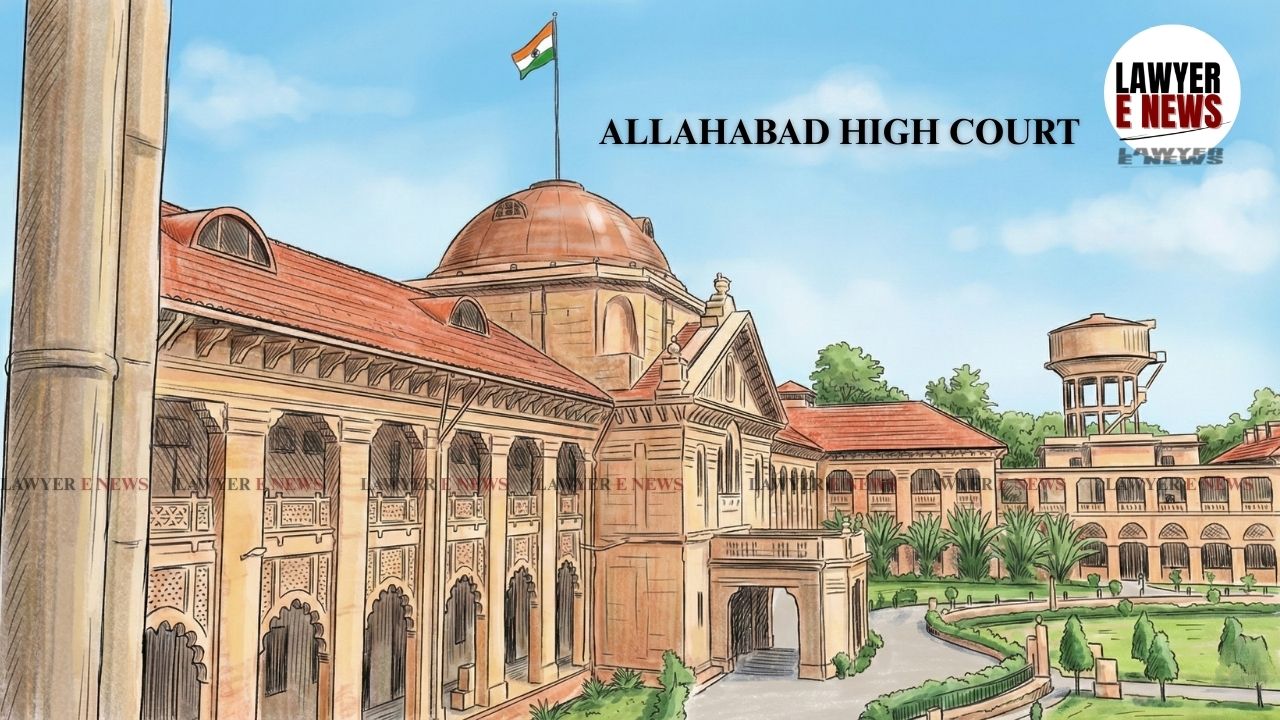
"Obligation to engross a final decree for partition on non-judicial stamp paper is a post-adjudicatory fiscal incident arising from the transformation of a declaratory decree into an executable instrument of partition and bears no juristic or fiscal correlation with the levy or sufficiency of court fees at any stage of the suit or its execution," Allahabad High Court, in a significant judgment, has clarified the legal position regarding the engrossment of partition decrees on non-judicial stamp papers and the associated limitation periods.
A bench of Justice Kshitij Shailendra held that while the limitation for executing a partition decree begins from the date it is passed and is not suspended until engrossment, the right to apply for such engrossment remains alive as long as the 12-year limitation period for execution under Article 136 of the Limitation Act, 1963, has not expired.
The matter originated from a 1972 partition suit (O.S. No. 68 of 1972) where a final decree was drawn in 1984. Decades later, following the conclusion of appellate proceedings before the High Court and Supreme Court in 2016, certain respondents moved an application in 2019 for the engrossment of the 1984 decree on non-judicial stamp papers. The petitioner challenged this application before the Additional District Judge, Mainpuri, arguing it was barred by limitation and that the decree-holders had failed to pay requisite court fees.
The primary questions before the court were whether the three-year limitation under Article 137 of the Limitation Act applies to applications for engrossment of a decree. The court was also called upon to determine the conceptual distinction between stamp duty and court fees in partition suits and whether the non-payment of court fees by certain defendants at the trial stage precludes them from seeking engrossment of the final decree.
Conceptual Distinction Between Stamp Duty and Court Fees
The Court emphasized that the requirement to engross a decree on non-judicial stamp paper under the Indian Stamp Act, 1899, must not be conflated with the obligation to pay court fees under the Court Fees Act, 1870. Justice Shailendra observed that these two concepts operate in distinct legal domains and serve different fiscal purposes. Stamp duty is a tax on the instrument itself to ensure its admissibility in evidence, whereas court fees are process-oriented levies required for the institution of legal proceedings.
"Stamp Duty Is A Tax On Instruments; Court Fee Is A Process-Oriented Levy"
The bench further noted that there is no statutory interdependence between the adequacy of stamp duty on an instrument and the liability to pay court fees. In partition suits, while a final decree embodies the actual division and acts as an "instrument of partition" requiring stamp duty, the court fees relate to the adjudication of shares. The Court held that even if a party has not yet paid the deficient court fees, they are not barred from seeking the engrossment of the decree on stamp papers.
"Right To Apply For Engrossment Continues During Period Of Limitation For Execution"
On the pivotal issue of limitation, the Court addressed the applicability of Articles 136 and 137 of the Limitation Act. The petitioner argued that under Article 137, an application for engrossment must be filed within three years. However, the Court clarified that since the enforceability of a partition decree is not suspended by the lack of engrossment, the 12-year execution period under Article 136 begins immediately upon the passing of the decree.
"Engrossment Relates Back To The Date Of The Decree"
Relying on the Supreme Court's precedent in Chiranji Lal v. Hari Das, the Court held that the date of furnishing stamp paper is an uncertain act within the control of the party. The High Court ruled that as long as the 12-year period for execution is subsisting, the "right to apply" for engrossment remains alive. Even if an application is moved at the eleventh hour of the 12-year period, it would be within time, as the decree must be duly stamped to be admissible in evidence during execution proceedings under Section 35 of the Stamp Act.
"Right To Apply Accrues And Remains Alive During Subsistence Of Execution Period"
The Court went as far as to state that even if the limitation for execution expires, an application for engrossment could still be allowed for the limited purpose of making the decree admissible in evidence for other purposes. However, in the present case, since the application was moved within the period of limitation following the conclusion of the Special Leave Petition, it was held to be maintainable and well within time.
The High Court concluded that the shares of the respondents were sufficiently declared in the final decree via the Commissioner's report. Consequently, their attempt to get the decree engrossed did not suffer from any legal bar. The petition was dismissed, upholding the order of the trial court and affirming the respondents' right to proceed with the engrossment of the partition decree.
Date of Decision: May 07, 2026