-
by sayum
23 August 2026 2:56 PM







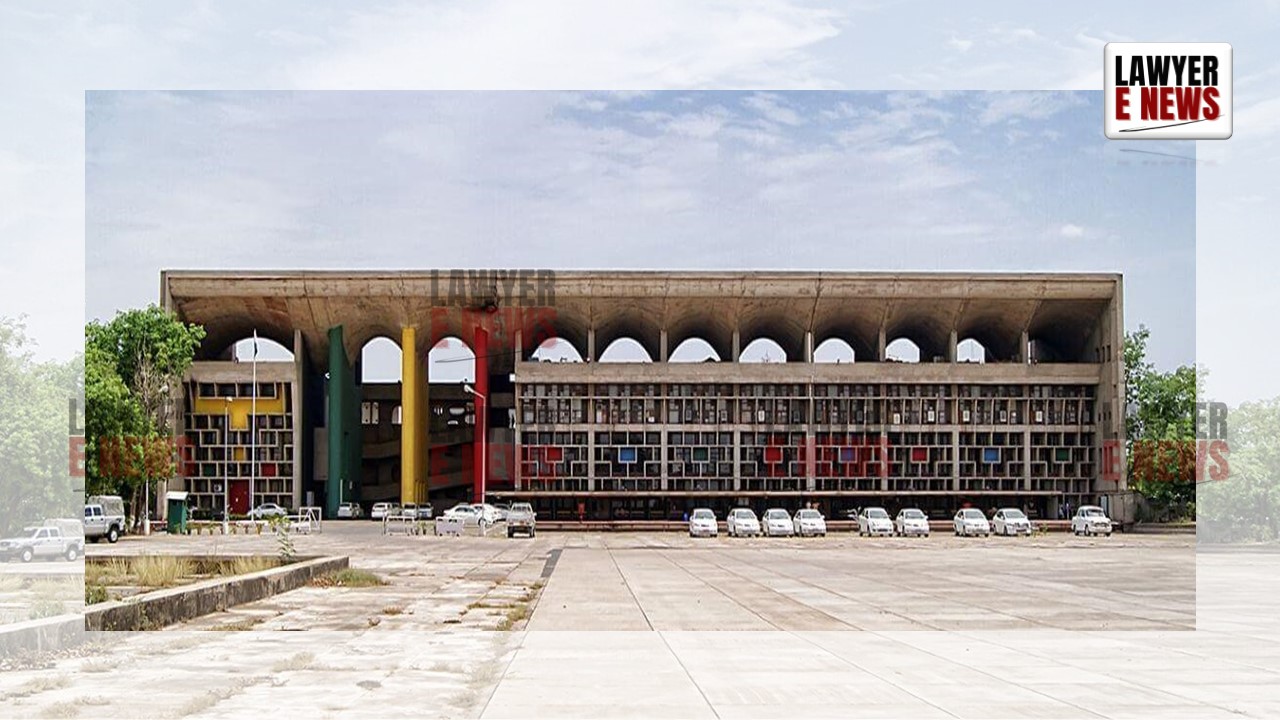
“The residuary period of three years cannot be rendered illusory by prolonged and unexplained inaction... Article 137 governs all applications presented before civil courts unless expressly excluded.”— In a seminal ruling, the Punjab and Haryana High Court, comprising Justice Deepak Gupta, has dismissed a revision petition seeking to set aside ex parte proceedings after a delay of over five years, firmly establishing that the limitation period under Article 137 of the Limitation Act applies to applications under Order IX Rule 7 of the Code of Civil Procedure (CPC).
The Court was seized of a Civil Revision petition filed by one Varinderjeet Singh, a defendant in a civil suit for permanent injunction. The petitioner had been proceeded against ex parte on January 10, 2020. More than five years later, on September 2, 2025, he moved an application under Order IX Rule 7 CPC to rejoin the proceedings, claiming he had only recently acquired knowledge of the suit.
The trial court dismissed this application, citing the gross delay and the petitioner's conduct. Challenging this dismissal, the petitioner argued before the High Court that the CPC prescribes no specific limitation for Order IX Rule 7 applications and that the service of summons was defective as it was effected upon his father, with whom he allegedly had strained relations.
“The provision does not confer an unfettered or vested right to reopen proceedings.”
Judicial Scrutiny: Service and Knowledge
Justice Gupta meticulously dissected the factual matrix, rejecting the petitioner's plea of ignorance. The Court noted that while the petitioner claimed the summons bore a minor error in his name ("Varinder Singh" instead of "Varinderjeet Singh"), the address and father's name were correct. Under Order V Rule 15 CPC, service upon an adult family member is valid. The process server had recorded that the father accepted the summons after conversing with the petitioner.
More damningly, the Court unearthed a compromise deed signed by the petitioner before the police authorities prior to the ex parte order. In this document, the petitioner had explicitly acknowledged the pending civil suit and the next date of hearing (10.01.2020). The Court termed the plea of lack of knowledge as an "afterthought and a clear attempt to mislead the Court."
The Legal Principle: Applicability of Article 137
The core legal takeaway from the judgment is the clarification regarding the limitation period. The petitioner relied on the judgment in Ghanshyam Dass v. Kamal Kishore to argue that no limitation applies to Order IX Rule 7.
Distinguishing the case and relying on the Constitution Bench decision in Kerala State Electricity Board v. T.P. Kunhaliumma (AIR 1977 SC 282), Justice Gupta held that where the CPC is silent, the residuary provision—Article 137 of the Limitation Act, 1963—steps in. This Article prescribes a three-year limitation period for "any other application" for which no period is specified.
“Gross and unexplained delay is destructive of any claim to equitable relief.”
Equitable Relief vs. Procedural Discipline
The Court emphasized that relief under Order IX Rule 7 is discretionary and equitable, unlike Order IX Rule 13 (setting aside ex parte decree). The applicant must show "good cause." The Court observed that allowing an application after five years, when the suit had reached the stage of defendant's evidence, would unsettle concluded proceedings and reward deliberate inaction.
The High Court dismissed the revision petition, upholding the trial court's order. However, balancing procedural discipline with natural justice, the Court permitted the petitioner to participate in future proceedings. This limited participation comes with a caveat: the petitioner cannot reopen concluded stages, meaning he is barred from filing a written statement or leading evidence on issues already closed.
Date of Decision: 09/01/2026