-
by sayum
24 August 2026 3:22 PM







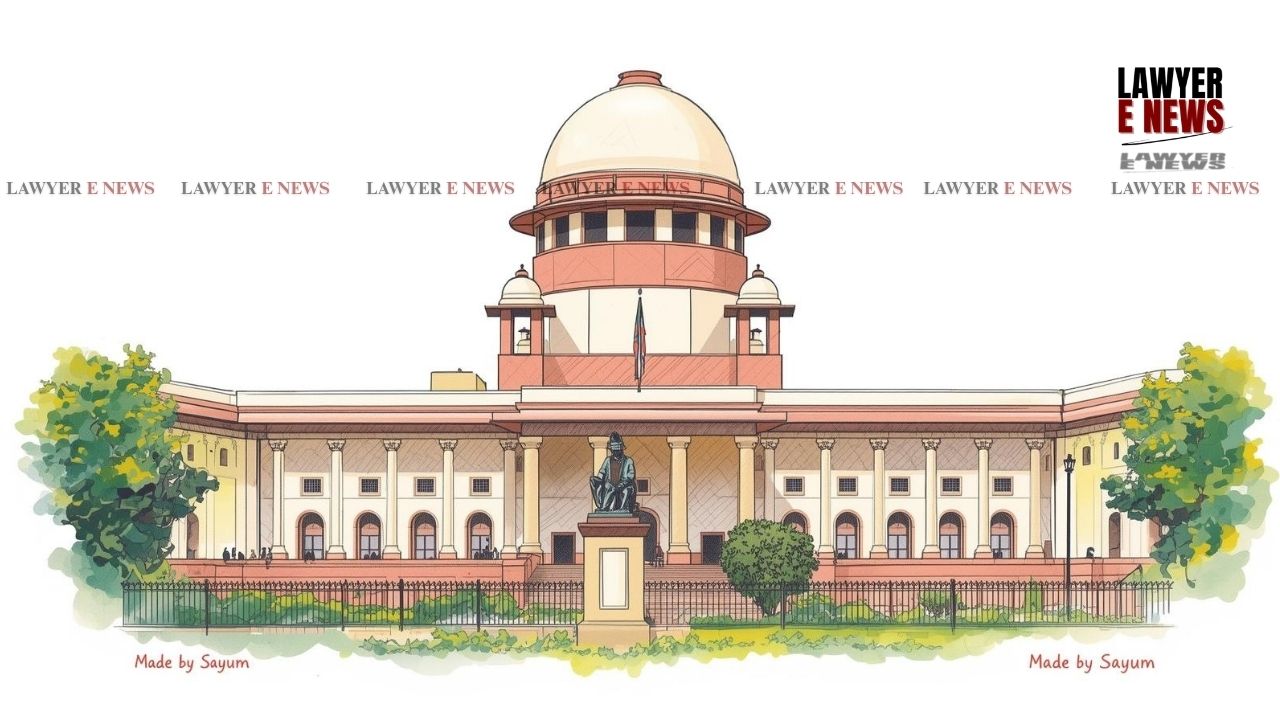
“Golden Hour Relief Must Not Be a Mere Idea – It Must Be a Functioning Reality,” In a pivotal moment for road safety jurisprudence, the Supreme Court of India, on 20 November 2025, took a decisive step to ensure cashless medical treatment for victims of road accidents, observing that the “golden hour” must not be lost due to delays in financial approvals or bureaucratic hurdles. While hearing S. Rajaseekaran v. Union of India & Ors., Writ Petition (Civil) No. 295 of 2012, a bench comprising Justice J.B. Pardiwala and Justice K.V. Viswanathan underscored the urgent need for a nationwide scheme under Section 162(1) of the Motor Vehicles Act, 1988, which goes beyond just immediate emergency care to also include post-discharge treatment and reimbursements.
"We Want a Holistic Scheme That Covers Emergency, Hospitalization and Aftercare – And It Must Reach the Common Man"
At the heart of the proceedings was an interlocutory application seeking a series of directives to implement the statutory mandate under Section 162(1), which empowers the Central Government to create a scheme for cashless treatment of victims of road accidents during the golden hour. The Court, while taking note of the previous directions for implementing Section 162(2), clarified that “Section 162(1) is an independent provision and must be invoked to ensure comprehensive treatment facilities without delay or financial burden”.
The Bench stated:
“We are of the view that all the relevant aspects highlighted in the I.A.s, more particularly the reliefs prayed for, should be looked into by the Hon’ble Justice A.M. Sapre Committee constituted by this Court.”
The reliefs placed before the Court included not only cashless treatment during the golden hour, but also reimbursement for post-hospitalisation expenses within two weeks, integration with Ayushman Bharat PM-JAY, and nationwide awareness campaigns.
The Bench recognized that despite the statutory framework, implementation remains fragmented, and directed that the Justice Sapre Committee deliberate on all facets, including funding mechanisms, hospital empanelment, and public access to information.
“We request the Committee to deliberate on all these reliefs, which have been prayed for, and forward its suggestions. The suggestions that may be offered by the Committee would definitely come handy to us before we proceed to issue final directions.”
The Court also asked the Registry to immediately forward the order to the Justice A.M. Sapre Committee, emphasizing stakeholder participation:
“We request Hon’ble Justice A.M. Sapre to hear all the stakeholders so that a holistic view of all the relevant aspects is taken in larger public interest.”
The deadline of six weeks has been fixed for the Committee to submit its report.
“Insurance Cannot Be an Excuse to Delay Treatment – Medical Aid Must Be Instantaneous, the Paperwork Can Follow”
Addressing the Insurance Regulatory and Development Authority of India (IRDAI), the application also demanded strict enforcement across all general insurance providers, pointing to e-DAR data that shows over 60% of accident cases involve insured vehicles. The applicant pressed for uninterrupted financial support to prevent victims from falling into debt traps post-treatment.
In this regard, the Court has left the door open for more granular directions once the Sapre Committee files its report, hinting at the possibility of statutory guidelines for insurance firms, empanelled hospitals, and third-party administrators (TPAs).
Notably, the scheme under Section 162(1) is envisioned to operate alongside and independently of existing government health schemes like Ayushman Bharat PM-JAY, ensuring that victims outside the poverty line are not excluded from access to emergency care.
“The Committee shall also consider awareness mechanisms to make the scheme accessible to all – through both print and electronic media – so that victims and their families are not left in the dark at the time of crisis,” the Court noted.
The Court also observed that the lack of transparency and public reporting on such schemes hinders accountability:
“Information regarding beneficiaries, cost incurred, and implementation across States must be regularly published. Transparency is critical to public trust.”
With these observations, the Supreme Court has laid the groundwork for what could become one of the most ambitious healthcare responses to road trauma in the country. If implemented in full spirit, the cashless treatment scheme under Section 162(1) may transform India’s emergency medical landscape by removing financial uncertainty from the critical moments following an accident.
The matter is now scheduled for further consideration on 22 January 2026, after the Justice A.M. Sapre Committee submits its comprehensive recommendations.
Date of Decision: 20 November 2025