Auction Purchaser Has No Vested Right Without Sale Confirmation: Calcutta HC Upholds Borrower’s Redemption Right Under Pre-Amendment SARFAESI Law Mere Breach of Promise to Marry Doesn’t Amount to Rape: Delhi High Court Acquits Man in False Rape Case Father Is the Natural Guardian After Mother’s Death, Mere Technicalities Cannot Override Welfare of Child: Orissa High Court Restores Custody to Biological Father Assets of Wife and Father-in-Law Can Be Considered in Disproportionate Assets Case Against Public Servant: Kerala High Court Refuses Discharge Identification Without TIP, Electronic Records Without 65B Certificate – Conviction Set Aside: Patna High Court Nothing Inflicts A Deeper Wound On Our Constitutional Culture Than A State Official Running Berserk Regardless Of Human Rights: Jharkhand High Court Orders ₹1.5 Lakh Interim Compensation Dishonour Due to ‘Account Blocked’ Not Attributable to Drawer—No Offence Under Section 138 NI Act: Delhi High Court Quashes Criminal Proceedings Presumption Under Section 139 NI Act Cannot Be Rebutted By Mere Assertions: Delhi High Court Affirms Conviction In 32-Year-Old Cheque Bounce Case Signature Alone Doesn’t Prove Debt: Kerala High Court Upholds Acquittal in Cheque Bounce Case, Rejects Blanket Presumption Under Section 139 NI Act Justice Cannot Be Left to Guesswork: Supreme Court Mandates Structured Judgments in Criminal Trials Across India Truth Must Be Proven Beyond Doubt—Not Built On Flawed FIRs, Tainted Witnesses And Investigative Gaps: Supreme Court Acquits Man in POCSO Rape-Murder Case Once parties agree and reconciliation is impossible, a fault-based decree is unnecessary: Supreme Court Sets Aside Divorce on Desertion No Escape from Statutory Ceiling: Exclusive Expenditure by Foreign Head Offices Also Attracts Section 44C Income Tax: Supreme Court Loss Of A Child Cannot Be Calculated In Rupees, But Law Must At Least Offer Dignity In Compensation: Supreme Court Enhances Compensation Sessions Court Cannot Direct Life Imprisonment Till Natural Life Without Remission: Supreme Court Reasserts Limits on Sentencing Powers of Subordinate Courts ‘Continuously Means Without a Single Break’: Supreme Court Bars Expired-and-Renewed Licences From Police Driver Recruitment Chief Justice’s Power Under Section 51(3) Is Independent and Continuing: Supreme Court Upholds Kolhapur Bench Notification Last Seen Evidence Alone Cannot Sustain Conviction: Supreme Court Acquits Accused in Murder Case No Cultivation on Forest Land Without Central Clearance: Supreme Court Cancels Lease Over 134 Acres, Orders Reforestation Appointment from Rank List Must Respect Communal Rotation: SC Declines Claim of SC Waitlisted Candidate After Resignation of Appointee Supreme Court Dissolves 20-Year Estranged Marriage Under Article 142 Despite Wife’s Objection Murder Inside Temple Cannot Be Treated Lightly: Supreme Court Cancels Bail of Father-Son Convicts in Group Killing Case No Notice, No Blacklist: Calcutta High Court Quashes Debarment Over Breach of Natural Justice Prosecution Must Elevate Its Case From Realm Of ‘May Be True’ To Plane Of ‘Must Be True: Orissa High Court Strict Compliance Is the Rule, Not Exception: Himachal Pradesh High Court Dismisses Tenant's Plea for Late Deposit of Rent Arrears When Accused Neither Denies Signature Nor Rebuts Presumption, Conviction Must Follow Under Section 138 NI Act: Karnataka High Court A Guardian Who Violates, Forfeits Mercy: Kerala High Court Upholds Natural Life Sentence in Stepfather–POCSO Rape Case Married and Earning Sons Are Legal Representatives Entitled to Compensation: Punjab & Haryana High Court Enhances Motor Accident Award to ₹14.81 Lakh Driver Must Stop, Render Aid & Report Accident – Flight from Scene Is an Offence: Madras High Court Convicts Hit-And-Run Accused Under MV Act Delay May Shut the Door, But Justice Cannot Be Locked Out: Gauhati High Court Admits Union of India’s Arbitration Appeal Despite Time-Bar Under Section 30 PC Act | Mere Recovery of Money Is Not Enough—Demand and Acceptance Must Be Proved Beyond Reasonable Doubt: Delhi High Court Allahabad High Court Slams Bar Council of U.P. for Ex Parte 10-Year Suspension of Advocate

Landlord Is Best Judge of His Business Needs; Pension Not a Substitute for Property Rights — Himachal Pradesh High Court Affirms Eviction for Bonafide Requirement

08 September 2025 8:37 PM

By: sayum


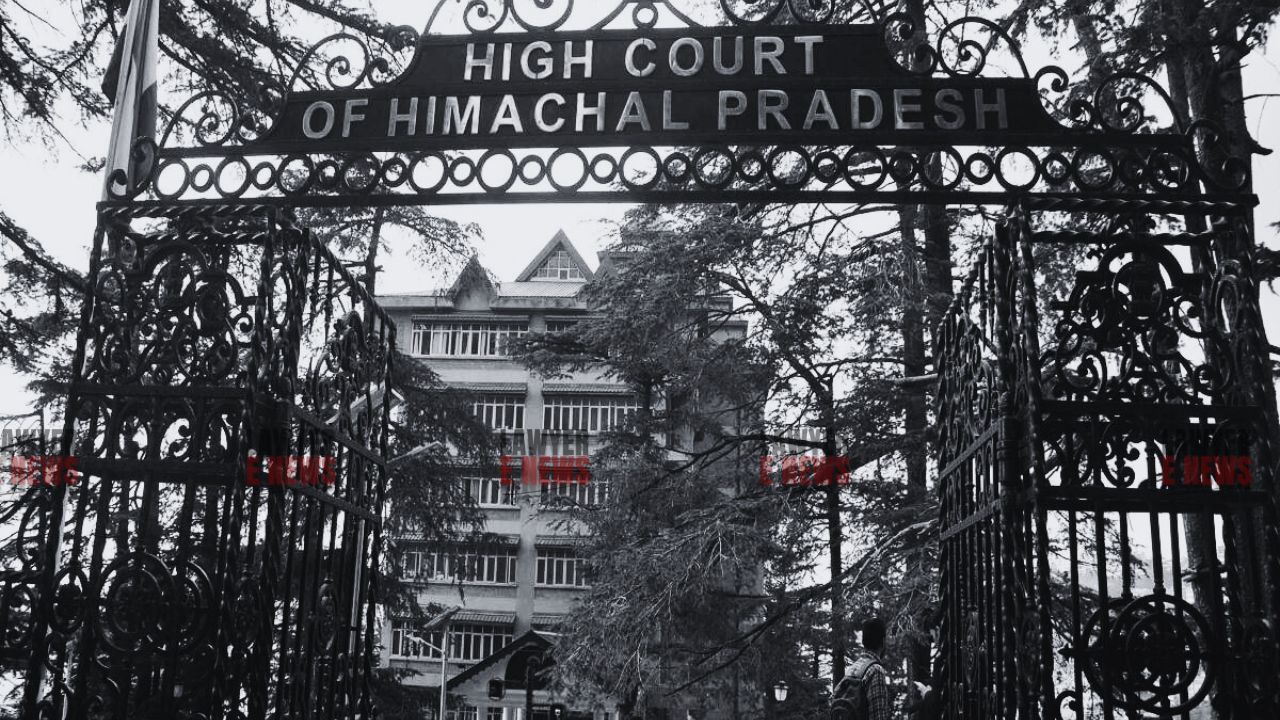
“Revisional Court Cannot Re-Appreciate Facts Like an Appellate Authority” — In a judgment Himachal Pradesh High Court upheld a landlord’s right to reclaim tenanted premises to expand his business and settle his son, reiterating that the landlord is the best judge of his needs and courts cannot interfere with his business choices under the garb of tenant protection.

Justice Vivek Singh Thakur dismissed the revision petition filed by the tenant, affirming concurrent findings of the Rent Controller and the Appellate Authority that recognised the bonafide requirement of the landlord under Section 14(3)(b)(i) of the Himachal Pradesh Urban Rent Control Act, 1987.

“A tenant cannot dictate to the landlord how to expand his business or manage his property” — the Court observed while holding that the landlord’s right to property includes the right to choose the mode, manner, and place of business expansion.

The Court categorically rejected the tenant's repeated contention that the landlord was financially secure due to pension, stating, “Income of pension is not a perpetual income and after death of landlord, his family members including his younger son shall not be entitled for any pension.”

The landlord had filed the eviction petition in 2012 claiming bonafide need to expand his cosmetics and gift shop business and to settle his younger son, who was then studying and acting as the only caretaker of the ailing parents.

“The petitioner has waited over a decade — his son was 19 when the petition was filed and is now over 30 — yet the landlord is still awaiting possession to settle his son in business,” the Court noted, while demonstrating the prejudice suffered by landlords due to protracted litigation.

The tenant had alleged that the landlord was harassing him, even claiming that a hole was dug in the lentil of the shop to force him out, and accused the landlord of suppressing facts regarding other available shops. However, the Court held these allegations to be immaterial and unsupported.

“Bonafide need must be assessed on the landlord’s terms, not tenant’s perception” — the Court reinforced, while rejecting the tenant’s claim that alternate premises were available with the landlord.

It was observed that the premises in question were adjacent to the landlord's existing small shop, and thus “most suitable” for expanding business to accommodate his younger son. The Court noted that the tenant failed to prove that any other such “similar” shop in the vicinity had been vacated or let out by the landlord recently.

The tenant also sought protection under the proviso to Section 14(3)(a)(i) of the Rent Act, alleging that the landlord had rented out another premises within five years prior to the eviction petition. But the Court rejected this plea outright, stating, “It is settled that pleadings without evidence as well as evidence without pleading cannot be used by a party for its advantage.”

Reiterating the limits of revisional jurisdiction, the Court held: “The revisional power of the High Court cannot be exercised as an appellate power to reassess or re-appreciate evidence for coming to a different finding on facts.”

Referring to the Constitution Bench judgment in Hindustan Petroleum Corporation Ltd. v. Dilbahar Singh [(2014) 9 SCC 78], Justice Thakur observed:

“Revision does not lie under Section 24(5) to bring the orders of the Trial Court or Appellate Authority for re-hearing of the issues raised in the original proceedings.”

The Court emphasized that revisional powers are confined to testing legality, regularity, and propriety of the findings and not intended to replace factual determinations of the subordinate authorities.

“A finding of fact recorded by Court below, if perverse, or based on no evidence, or grossly erroneous such that it results in miscarriage of justice, may be interfered with — but not otherwise,” the Court clarified.

In conclusion, the High Court dismissed the tenant’s revision and directed him to vacate the shop by 31st October 2025, observing that no case for interference under revisional jurisdiction was made out.

“I am of the considered opinion that no case is made out for interference by exercising revisional jurisdiction to reverse the impugned order and judgment.”

Date of Decision: 2nd September 2025

 

Latest Legal News