-
by kapil
11 October 2026 7:57 AM







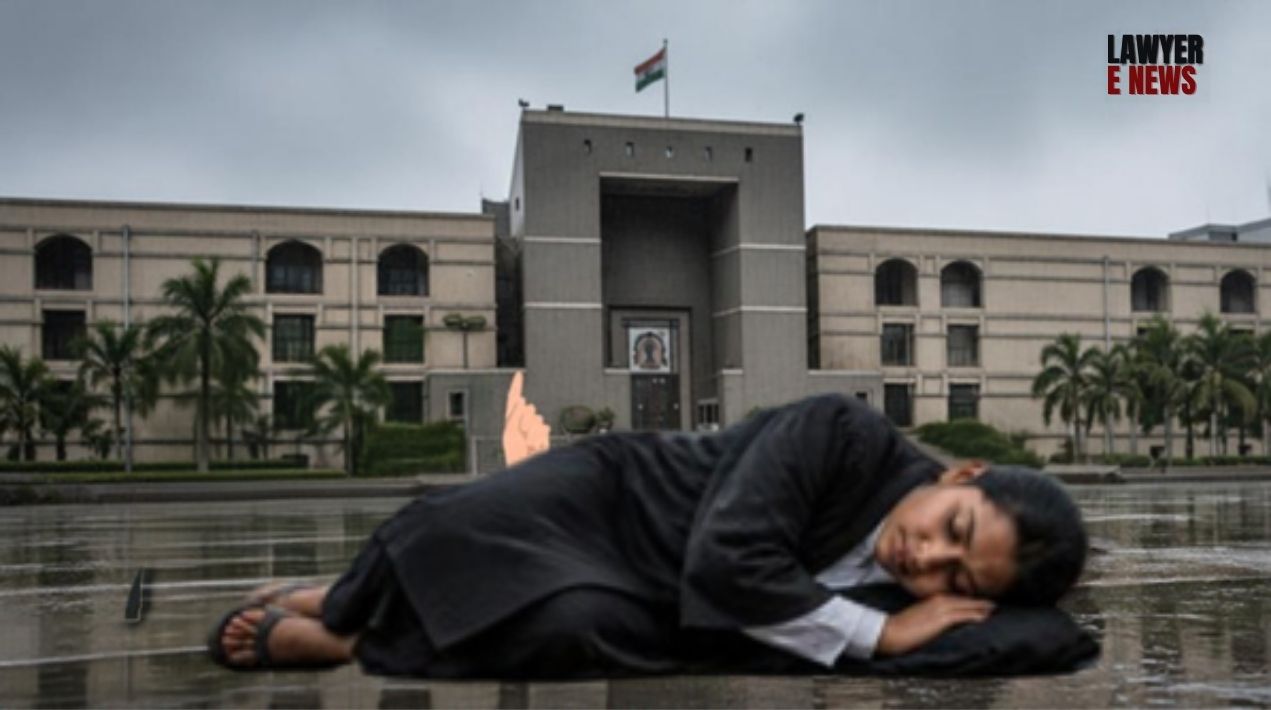
"In our view, such a conduct, which is not in dispute, renders a Judicial Officer incapable of holding a judicial office and she cannot be permitted to continue in service." Gujarat High Court, in a judgment dated October 9, 2026, upheld the dismissal of a Senior Civil Judge who engaged in "obnoxious and despicable" conduct by threatening to sleep on the pavement to protest against the non-allotment of official housing.
A division bench comprising Justice N.S. Sanjay Gowda and Justice J.L. Odedra observed that such actions not only undermine the dignity of the institution but are fundamentally inconsistent with the responsibilities inherent in holding a judicial office.
Judicial conduct and institutional dignity
The court underscored that the judiciary operates on established protocols and that a judicial officer is expected to maintain decorum even in the face of administrative grievances. By demanding that the Principal District Judge requisition private accommodation through the Collector and threatening public protest, the officer displayed a complete lack of judicial temperament. The bench noted that such behaviour creates unnecessary controversy and portrays the entire institution in a poor light.
Dismissal upheld for grave misconduct
The petitioner was dismissed from service following multiple departmental inquiries into her conduct, which included insubordination, the use of intemperate language against the Chief Justice, and improper demands for judicial quarters. The court highlighted that a judicial officer is entitled to House Rent Allowance (HRA) when official quarters are unavailable and that there is no rule mandating the provision of a government quarter as an absolute right.
Conduct unbecoming of a judicial officer
The court further remarked that addressing letters to the Chief Justice and other High Court judges demanding the transfer of a sitting High Court Judge constitutes the "highest form of indiscipline and also insubordination." The bench firmly rejected the petitioner’s claims that the inquiries violated the principles of natural justice, noting that the officer had been granted ample opportunities to participate and defend herself, yet she consistently chose to obstruct the proceedings with repetitive applications and refusals to cooperate.
Institutional decorum as a non-negotiable requirement
The bench emphasized that the officer's actions were not merely administrative lapses but represented a failure of character required for judicial service. The court reasoned that the nature of the charges, which were largely documented by the officer’s own communications, left no room for leniency. The refusal to engage with the inquiry process despite having legal assistance made available to her further justified the imposition of the major penalty of dismissal.
No scope for judicial interference
Concluding the matter, the court found that the disciplinary authorities had followed due process and that the findings were based on substantial oral, documentary, and video-graphic evidence. Given the gravity of the misconduct, the court found no valid ground to interfere with the order of dismissal. The writ petition was consequently dismissed, reinforcing the high standard of conduct expected of those occupying judicial office.
Date of Decision: 09 October 2026