-
by sayum
27 August 2026 7:40 AM







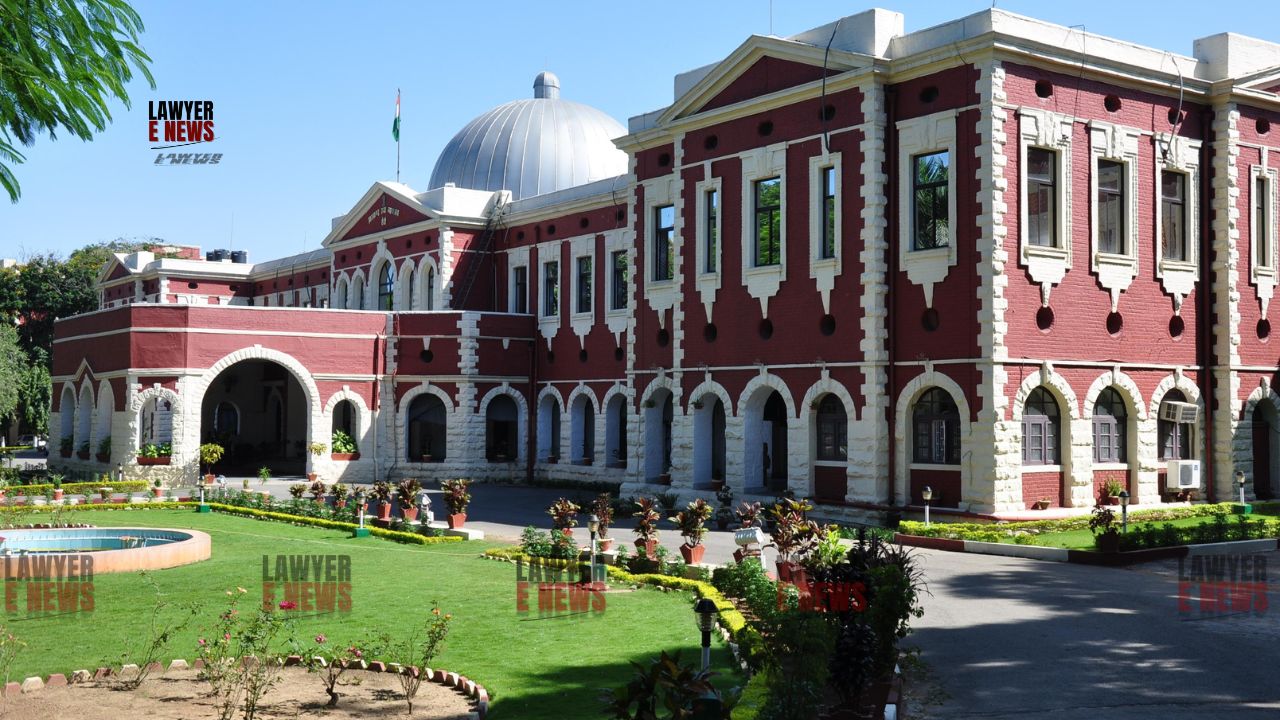
"The Tribunal has no jurisdiction to sit in judgment over the decision of the employer as an appellate body. The interference with the decision of the employer will be justified only when the findings arrived at in the enquiry are perverse or the management is guilty of victimisation, unfair labour practice or mala fide." Jharkhand High Court, in a significant ruling dated 25 August 2026, held that an Industrial Tribunal exceeds its jurisdiction under Section 11A of the Industrial Disputes Act, 1947, when it re-appreciates evidence to substitute its own findings for those of a fair and proper domestic enquiry.
A bench of Hon'ble Mrs. Justice Anubha Rawat Choudhary observed that once a domestic enquiry is deemed fair, the Tribunal cannot act as an appellate court, stating, "The findings of the domestic enquiry have to be upheld even if it is found to be based on some legally acceptable evidence."
The case involved a workman, Dharam Singh, who was dismissed by TISCO management in 1994 after being found guilty of threatening an Assistant Colliery Manager with a revolver at the pit top. While the Industrial Tribunal had initially held the domestic enquiry to be fair, it subsequently overturned the dismissal in 2005, citing a lack of evidence and failure to prove charges "beyond reasonable doubt," and ordered reinstatement with 25% back wages.
The primary legal issue before the High Court was whether the Industrial Tribunal, while exercising powers under Section 11A of the Industrial Disputes Act, could legally re-appreciate evidence and demand a standard of proof akin to criminal proceedings for a domestic misconduct enquiry. The Court was also called upon to determine if the Tribunal acted within its jurisdiction in reviewing its own order regarding the fairness of the enquiry and whether the punishment of dismissal was shockingly disproportionate.
Tribunal Cannot Act As An Appellate Body
The High Court emphasized that the scope of Section 11A is not unlimited. It clarified that once a domestic enquiry is held to be fair, the Tribunal lacks the authority to sit in appeal over managerial functions. The Court noted that the Tribunal wrongly treated the domestic proceedings as a criminal trial, erroneously applying the "beyond reasonable doubt" standard instead of the "preponderance of probabilities" test applicable to disciplinary matters.
"The Industrial Tribunal has re-appreciated the materials on record and come to a different finding. Such a course of action is not available to the Tribunal in absence of any perversity in the findings of the domestic enquiry," the Court observed.
Misapplication Of Evidentiary Standards
The Court criticized the Tribunal for drawing adverse inferences from the management's failure to lodge an FIR or examine every potential witness, including independent persons present at the scene. It reiterated that strict rules of the Indian Evidence Act do not apply to domestic enquiries, and "hearsay evidence is admissible provided it has reasonable nexus and credibility."
"The findings in the domestic enquiry were neither perverse nor was there any material to suggest that the management was guilty of victimisation, unfair labour practice, or mala fide," the Court held.
Disciplinary Gravity and Punishment
On the issue of punishment, the High Court held that threatening a superior with a lethal weapon at the workplace is an extremely serious act of misconduct. It ruled that the punishment of dismissal was neither disproportionate nor shocking to the conscience of the Court. Consequently, the High Court allowed the writ petition, setting aside the Industrial Tribunal's award and upholding the dismissal of the workman.
The High Court also disposed of a pending interlocutory application regarding Section 17B wages, confirming that the management had duly paid the admissible subsistence allowance until the workman’s superannuation in 2018.
Date of Decision: 25 August 2026