-
by sayum
27 August 2026 6:51 AM







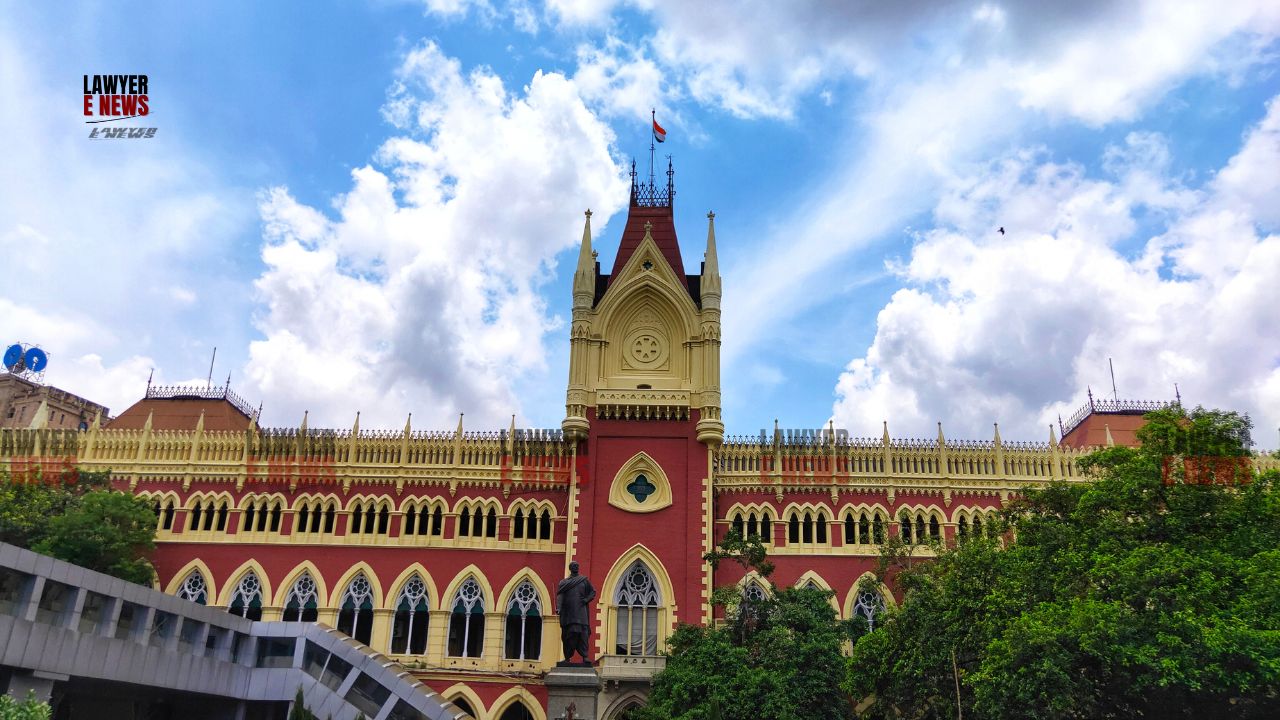
"The question of jurisdiction of the court to invoke Order 1 Rule 10 CPC to add a party who is not made a party in the suit by the plaintiff shall not arise unless a party proposed to be added has direct interest in the controversy involved in the suit." Calcutta High Court, in a significant ruling dated August 25, 2026, held that a third party claiming independent title to a property cannot be impleaded in a suit for specific performance of a contract of sale.
A bench of Justice Md. Shabbar Rashidi observed that allowing such an impleadment would fundamentally alter the nature of the suit by converting it from a contractual enforcement action into a title dispute, which is impermissible under the Code of Civil Procedure (CPC).
The petitioner, Panchanan Pal, filed a Civil Revision against an order of the 3rd Civil Judge (Senior Division), Midnapore, which had dismissed his application to be added as a defendant in a specific performance suit (Other Suit No. 10 of 2019). The petitioner contended that he had already filed an earlier suit (Other Suit No. 189 of 2018) seeking a declaration of his title over the same property and argued that the subsequent suit filed by the opposite party was a collusive effort to frustrate his claim.
The court was called upon to determine whether a stranger to an agreement of sale, who claims an independent title to the suit property, constitutes a "necessary" or "proper" party under Order 1 Rule 10(2) of the CPC. Furthermore, the court examined whether the trial court acted within its jurisdiction in rejecting the petitioner's plea to avoid widening the scope of the specific performance litigation.
Court's Observations and Judgment
The court emphasized that the primary scope of a suit for specific performance is restricted to the enforceability of the contract between the parties thereto. Referring to the Supreme Court's landmark decision in Kasturi vs. Iyyamperumal, the bench noted that a third party is neither a necessary nor a proper party in such proceedings because they are not privy to the contract.
Scope of Specific Performance Suits
The court underscored that the plaintiff is the dominus litis and cannot be forced to fight against parties they have not chosen, unless necessitated by the rule of law. By impleading a claimant of independent title, the very character of the suit shifts from determining the breach of a specific agreement to adjudicating upon the validity of competing titles, a process which would only lead to legal chaos and unnecessary delay.
The Distinction Between Necessary and Proper Parties
The bench elaborated on the distinction between a necessary party, in whose absence no effective decree can be passed, and a proper party, whose presence is conducive to a comprehensive resolution. The court held that the petitioner, by his own admission, is a stranger to the contract dated May 22, 2019. Consequently, his presence is not required to adjudicate whether the vendor failed to perform the contractual obligations owed to the plaintiff.
Court's Discretion Under Order 1 Rule 10
The court rejected the petitioner's reliance on J.N. Real Estate vs. Shailendra Pradhan, distinguishing the facts by noting that in that case, the original plaintiff had not opposed the impleadment. In the present matter, the plaintiff in the specific performance suit vehemently opposed the move, and the court maintained that judicial discretion must be exercised to prevent the enlargement of the suit's scope.
Concluding the matter, Justice Rashidi stated that the petitioner’s remedy lies in pursuing his independent suit for declaration of title rather than attempting to intervene in the contractual dispute of others. Finding no illegality or material irregularity in the trial court's order, the High Court affirmed the dismissal of the petitioner’s application and vacated any existing stay orders.
Date of Decision: 25 August 2026