-
by sayum
29 August 2026 9:28 AM







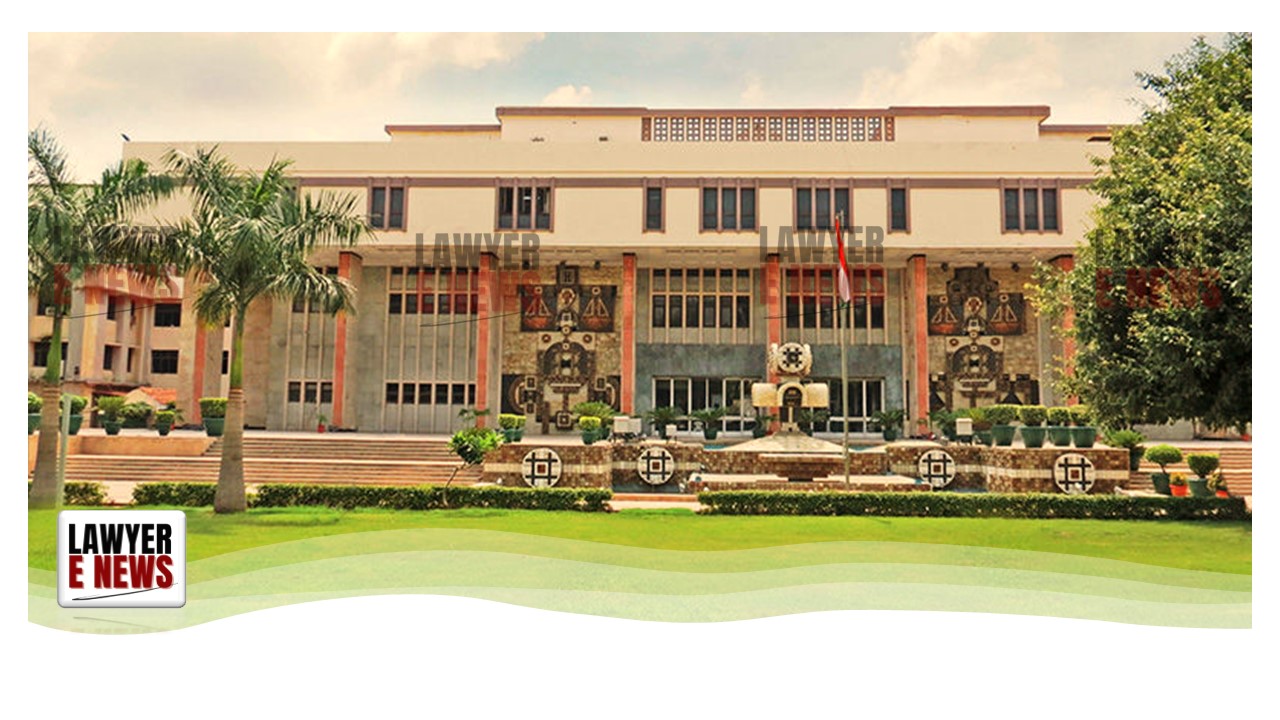
“A Disputed Family Settlement or Will Cannot Be Dislodged Without Evidence”— Today, In a ruling that underscores the limitations of procedural shortcuts in civil litigation, the Delhi High Court on 2nd September 2025, declined to carve out and decide certain legal issues as preliminary under Order XIV Rule 2(2) of the Civil Procedure Code, 1908. The Bench comprising Justice C. Hari Shankar and Justice Ajay Digpaul held that questions involving disputed facts—however legally framed—must go through the crucible of trial.
The case stems from a complex and deeply contested inheritance dispute between siblings over a prime residential property in Vasant Vihar, where the petitioner Pankaj Aggarwal urged the Court to decide three “legal” issues up front. These included whether the respondent Meenakshi Dubey had concealed her relinquishment of rights, whether the 1998 family settlement required registration, and whether a 2004 gift deed precluded further claims.
Rejecting the plea outright, the Court held: “The exercise of discretion under Order XIV Rule 2(2) CPC is to be exercised cautiously, not mechanically. It is limited only to issues of pure law—not those requiring the appreciation of disputed facts.”
"Alleged Concealment, Fraud or Registration Deficiency Must Be Proven Through Evidence"—Court Refuses to Split Trial
The dispute has a long factual history dating back to the death of K.K. Aggarwal in 1981. The property in question was partially conveyed to the children through a 2004 conveyance deed. Thereafter, Pankaj Aggarwal claimed exclusive title by relying on a 2008 and 2012 Gift Deed, and a 2010 Will allegedly executed by their mother Indira Aggarwal, who passed away in 2020. Meenakshi Dubey, the respondent, filed a partition suit seeking her rightful share and declared the 2010 Will null and void, asserting the presence of a prior oral family settlement in 1981, formalized in writing in 1998, and a gift deed executed by their mother in her favour in 2004.
Pankaj sought that three core issues be treated as legal and decided without trial:
The High Court rejected this attempt, stating that all these issues involved questions of intent, authenticity, voluntariness, and mental capacity—all of which were heavily contested facts.
In a telling remark, the Court noted:
“To determine whether concealment has occurred, it is not enough to look at pleadings. One has to see whether the act was deliberate, material, and misleading—and these are questions that can only be resolved through trial.”
On the issue of registration, the Court clarified that even the applicability of Section 17(1)(b) of the Registration Act could not be decided mechanically, since the nature of the settlement and the circumstances under which it was executed were themselves under challenge.
“Scope of Section 10 CPC is Narrow”—Court Also Rejects Plea to Stay Present Suit
Pankaj Aggarwal also sought to stay the present partition suit under Section 10 CPC, pointing to a previously filed suit (CS 58565/2016) where Meenakshi had challenged the 2012 Gift Deed. He argued that both suits revolved around the same parties, the same property, and that the mother’s mental capacity was a shared issue.
But the Court, finding the two suits legally and factually distinct, observed:
“The reliefs are substantially different—the earlier suit relates to the validity of the 2012 gift deed, while the present suit involves broader claims of partition, title, and declaration of will’s invalidity.”
It concluded that the cause of action and scope of the suits were not identical, and therefore Section 10 CPC was not attracted.
The Court added that a broader approach would only serve to delay adjudication, which civil courts must actively avoid.
“Disputed Deeds, Wills and Settlements Cannot Be Decided in Abstract”
Refusing to indulge in procedural dissecting of the case, the Court echoed a principle settled in Ramesh B. Desai v. Bipin Vadilal Mehta and more recently in Sukhbiri Devi v. Union of India, that:
“Where an issue involves adjudication on disputed facts and is not purely a legal issue, the court should not treat it as a preliminary issue.”
This position was further solidified by the Court’s reference to Mongia Realty v. Manik Sethi, where it was held that even limitation—often considered a legal bar—cannot be tried preliminarily when underlying facts are in dispute.
“Short-Circuiting of Civil Trials is Not a Right” — Court Orders Full Trial
In denying the appeal, the High Court emphasized that Order XIV Rule 2(2) is an exception to the general rule, and must be sparingly invoked. It said:
“Even facially legal issues cannot be taken up in isolation if they are entangled in disputed facts, and if their determination requires an appreciation of conduct, circumstances, and intent.”
The Court ultimately directed that the case proceed to full trial, where all evidence regarding the 1984 Relinquishment Deed, the 1998 Family Settlement, the 2004 and 2012 Gift Deeds, and the 2010 Will could be assessed in totality.
The order protects the integrity of civil trials and reins in the misuse of procedural provisions that aim to slice off key legal issues prematurely, particularly in family property disputes often laced with emotional, legal, and factual complexity.
Date of Decision: 2nd September 2025