-
by sayum
27 August 2026 7:40 AM







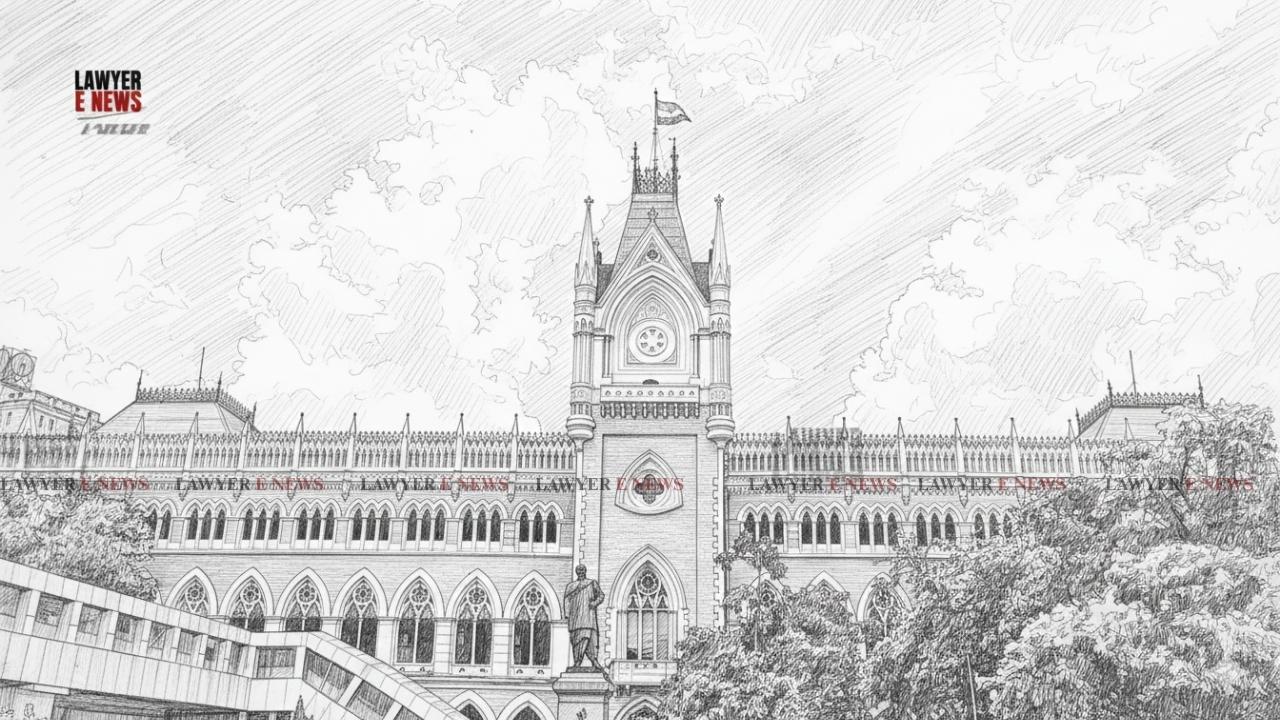
"Although irretrievable breakdown of marriage, by itself, is not a ground for divorce, it comes within the ambit of cruelty and, as such, is a valid ground under Section 13(1)(ia) of the Hindu Marriage Act." Today, Calcutta High Court, in a significant ruling dated April 6, 2026, held that an irretrievable breakdown of marriage falls squarely within the ambit of mental cruelty under Section 13(1)(ia) of the Hindu Marriage Act, 1955.
A bench comprising Justice Sabyasachi Bhattacharyya and Justice Supratim Bhattacharya observed that when a marriage has "spent its shelf-life long back" and parties have reached a point of no-return, denying a divorce perpetuates cruelty. The Court also laid down a crucial procedural mandate, holding that civil courts possess no jurisdiction to grant permanent alimony on their own motion without a formal application filed under Section 25 of the Act.
The appellant-wife and respondent-husband were married in 2005, but the wife left the matrimonial home in November 2009. Shortly after the husband instituted a suit for divorce in January 2010, the wife filed multiple criminal complaints alleging cruelty and criminal breach of trust, all of which eventually ended in the husband's acquittal due to a total lack of evidence. The trial court decreed the divorce in favour of the husband on grounds of cruelty and irretrievable breakdown, prompting the wife to prefer the present appeal before the High Court.
The primary question before the court was whether the wife's conduct, including filing criminal complaints that ended in acquittal on grounds of no evidence, amounted to mental cruelty. The court was also called upon to determine whether the irretrievable breakdown of a marriage constitutes a valid statutory ground for divorce, and whether a trial court can grant permanent alimony suo motu without a specific application.
Family Member's Testimony Not Inherently Unreliable
Addressing the appellant's contention that the husband's elder brother was an interested witness, the court clarified that mere relationship does not automatically demean a witness's credibility. The bench noted that family members residing in the matrimonial home have direct knowledge of the interpersonal dynamics and any cruelty meted out by a spouse. Finding the brother's testimony substantially unshaken during cross-examination, the court accepted it as valid proof on the yardstick of preponderance of probabilities.
False Criminal Complaints Amount To Mental Cruelty
The court heavily weighed the impact of the criminal complaints lodged by the wife immediately after the husband filed the divorce suit. Noting that the husband was acquitted in proceedings under Sections 498A, 403, 406, and 120B of the Indian Penal Code due to a complete lack of evidence, the bench relied on the Supreme Court's ruling in Rani Narasimha Sastry v. Rani Suneela Rani. The court observed that undergoing a criminal trial, facing arrest, and enduring detention at a police station based on baseless allegations creates severe mental agony and loss of face in society.
"The consistent efforts of the appellant-wife and her family was to malign the husband and his family by lodging one false complaint after the other, even after institution of the suit... tantamounting to mental cruelty."
Irretrievable Breakdown Merges With Cruelty
Turning to the protracted separation between the spouses since 2009, the bench found absolutely no intent to resume conjugal life on the part of the wife. Relying heavily on the Supreme Court's landmark decision in Rakesh Raman v. Kavita, the High Court ruled that forcing parties to remain in a dead marriage is inherently cruel to both spouses. The court emphasised that while irretrievable breakdown is not an independent statutory ground, it seamlessly merges into the concept of mental cruelty under Section 13(1)(ia) of the Hindu Marriage Act.
"The rift between the parties has reached a point of no-return and their marriage has spent its shelf-life long back."
"Without an application to provide the contours and parameters of the prayer of permanent alimony and without materials being adduced... there cannot be any scope of granting permanent alimony by the court of its own."
No Suo Motu Grant Of Permanent Alimony
The court decisively rejected the appellant's argument that the trial judge should have granted permanent alimony on its own motion at the time of granting the divorce. Interpreting Section 25(1) of the Hindu Marriage Act, the bench stated that a formal application, supported by affidavits of assets from both parties, is a mandatory statutory prerequisite. The court noted that it cannot blindly calculate maintenance without financial materials being brought on record by the claimant spouse.
Supreme Court Powers Distinguished
The appellant had cited recent judgments to argue that permanent alimony could be awarded without a strict application. However, the High Court distinguished these rulings, noting that the Supreme Court had exercised its extraordinary, inherent powers under Article 142 of the Constitution of India to fix a ballpark alimony amount in those specific instances. The bench clarified that regular civil courts and High Courts do not possess this extraordinary power and are strictly bound by the procedural requirements of Section 25 of the Act.
The High Court ultimately dismissed the wife's appeal and affirmed the trial court's decree of divorce granted in favour of the husband. Recognizing the wife's future financial rights, the bench granted the appellant-wife the liberty to file a fresh and proper application for permanent alimony under Section 25 of the Hindu Marriage Act before the competent civil court at any subsequent time.
Date of Decision: 06 April 2026