-
by sayum
24 August 2026 6:22 AM







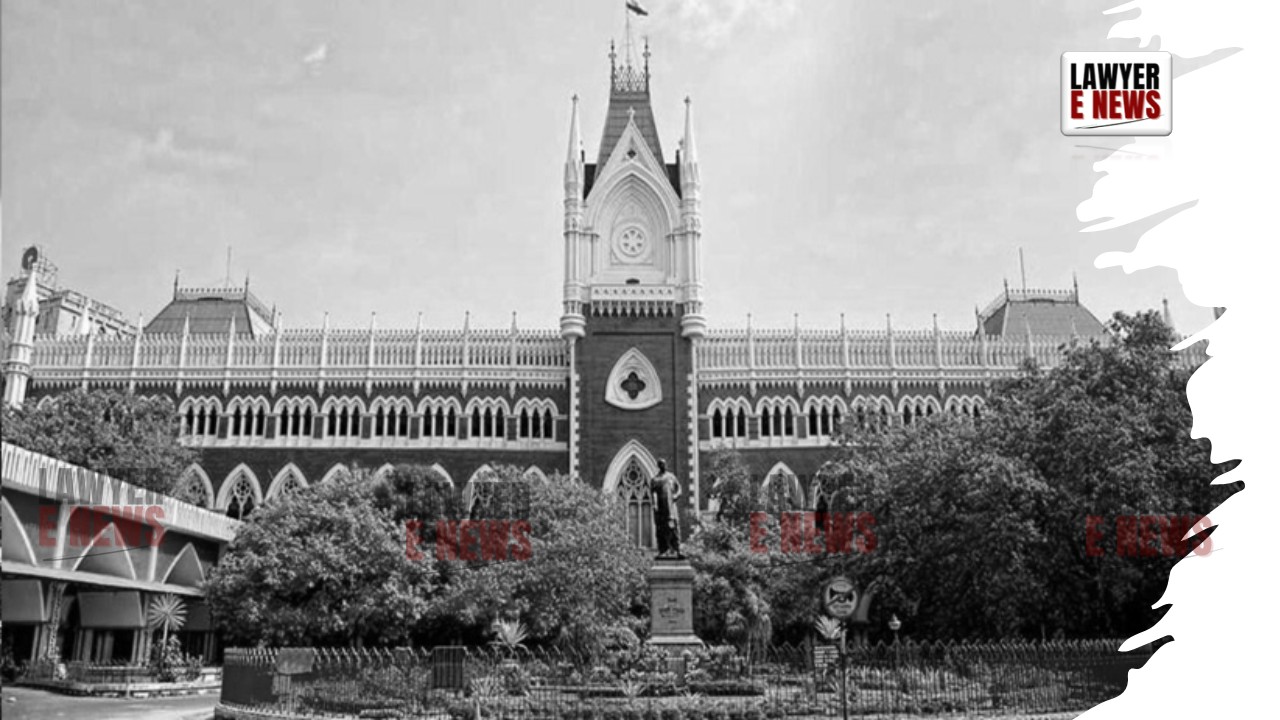
“Injured Witness Stands Firm”, In a criminal appeal involving the assault of a local businessman resulting in grievous injuries, the Calcutta High Court on January 9, 2026, upheld the conviction of two men under Section 325 of the Indian Penal Code. While affirming the findings of guilt based on the compelling testimony of the injured victim and supporting medical evidence, Justice Tirthankar Ghosh modified the sentence, citing the long lapse of over 17 years since the incident and the fact that the appellants had already undergone a part of the sentence.
“There has been hardly any cross-examination which would raise any reasonable suspicion as to the injuries being inflicted upon the injured by the appellants,” observed the Court, adding that “after seventeen and half years, no fruitful purpose would be served by sending the appellants to jail.”
The sentence of two years' simple imprisonment awarded by the Trial Court was thus reduced to the period already undergone, subject to the appellants furnishing a conditional bond under Section 106(4) Cr.P.C., to remain in force for two years.
Assault Over Business Dispute Leaves Man Hospitalized for Over a Month
The incident took place on 12 June 2008 at Park Gate Bazaar, North 24 Parganas, when the victim, Kundan Shaw, was assaulted allegedly over a business dispute by Ram Chandra Prasad @ Das and Rabi Prasad, along with a third accomplice who absconded during trial.
According to the prosecution, the accused struck Kundan Shaw on the head with a wooden stick and a bicycle pump, leaving him unconscious with serious injuries, including skull fractures. The victim was initially treated at Dr. B.N. Bose Hospital and later admitted to NRS Medical College Hospital for over a month. Based on a complaint filed by his sister (PW1), an FIR was registered under Sections 326/307/34 IPC, and the case proceeded to trial.
The trial culminated in a conviction under Section 325 IPC for voluntarily causing grievous hurt, and the Sessions Court sentenced both accused to 2 years' simple imprisonment and a fine of ₹5,000, in default of which they were to undergo another six months in prison.
Eyewitness and Medical Evidence Held Consistent and Reliable
Justice Ghosh carefully examined the depositions of 13 prosecution witnesses, including the injured victim (PW2), multiple eyewitnesses (PWs 3, 5, 6, and 7), and two medical officers (PWs 9 and 12). The Court noted that while minor discrepancies existed—such as confusion about the precise weapons used or the number of assailants—these did not discredit the core of the prosecution’s case.
Referring to the legal position on injured eyewitnesses, the Court placed strong reliance on the Supreme Court’s ruling in Balu Sudam Khalde v. State of Maharashtra [(2023) 13 SCC 365], reiterating that:
“The presence of an injured eyewitness at the time and place of the occurrence cannot be doubted unless there are material contradictions in his deposition.”
The Court observed: “PW-2 deposed that the accused persons assaulted him on his head with a wooden stick and a bicycle pump... PW-9, the medical officer... found lacerated injuries with fracture of the underlying bone... As per settled legal principles, the evidence of injured witnesses deserves great weight.”
The Court concluded that the prosecution had successfully established guilt beyond reasonable doubt, and the broad substratum of the case remained consistent despite the passage of time.
Defence Contentions Rejected: Minor Inconsistencies Not Enough to Overturn Conviction
The defence had argued that the injured victim became unconscious and could not accurately identify the attackers, and that the complainant (PW1) was not an eyewitness. They also pointed to inconsistencies among the eyewitness accounts—some claimed the assault was by two persons, others by three.
However, the High Court was unimpressed. It found that these were minor contradictions that naturally occur in witness testimonies over time and do not go to the root of the prosecution case. The Court reiterated that the quality of evidence, particularly from an injured witness, matters more than quantity.
“Minor inconsistencies as to number of assailants or nature of weapon do not discredit the core prosecution case,” the Court noted.
Sentence Modified: No Purpose Served by Incarceration After 17 Years
While upholding the conviction, the Court took a lenient view on sentencing, invoking the principle of reformation and proportionality. It noted that both appellants had already undergone more than one month in custody, and the incident was over 17.5 years old.
“After seventeen and half years, no fruitful purpose would be served by sending the appellants to jail,” observed Justice Ghosh.
Accordingly, the Court reduced the sentence to “period already undergone”, conditional upon the appellants executing a bond of ₹10,000 each under Section 106(4) Cr.P.C. before the Sessions Court. The bond shall remain in force for two years, and if either appellant is found to be involved in any similar assault during this period, the bond would be cancelled, and they would be directed to serve the remaining sentence of six months.
Conviction Upheld, Sentence Reduced with Conditions
The Calcutta High Court's decision reinforces the jurisprudence that injured witness testimony, especially when corroborated by medical and physical evidence, carries decisive weight in criminal trials. It also balances justice and proportionality by recognizing the long passage of time as a mitigating factor in sentencing.
“C.R.A. 508 of 2019 is disposed of. The conviction stands. Sentence is reduced to period already undergone, subject to conditional bond under Section 106(4) Cr.P.C.”
Date of Decision: 09 January 2026