-
by sayum
26 August 2026 6:42 AM







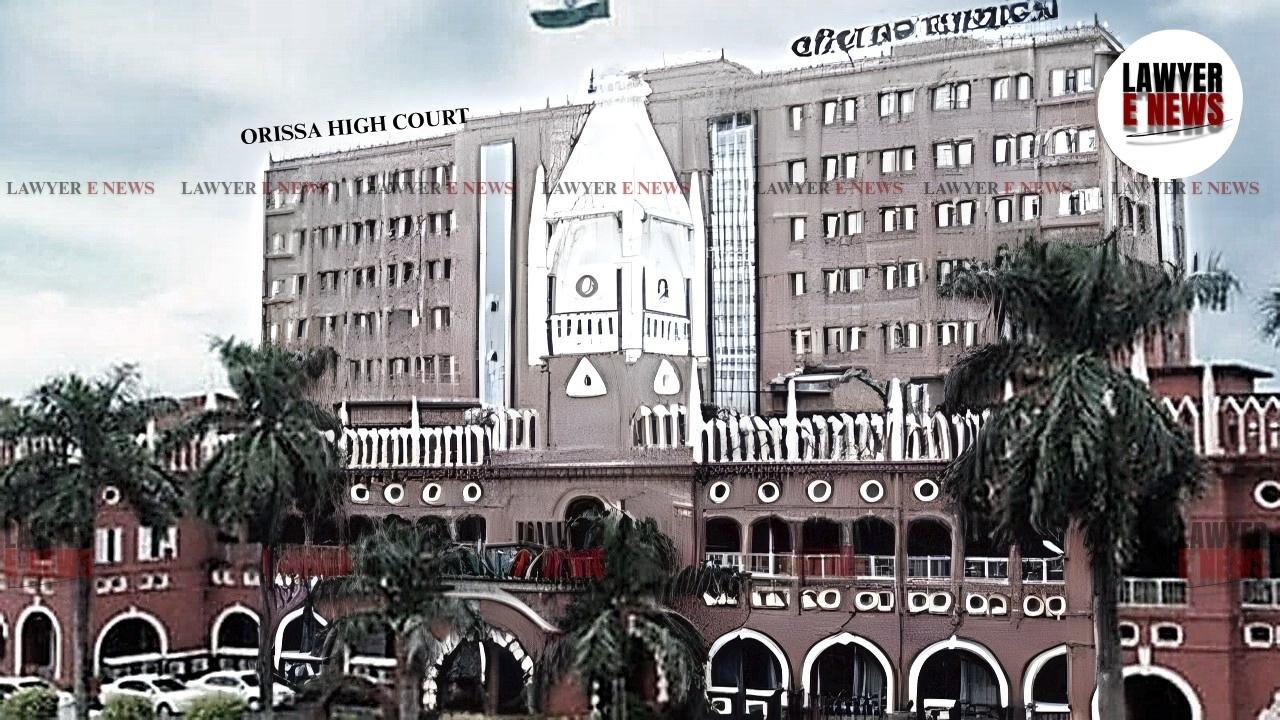
“Injuries caused by lathi blows on vital body parts were sufficient in the ordinary course of nature to cause death. Vicarious liability under Section 149 IPC squarely attracted” - In a judgment that reiterates the evidentiary value of injured eyewitnesses and the legal consequences of a common unlawful design, the Orissa High Court on 6 November 2025, dismissed a criminal appeal filed by four convicts in the 1996 murder of Natabar Ojha, affirming their convictions under Sections 148, 436, 302 read with Section 149 of the Indian Penal Code (IPC). The Division Bench of Justice S.K. Sahoo and Justice Chittaranjan Dash upheld the findings of the trial court, noting that the evidence of injured and independent witnesses was consistent, medically corroborated, and established a shared common object among the accused to forcibly assert their claim over a disputed house.
The Court found that Natabar Ojha died a homicidal death, suffering cranio-cerebral trauma inflicted by lathi blows on the head, delivered by a group of assailants acting in concert. The murder occurred following an attempted forced takeover of a disputed house, during which the accused set the house on fire and launched a violent attack on the deceased and his family.
“Privacy of death fades before the certainty of fact — Medical evidence confirms brutal killing; eye-witnesses injured in assault strengthen prosecution case”
The case arose from an incident that occurred on 7 November 1996, in Niali, Cuttack, where a longstanding land dispute between the deceased and the accused culminated in a violent assault and arson. According to the prosecution, Natabar Ojha and his family had been living in the disputed house for 40 years, though without formal registration. That morning, the appellants — Yudhistir Barik, Sriram Barik, Iswar Barik, Birabar Barik, and the now-deceased Basudev Barik — allegedly came armed, set fire to the house, and assaulted Natabar Ojha with lathis when he protested.
Multiple family members and villagers attempted to intervene but were also assaulted. Six of them sustained visible injuries, which were confirmed by medical examination. Natabar Ojha later succumbed to his injuries at SCB Medical College, Cuttack.
The Trial Court, after a full-fledged trial in Sessions Trial No. 197 of 1999, convicted all five accused for murder, arson, and being part of an unlawful assembly. The present appeal was filed in 2001 but was finally decided in 2025 due to procedural delays and the death of one of the appellants (Basudev Barik).
“Depressed skull fracture, brainstem haemorrhage, and scalp contusions show fatal use of blunt force — Court holds: death was clearly homicidal”
The post-mortem examination by PW-3, the Medical Officer, was pivotal. The Court noted:
“The injuries inflicted on the deceased, including the extensive subscalpal and extradural haematomas, the depressed and fissured fractures of the skull, the contusion of the temporalis muscle, and the intracerebral haemorrhage involving the brain stem and hypothalamus, were fatal in the ordinary course of nature.”
The Court rejected hypothetical suggestions by the defence that such injuries could result from accidental causes, terming those conjectures “plainly hypothetical” and unsupported by the evidentiary record.
The High Court categorically concluded:
“The finding of the trial court that the death of the deceased was homicidal in nature is just and correct.”
“Each accused had a role — setting fire, instigating, inflicting blows. Common object proved beyond doubt, individual overt act not needed under Section 149 IPC”
The Court closely examined the testimonies of injured eyewitnesses including PW-9, PW-10, PW-11, PW-12, PW-13, PW-14, and PW-15, finding that:
“The evidence of the injured witnesses, who have unequivocally attributed the assault to the appellants and described the blows delivered on the vital parts of the body of the deceased, fully corroborates the medical findings.”
In particular, Appellant-Basudev Barik was repeatedly identified as the person who delivered the first lathi blow on the deceased’s head, which caused him to fall. Yudhistir Barik was seen instigating others, while Sriram, Iswar, and Birabar were identified as participating in the assault and setting fire to the house.
The Court observed:
“Under Section 149 IPC, it is not necessary to prove the specific overt act of each member once the common object is made out; it is sufficient that the offence committed was in prosecution of that object.”
Hence, vicarious liability for murder and arson was clearly established.
“Eyewitness credibility bolstered by injury — Minor omissions and hostile witnesses immaterial when prosecution is built on quality over quantity”
The defence attempted to discredit the prosecution by pointing out that some witnesses turned hostile and others were related to the deceased. The Court dismissed this argument, reiterating the law from Vedivelu Thevar v. State of Madras:
“It is a sound and well-established rule of law that the court is concerned with the quality and not with the quantity of the evidence necessary for proving or disproving a fact.”
The Court held:
“Where credible ocular testimony is corroborated by medical evidence, the lapse or hostility of some witnesses does not impair the prosecution case.”
“Land dispute provides motive — Evidence of ownership claim used to threaten and then kill; motive not essential where direct evidence exists”
Although the defence argued that the property belonged to Appellant-Basudev Barik, the Court found that the existence of a land dispute in fact lent support to the prosecution’s narrative. The Court noted:
“The presence of a land dispute furnishes a plausible motive for the Appellants to assert their claim over the property and explains the targeted violence.”
Even assuming that the land belonged to Basudev, the Court reiterated that motive is not indispensable when eyewitness testimony is clear, direct, and corroborated.
Conviction Justified, Appeal Dismissed — Appellants Directed to Surrender Within 3 Weeks
In conclusion, the Orissa High Court found no legal infirmity in the trial court’s finding that the appellants formed an unlawful assembly, set the house on fire, and assaulted the deceased to death in prosecution of a common object.
“The fatal assault on the deceased-Natabar Ojha was clearly in furtherance of the common object, thereby attracting the vicarious liability under Section 149 IPC.”
The conviction and life sentence of the surviving appellants were affirmed, while the appeal stood abated against Appellant-Basudev Barik, who had passed away during the pendency of the appeal.
The appellants, who were on bail, have been directed to surrender within three weeks, failing which the trial court shall take coercive steps to ensure compliance.
Before parting, the High Court placed on record its appreciation for Mr. Nilambar Jena, Amicus Curiae, and Mr. Partha Sarathi Nayak, Additional Government Advocate, for their assistance in resolving the long-pending matter.
Date of Decision: 6 November 2025





