-
by sayum
23 August 2026 2:56 PM







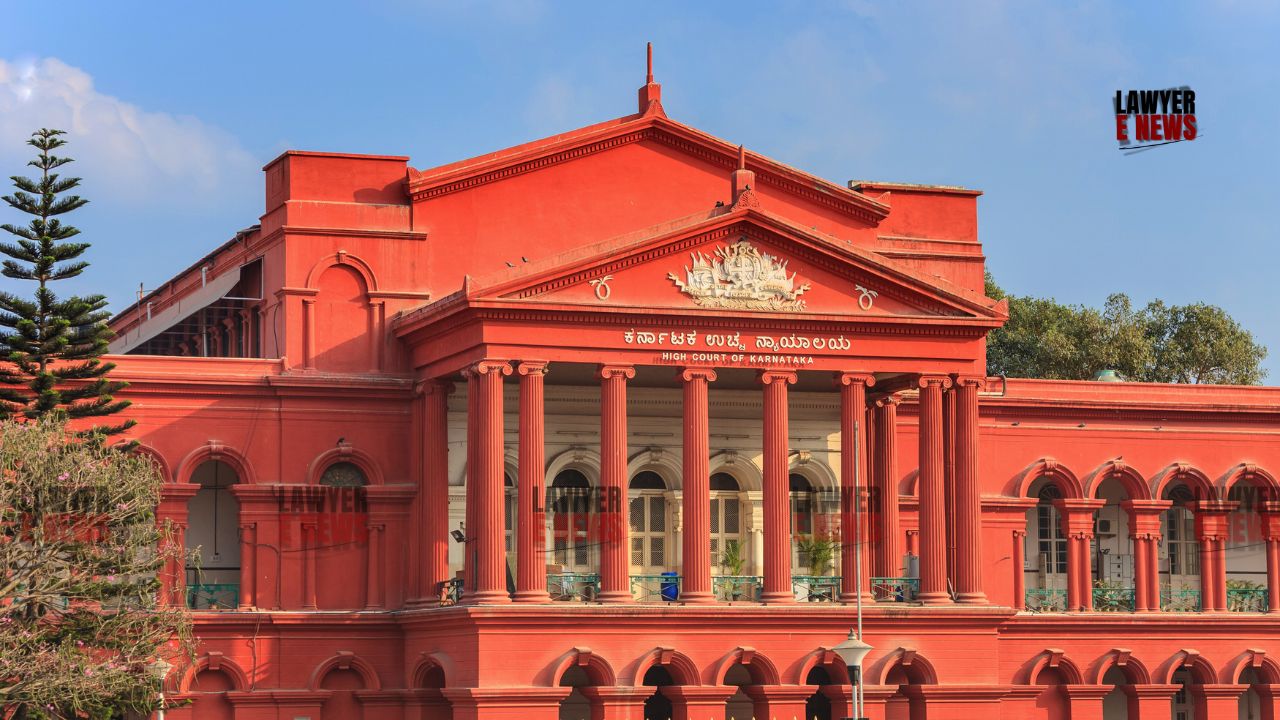
Forfeiture of Gratuity Requires Establishing Losses Through Legal Recovery Proceedings - Karnataka High Court delivered a crucial judgment under the Payment of Gratuity Act, 1972, emphasizing that an employer cannot forfeit gratuity without initiating recovery proceedings to prove losses caused by an employee’s misconduct. The Court dismissed the writ petition filed by Central Warehousing Corporation (CWC) and upheld the Controlling Authority’s order directing the payment of gratuity with interest to a dismissed employee.
The Court, presided over by Justice Suraj Govindaraj, observed:
"The Corporation could not without initiating proceedings for recovery, retain the gratuity amount. Without such proceedings being initiated, the contention of the employer that losses have been caused will only remain a contention and is not one which has been adjudicated upon."
The petitioner, Central Warehousing Corporation, had employed the respondent, Sri. G.C. Bhat, as a Junior Superintendent. Bhat was dismissed from service on December 6, 2013, following a disciplinary inquiry that found him guilty of issuing 93 negotiable warehouse receipts to fictitious persons, causing a financial loss of ₹1.71 crores to the Corporation.
Seven years after his dismissal, Bhat initiated proceedings under the Payment of Gratuity Act, 1972, before the Controlling Authority, claiming ₹14,03,860/- as gratuity along with interest. On September 11, 2023, the Controlling Authority directed the employer to pay ₹7,88,165/- with 10% interest from December 12, 2013, until the actual date of payment.
CWC challenged this order before the High Court, asserting that the employee’s gratuity was rightly withheld and that the long delay in filing the claim should not have been condoned.
The High Court examined the employer’s claims and found no grounds to interfere with the Controlling Authority’s decision.
On the issue of forfeiture of gratuity, the Court highlighted that under Section 4(6) of the Payment of Gratuity Act, gratuity may be forfeited if the employee’s misconduct has caused financial losses to the employer. However, the forfeiture is subject to the employer proving the losses through recovery proceedings. The Court stated:
"Whenever any employee were to be dismissed on account of misappropriation or causing losses to the employer, it is always available for the employer to initiate proceedings for recovery of the losses… Suspension from service and later dismissal would not in any manner restitute the losses caused to the employer."
The Court noted that despite allegations of financial losses due to Bhat’s actions, CWC admitted that no recovery proceedings were initiated against him. Justice Govindaraj emphasized that the employer’s inaction rendered its claim of forfeiture legally unsustainable:
"No proceedings having been initiated against respondent No.1 for recovery of the alleged losses, the question of the employer retaining the gratuity amount and forfeiting the same would not arise."
The Court also criticized the inaction of CWC’s officers in pursuing recovery:
"In the present case, there is a further delinquency of the other officers in not seeking recovery of the aforesaid losses. The employer, being a public institution dealing with public monies, has failed in its duty, and this amounts to abdication of responsibility."
On the issue of delay in filing the gratuity claim, the Court upheld the Controlling Authority’s decision to condone the seven-year delay, noting that the employee had provided valid reasons. Justice Govindaraj remarked:
"The delay in filing proceedings has been justified on account of the illness suffered by the respondent, which prevented him from initiating proceedings earlier. This cannot be found fault with."
The Court also rejected the employer’s argument that awarding gratuity to an employee dismissed for misconduct would amount to rewarding wrongful acts. It clarified that unless losses are proven and recovery is initiated, gratuity remains a statutory right of the employee.
The Court concluded by dismissing the petition and directing the employer to comply with the Controlling Authority’s order. However, in light of the circumstances, the Court extended the time for compliance until January 31, 2025.
The judgment underscores the procedural safeguards under the Payment of Gratuity Act and the employer’s obligation to follow due process before withholding or forfeiting gratuity. As Justice Govindaraj noted:
"The management of the petitioner would be well advised to look into these aspects and initiate action for recovery of losses or misappropriated amounts at least in future against employees who have been dismissed on such charges."
The employer was directed to pay ₹7,88,165/- with 10% interest to the dismissed employee within the extended timeline.
Date of Decision: January 10, 2025