
-
by sayum
29 August 2026 3:15 PM







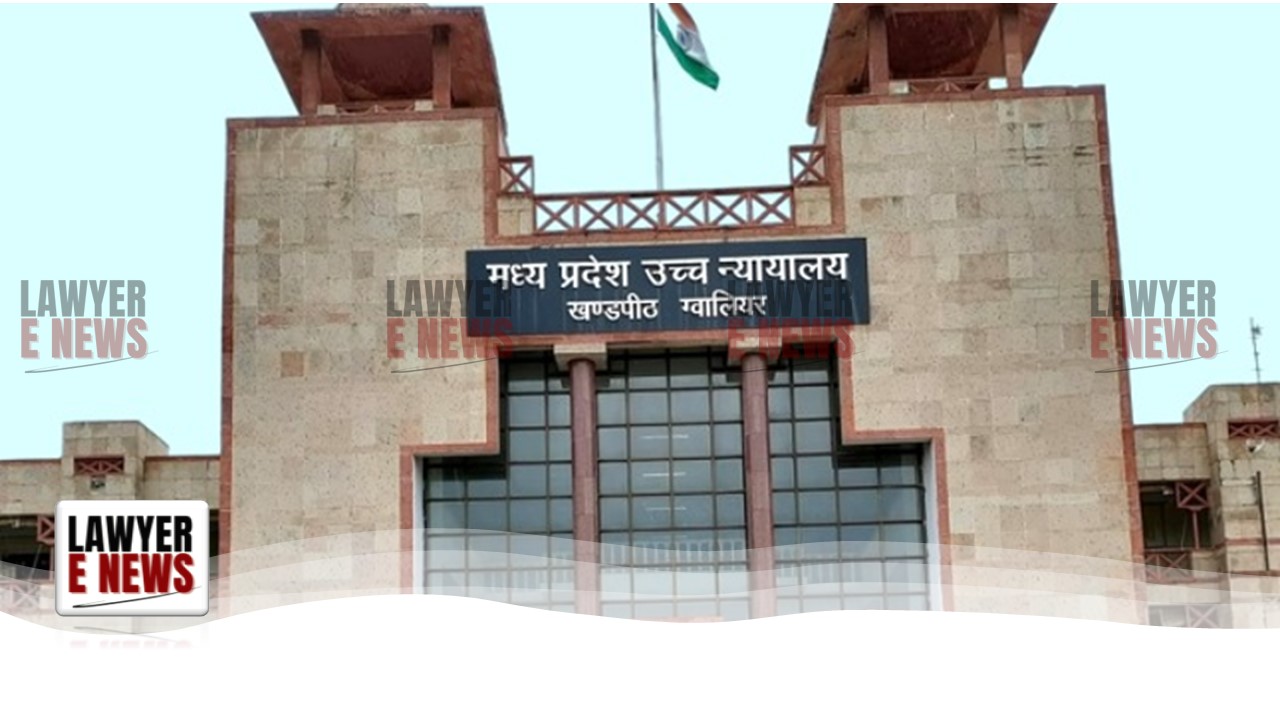
"Once a substantive amendment in the pleading was made it is incumbent upon the trial court to issue fresh notices to all those defendants against whom it has earlier proceeded ex-parte." Madhya Pradesh High Court, in a significant ruling dated March 31, 2026, held that a trial court is duty-bound to issue fresh notices to defendants who have been proceeded against ex-parte if the plaintiff subsequently makes substantive amendments to the plaint.
A single-judge bench of Justice Pavan Kumar Dwivedi observed that amending a plaint to add new reliefs directly against a defendant without notifying them is a negation of justice and completely vitiates an ex-parte decree.
The dispute originated from a 2006 agreement to sell a property in Indore, executed between the original owners and the plaintiffs. During the pendency of the plaintiffs' 2008 suit for specific performance, the original owners sold the property to the appellants, who permanently relocated to the USA in 2011. The trial court proceeded ex-parte against the appellants, allowed the plaintiffs to substantively amend their plaint to declare the appellants' sale deed void without issuing fresh notice, and ultimately decreed the suit in the plaintiffs' favour, prompting the present appeal.
The primary questions before the High Court were whether the trial court properly proceeded ex-parte against the appellants under Order 5 Rule 15 of the Code of Civil Procedure (CPC), and whether fresh notices were legally mandated after the plaint was substantively amended. The Court was also called upon to determine if subsequent purchasers can challenge the plaintiff's readiness and willingness to perform the contract under the unamended Section 16 of the Specific Relief Act.
Strict Compliance For Substitute Service
The court first examined the validity of the summons served upon the appellants' father in October 2023, noting that the process server's own endorsement indicated the noticees were living abroad. Analysing Order 5 Rule 15 of the CPC, the High Court observed that substitute service on an adult family member is only valid if that member actually resides with the defendant. Relying on precedents like Sumitra Bai v. Shyam Lal Sen and Mohammad Yakub Niyaji v. Shahi Zama Masjid, the bench noted that serving a family member when the defendants had permanently settled in the USA over a decade ago did not constitute proper service in the eyes of the law.
"The requirement is that the defendant should be living at the said address and with him the person upon him service is effected must also be residing."
Substantive Amendment Requires Fresh Notice
Turning to the issue of the amended plaint, the Court highlighted that the plaintiffs did not merely make a formal amendment, but actively inserted new pleadings and a substantive relief seeking the cancellation of the appellants' sale deed under Order 6 Rule 17 of the CPC. Relying on the coordinate bench decision in Mahesh Singh v. Sewaram and the Supreme Court's ruling in Ramnik Vallabhdas Madhvani v. Taraben Pravinlal Madhvani, the High Court established that parties are entitled to assume that matters will be litigated on the strength of the original pleadings. The bench categorically ruled that if a plaintiff changes the cause of action or adds direct reliefs against an absent defendant, proceeding to decree the suit without issuing a fresh notice violates fundamental principles of natural justice.
"Once a substantive amendment in the pleading was made it is incumbent upon the trial court to issue fresh notices to all those defendants against whom it has earlier proceeded ex-parte."
"It is not only the original vendor but also a subsequent purchaser who would be entitled to raise a contention that the plaintiff was not ready and willing to perform his part of contract."
Subsequent Purchasers Can Challenge Readiness And Willingness
The Court then addressed the trial court's failure to examine whether the plaintiffs were actually ready and willing to perform their part of the contract. The High Court pointed out that the trial court erroneously applied the 2018 amended version of Section 16 of the Specific Relief Act to a transaction dating back to 2006. Under the unamended provisions applicable to this case, a plaintiff must expressly aver and prove their continuous readiness and willingness. Citing the Supreme Court's decisions in Ram Awadh v. Achhaibar Dubey and Azhar Sultana v. B. Rajamani, Justice Dwivedi emphasised that this statutory defence is not restricted solely to the original vendors. Subsequent purchasers possess an equal right to contest the specific performance suit on the ground that the plaintiff lacked the financial capacity or intent to honour the original agreement.
"It is open to any defendant to contend and establish that the mandatory requirement of Section 16(c) has not been complied with and it is for the court to determine whether it has or has not been complied with."
Concluding that the ex-parte proceedings were deeply flawed and conducted in a hasty manner, the High Court allowed the appeal and set aside the trial court's judgment and decree dated January 29, 2024. The matter was remanded to the trial court for fresh adjudication, with explicit directions to grant the appellants an opportunity to file their written statements and lead evidence on all merits, including their defence as bonafide purchasers.
Date of Decision: 31 March 2026