-
by sayum
26 August 2026 10:38 AM







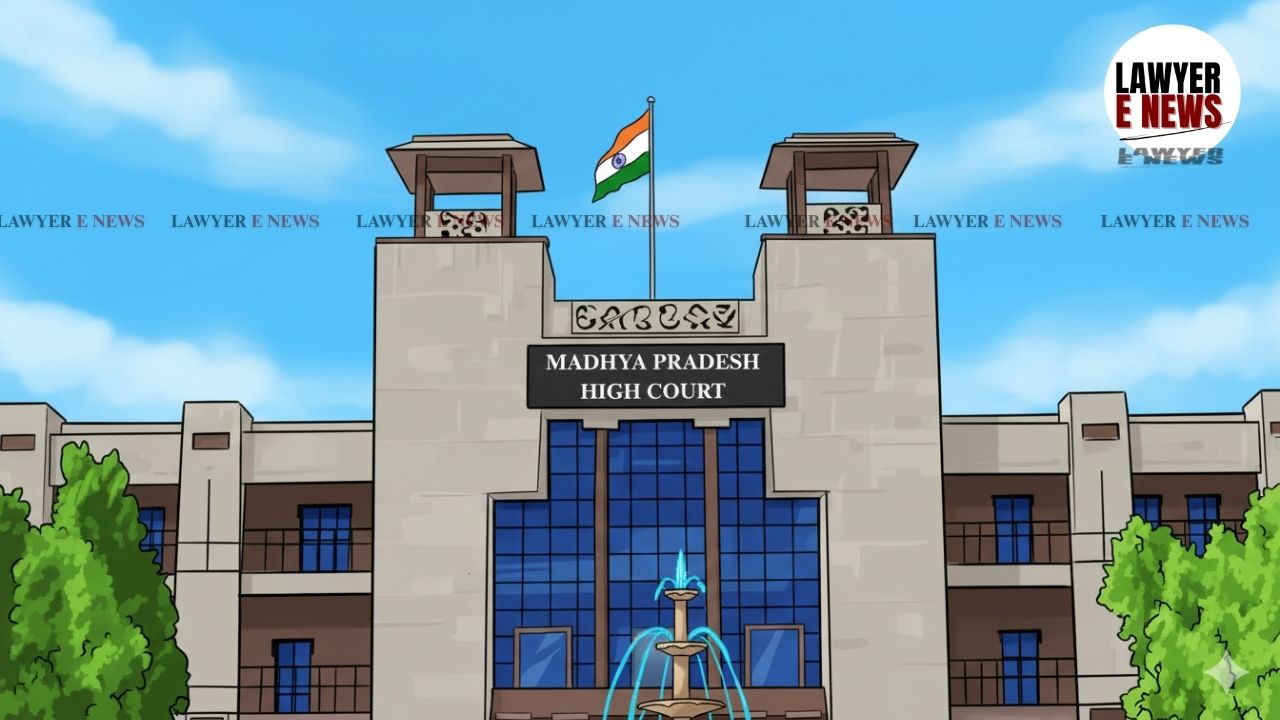
“Satender Kumar Antil Does Not Lay Down an Absolute Proposition That Bail Must Be Granted Irrespective of Gravity”, In a significant and strongly worded order High Court of Madhya Pradesh at Gwalior, presided over by Justice Milind Ramesh Phadke, dismissed the first bail application filed by Munendra Singh under Section 483 of the Bharatiya Nagarik Suraksha Sanhita, 2023 (corresponding to Section 439 Cr.P.C.). The case arose out of allegations of a violent assault on a police constable deployed during an NSG mock drill.
The Court not only refused bail considering the “seriousness of the accusations” and the “manner of commission of the offence,” but also issued a show-cause notice to the applicant’s counsel, an advocate previously convicted for criminal contempt, for appearing without purging the contempt in violation of Rule 16 of the High Court of Madhya Pradesh (Conditions of Practice) Rules, 2012.
The ruling assumes importance for two reasons: first, its treatment of bail jurisprudence in cases involving assault on public servants during sensitive security deployment; and second, its firm assertion of constitutional courts’ power to regulate the appearance of advocates convicted for contempt.
Alleged Assault During NSG Mock Drill
The prosecution case stemmed from an incident in the intervening night of 04/05 February 2026 near DB Mall, where an NSG mock drill was underway. Police personnel, including Constable Ravi Kumar Vimal, were deployed for traffic management under supervision of senior officers.
According to the prosecution, at around 12:10 AM, a white Honda Amaze allegedly driven in a rash manner was signaled to stop. Instead of complying, the driver allegedly accelerated the vehicle “with intention of obstructing Government work,” hit the constable, and in a shocking sequence of events, the occupants allegedly pulled him, threw him onto the bonnet, and dragged him for 30–40 meters before he fell headfirst onto the road, sustaining injuries.
The vehicle was intercepted shortly thereafter. The applicant, Munendra Singh, was one of the occupants. Offences under Sections 132, 121(1), 127(2), 281 and 125-A of the Bharatiya Nyaya Sanhita, 2023 were invoked.
“Mere Passenger” and Reliance on Satender Kumar Antil
Counsel for the applicant contended that Munendra Singh was merely a passenger and not the driver. It was argued that there was no specific overt act attributed to him and that allegations were “general and omnibus.” Emphasis was placed on the Supreme Court’s judgment in Satender Kumar Antil v. CBI (2022) 10 SCC 51, which cautions against mechanical arrests and prolonged incarceration, especially where investigation is substantially complete and offences are triable by a Magistrate.
The defence further argued that custodial interrogation was no longer necessary and that continued incarceration would amount to punitive detention before trial.
State’s Stand: “Deliberate and Concerted Act to Obstruct Public Servant”
The State vehemently opposed bail, contending that this was not a case of simple rash driving but a “deliberate and concerted act” to obstruct a public servant during a sensitive security arrangement. The prosecution emphasized that the applicant was not a passive occupant but acted in furtherance of common intention.
The allegations that the complainant was pulled, thrown onto the bonnet, and dragged were highlighted to demonstrate the gravity and potential life-threatening nature of the act.
Gravity and Common Intention Override Bail Plea
Justice Phadke observed that the allegations prima facie disclosed “a concerted act on the part of the occupants of the vehicle to obstruct and deter a public servant from performing his official duty.” The Court was not persuaded that the applicant’s role was “so minimal as to entitle him to the discretionary relief of bail.”
While acknowledging settled principles of bail, the Court held that the gravity of the offence, the stage of investigation, and the impact on public administration weighed against grant of bail.
Distinguishing Satender Kumar Antil, the Court categorically held:
“The said judgment does not lay down an absolute proposition that bail must be granted in every case where investigation is substantially complete, irrespective of the gravity and surrounding circumstances.”
The Court clarified that the present case stood “on a distinct footing” due to the alleged deliberate assault on a constable during a security drill, thereby justifying continued custody.
The bail application was accordingly dismissed.
“Mere Modification of Fine Does Not Constitute Purgation” – Court Acts Against Advocate Convicted for Contempt
“No Advocate Found Guilty of Criminal Contempt Shall Appear Unless Contempt Has Been Duly Purged”
In an equally significant development, the Court took serious note of the appearance of the applicant’s counsel, Shri Awdhesh Singh Bhadauria, who had earlier been held guilty of criminal contempt under Section 2(c) of the Contempt of Courts Act, 1971. That conviction had attained finality, with the Supreme Court declining to interfere and only reducing the quantum of fine.
The Court noted that Rule 16 of the High Court of Madhya Pradesh (Conditions of Practice) Rules, 2012 explicitly bars an advocate found guilty of criminal contempt from appearing before the Court unless the contempt has been duly purged.
Justice Phadke observed:
“Mere modification of the fine by the Hon’ble Supreme Court does not amount to exoneration nor does it constitute purgation under the law.”
The Court further recorded that during the hearing, the advocate’s conduct was “argumentative beyond permissible limits and bordered on defiance of judicial discipline.” It noted that the tone and tenor of submissions reflected a “deliberate attempt to intimidate and influence the Court.”
Relying on Supreme Court Bar Association v. Union of India (1998) 4 SCC 409, Bar Council of India v. High Court of Kerala (2004) 6 SCC 311, Mahipal Singh Rana v. State of U.P. (2016) 8 SCC 335, and R. Muthukrishnan v. High Court of Madras (2019) 16 SCC 407, the Court reiterated that constitutional courts possess inherent power to regulate the appearance of advocates to preserve institutional discipline and dignity.
Accordingly, the Office was directed to issue a show-cause notice to Shri Bhadauria, asking under what authority he was appearing in absence of compliance with Rule 16. Notice was also directed to the State Bar Council to inform the Court of steps taken pursuant to the earlier contempt order.
The matter has been directed to be listed under the head “Direction” in the week commencing 06/04/2026.
Strong Message on Assault Against Police and Courtroom Discipline
The order sends a dual message. First, that assaults on police personnel performing official duties—especially during sensitive security arrangements—will be treated with seriousness at the bail stage, and general reliance on liberal bail precedents will not suffice where gravity and common intention are prima facie evident. Second, that constitutional courts will not hesitate to enforce their Rules against advocates convicted for criminal contempt who continue to appear without purging the contempt.
The bail application of Munendra Singh was dismissed, and consequential directions regarding the advocate’s appearance were issued to safeguard institutional decorum.
Date of Decision: 23/02/2026