-
by sayum
25 August 2026 5:15 AM







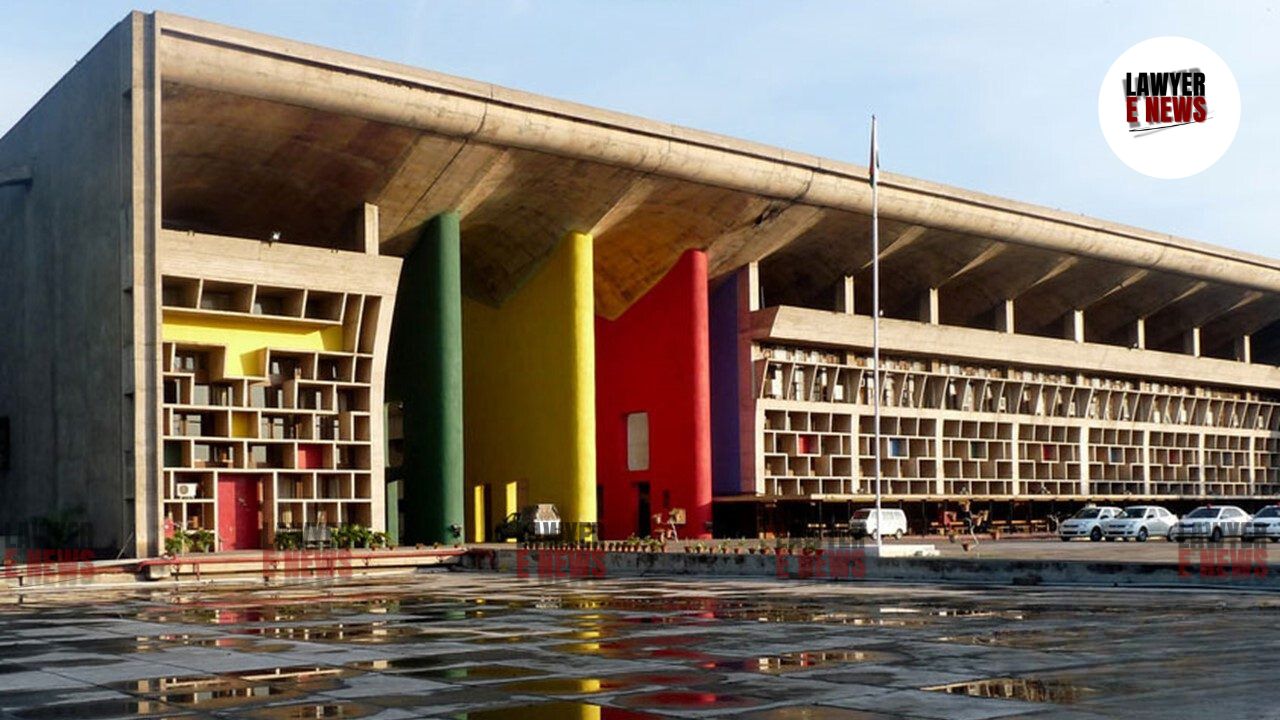
“Once the Rigours of Section 37 Are Attracted, Bail is Not a Matter of Sympathy but of Statutory Satisfaction”— In a strongly worded order Punjab and Haryana High Court dismissed a regular bail plea filed under Section 483 of the Bharatiya Nagrik Suraksha Sanhita, 2023, by Satnam Singh @ Nishan Singh @ Shana, in an NDPS case involving the alleged recovery of 195 intoxicant tablets (Etizolam)—a quantity amounting to “commercial quantity” under the Narcotic Drugs and Psychotropic Substances Act, 1985.
The judgment delivered by Justice Sumeet Goel makes it emphatically clear that the moment commercial quantity is involved, the bail court is statutorily bound to apply the rigours of Section 37, and neither prolonged incarceration nor mere procedural arguments can suffice to overcome this legislative embargo.
“It is well settled that Section 37 of the NDPS Act mandates that regular bail can be granted only if the Court is satisfied that there are reasonable grounds for believing that the accused is not guilty and that he is not likely to commit any offence while on bail,” the Court held, refusing to relax the statutory conditions despite the petitioner’s nine-month incarceration.
“False Implication is a Matter of Trial, Not Bail”—High Court Rejects Arguments on Conscious Possession and Procedural Lapses
The petitioner, represented by counsel Mr. Ruhani Chadha, had assailed the prosecution's case as a fabricated narrative, asserting that the alleged contraband was planted and not recovered from his conscious possession. It was also contended that the mandatory requirements of Sections 42 and 50 of the NDPS Act had been blatantly violated.
However, the Court refused to be persuaded by what it termed "matters of trial" and not valid grounds for bypassing statutory restrictions at the bail stage. “The plea regarding non-compliance of mandatory provisions is a mixed question of law and fact, which cannot be conclusively determined at the stage of bail,” Justice Goel observed, firmly rejecting the contention that procedural irregularities diluted the weight of the prosecution’s case.
On the allegation of planted recovery, the Court was equally categorical. “The Court cannot accept the plea of the petitioner of false implication merely based on assertions without evidence.”
“Commercial Quantity and Criminal Antecedents Are Not Incidental—They Go to the Heart of Judicial Discretion in Bail Matters”
The petitioner was arrested on 13 April 2025, after he and a co-accused were allegedly intercepted by a police party acting on secret information. While 258 grams of heroin were reportedly recovered from the co-accused, the petitioner allegedly discarded a polythene bag containing the 195 Etizolam tablets.
The High Court noted, “The total weight is stated to be 27.49 grams which falls under the commercial quantity and, therefore, attracts the rigours of Section 37 of the NDPS Act.”
The Court further highlighted that the petitioner had criminal antecedents, including involvement in multiple NDPS cases, which severely weakened his case for bail. “The petitioner is also stated to be involved in other NDPS cases as well, which prima facie reflects his criminal antecedent and weighed heavy against the petitioner,” the judgment stated.
“The Bail Court Cannot Bypass Statutory Conditions on Grounds of Sympathy or Delay”—Judgment Reiterates Supreme Court Standards
Citing a litany of Supreme Court judgments, including Union of India v. Namdeo Ashruba Nakade and Union of India v. Vigin K. Varghese, the Court reiterated that courts must tread carefully when exercising discretion in bail matters under NDPS, especially when the offence involves commercial quantity and carries punishment ranging from ten to twenty years of rigorous imprisonment.
“The liberty of the individual must be balanced against societal interest and the statutory mandate,” observed the Court, quoting extensively from Supreme Court decisions on the increasing menace of substance abuse, especially among youth.
In the context of public interest, Justice Goel noted:
“The ills of drug abuse seem to be shadowing the length and breadth of our country... The debilitating impact of drug trade and drug abuse is an immediate and serious concern for India.”
The Court reminded that Article 47 of the Constitution casts a duty upon the State to prohibit consumption of drugs except for medicinal purposes, reinforcing that bail cannot be granted lightly in drug-related offences.
“Judicial Discretion Cannot Trump Legislative Mandate—Bail Plea Dismissed for Failing to Satisfy Section 37 Conditions”
In a comprehensive conclusion, the High Court held that no “accentuating circumstances” existed that could warrant overriding the embargo of Section 37(1)(b). The Court categorically found that it could not record a satisfaction that there were reasonable grounds to believe the accused was not guilty or that he would not commit an offence if released on bail.
“From the material available on record, this Court is unable to record such satisfaction,” said Justice Goel.
Refusing to be swayed by the argument of delayed trial or completed investigation, the Court remarked, “Merely because the investigation is complete or that the trial may take time, cannot be a ground for regular bail in cases under Section 37 NDPS Act.”
The petition was, therefore, dismissed with a final observation that “any findings or observations made herein are confined to the context of bail proceedings and shall not influence the course of trial.”
Date of Decision: 27 January 2026