-
by sayum
28 August 2026 2:11 PM







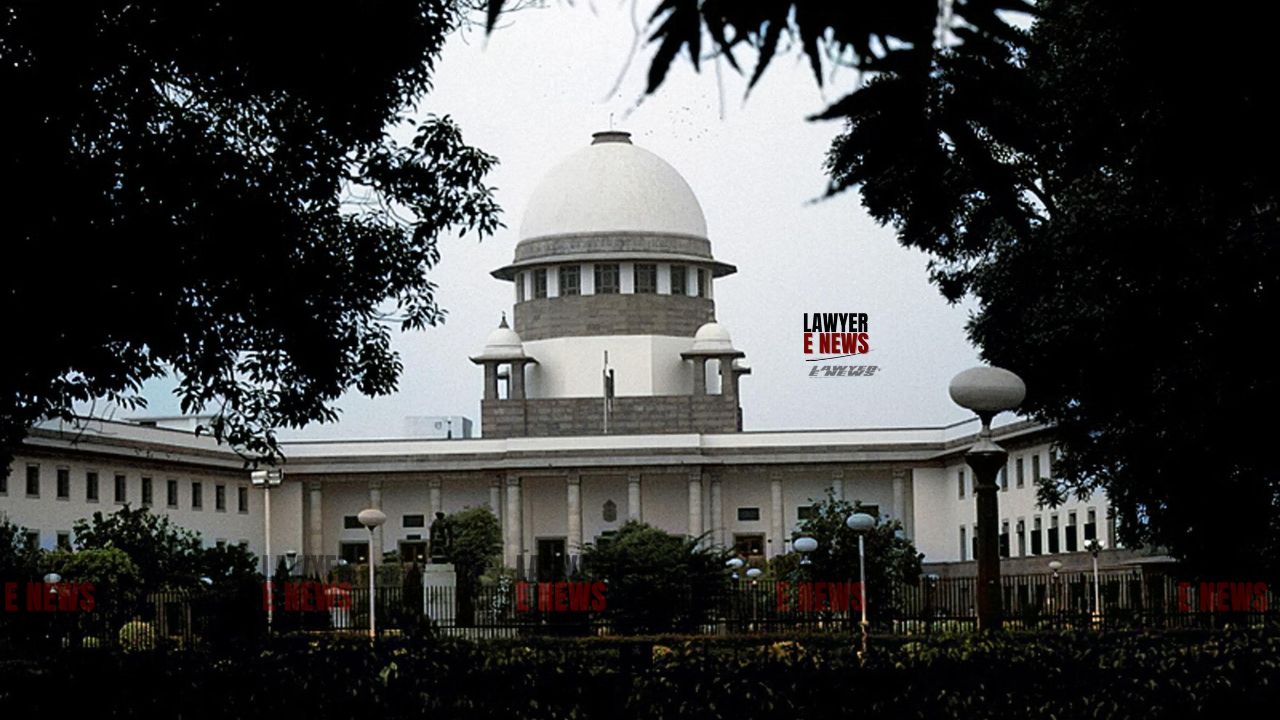
“The presence of the accused was not established, the offer was unconnected, and no nexus was drawn — there is no offence made out to warrant prosecution under Section 12 of the PC Act- Supreme Court of India delivered a decisive verdict upholding the quashing of criminal proceedings against a political functionary (A4), accused of offering a bribe to an MLA in connection with the 2015 MLC elections in Telangana. The Court found that the allegations against the respondent were vague, uncorroborated, and wholly insufficient to sustain a prosecution under the Prevention of Corruption Act, 1988.
Dismissing the State’s special leave petition against the High Court’s judgment, the Supreme Court observed that the complaint lacked any material connecting the accused to the actual transaction, and what existed was a mere “casual allegation raised on a call having been received by the complainant without any indication even of the time when such call was received.”
“Presence Not Alleged, Participation Not Proven, Nexus Not Shown — No Prima Facie Case Against A4”
The Supreme Court refused to accept the State’s contention that the High Court had improperly conducted a “mini trial” at the stage of quashing. While noting that the High Court’s order was lengthy and perhaps overly detailed, the Bench of Justice B.R. Gavai and Justice K. Vinod Chandran emphasized that the order contained “justifiable reasons to quash the proceedings” and could not be faulted for elaboration.
In narrating the background, the Court noted that the complainant — a sitting Member of the Legislative Assembly — had submitted a written complaint on 28.05.2015, alleging that he was offered Rs. 2 crores by A4 to vote in favour of a particular political party in the upcoming MLC elections. He also alleged that a second, higher offer of Rs. 5 crores was made by another person. The complaint, however, was vague and failed to mention any specific date, response by the complainant, or link between the two offers.
The FIR was registered not on the date of the complaint but later, based on a sting operation conducted on 31.05.2015, in which other persons were caught in the act of bribery. The Court highlighted that “the presence of A4 is not reported when the alleged transaction occurred” and that “the allegation made in the complaint against A4 is not in any way linked with the allegation of a higher offer having been made by another.”
“The Law Does Not Permit Criminal Prosecution to Proceed on Vague or Improbable Allegations”
The Court drew attention to the complete lack of nexus between the first alleged bribe offer and the later sting operation, and found no evidence to suggest that A4 had instigated, planned, participated in, or was even aware of the bribe transaction that took place.
“The FIR further indicates that the police were present at a particular location, wherein the persons referred to in the second paragraph of the complaint along with another, having come to the residence of the friend of the complainant. There were arrangements made for audio and video recordings.”
Despite the elaborate operation and surveillance, the Court noted that “A4 was not present, and nothing emerged from the material to connect him to that scene.” The bench, therefore, held that the continuation of proceedings against A4 would amount to an abuse of the process of law.
“Criminal Law Cannot Be Set in Motion Based on Surmise and Conjecture”
Rejecting the argument that an FIR, once registered, must be allowed to proceed to trial even on the basis of minimal suspicion, the Supreme Court reiterated that “registration of an FIR is not a ritual to be followed in every complaint — it requires prima facie disclosure of a cognizable offence.”
“There is nothing to connect A4 to the crime, but for a casual allegation,” the Court said, adding, “We find absolutely no reason to interfere with the order of the High Court and dismiss the Special Leave Petitions.”
The ruling emphasized that criminal trials must be preceded by plausible and specific allegations, and not dragged on the basis of uncorroborated assertions made against persons not even present during the alleged transaction.
“Brevity May Be a Virtue, But Not at the Cost of Justice”
In a nuanced reflection on judicial writing, the Court also observed that the High Court’s order, though lengthy, was not flawed merely for want of conciseness. “Brevity at times is a virtue but often in legalese it is faulted as levity and in adjudicatory orders, projected as non-application of mind,” said the Court, lending legitimacy to comprehensive judicial reasoning where warranted.
The Allegation Was Casual, the Evidence Non-Existent, and the FIR Unsustainable in Law
The Supreme Court’s judgment serves as a reminder that casual invocation of criminal law against public figures or individuals cannot be tolerated in the absence of concrete material. By reiterating the standards required for sustaining an FIR under the Prevention of Corruption Act, the Court has drawn a clear line between political accusation and criminal culpability.
Date of Decision: 26 September 2025