-
by sayum
02 August 2026 1:07 PM







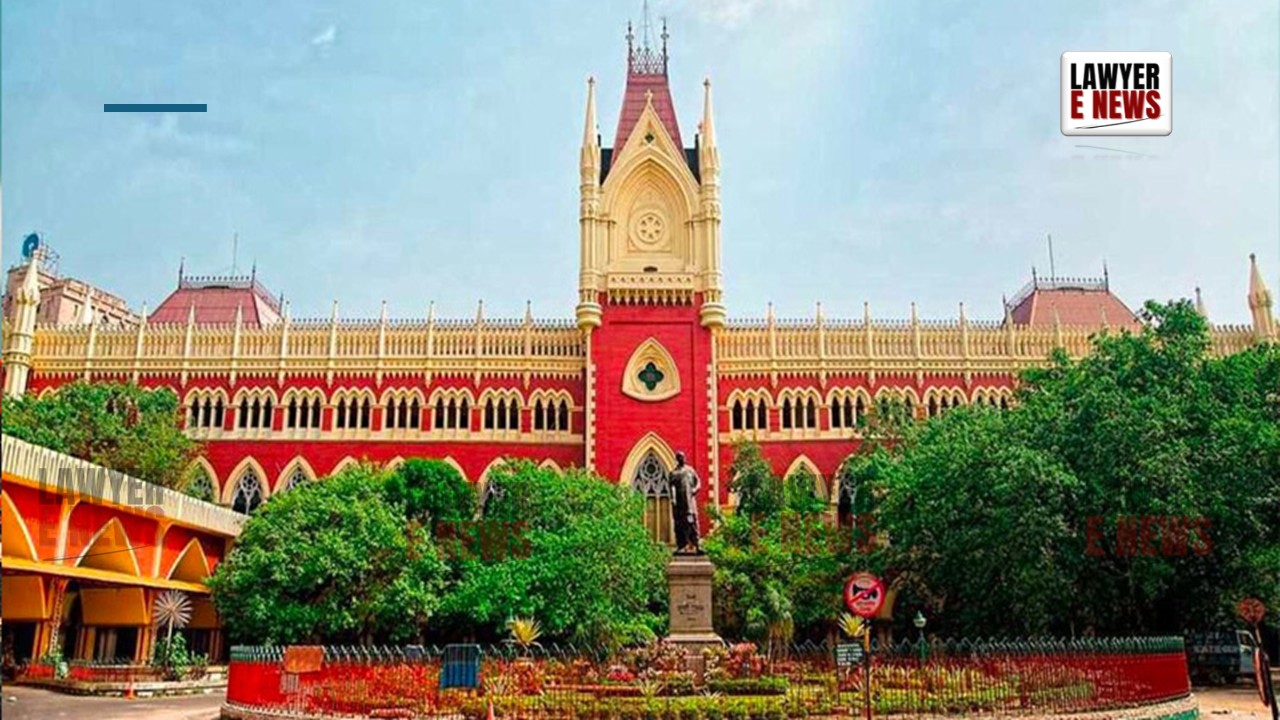
“Cancellation of Recruitment Cannot Deprive Candidates of Their Right to Fair Opportunity” – Calcutta High Court Grants Age Relaxation. In a significant ruling Calcutta High Court granted a one-time age relaxation to candidates who had participated in the 2022 recruitment process for the post of Junior Assistant (Fire Service) at the Airports Authority of India (AAI) but were rendered ineligible due to the cancellation of the process. The petitioners had exceeded the maximum age limit by the time a new recruitment advertisement was issued in 2024.
Rejecting AAI’s argument that age criteria must be strictly adhered to, Justice Arindam Mukherjee held: “A recruitment cancellation, which occurs through no fault of the candidates, cannot create an artificial barrier to their participation in future processes. The principles of fairness and equal opportunity demand that the petitioners be allowed to apply.”
The court directed AAI to extend the application deadline for these candidates and issue a fresh notification within 15 days, ensuring their participation in the 2024 selection process.
On September 30, 2022, AAI published a recruitment advertisement for the post of Junior Assistant (Fire Service) NE-4, inviting applications from candidates aged 18 to 30 years (General Category) and up to 33 years (OBC-NCL), with additional relaxations for other categories.
The petitioners, who met the eligibility criteria at the time, participated in the selection process, but none were ultimately selected. On February 13, 2024, AAI cancelled the recruitment process, citing administrative reasons.
A fresh recruitment process was initiated on December 19, 2024, with increased vacancies (from 32 to 89), but the maximum age limit remained unchanged as of November 1, 2024. By this time, the petitioners had exceeded the permissible age limit and were unable to reapply, despite the fact that the new vacancies included the 32 originally advertised in 2022.
Challenging their exclusion, the petitioners approached the High Court, arguing that the cancellation of the 2022 process was beyond their control and that denying them the opportunity to apply for the 2024 recruitment violated their constitutional rights under Articles 16 and 21.
Recruitment Cancellation Cannot Unfairly Disqualify Candidates
The High Court observed that the petitioners had no control over the cancellation of the recruitment process and could not be penalized for an administrative decision by AAI.
“Candidates who were eligible under the 2022 recruitment process and were waiting for a fair chance to secure employment cannot be arbitrarily excluded from the 2024 recruitment merely due to a procedural delay that was beyond their control.”
Referring to A.P. Public Service Commission v. B. Sarat Chandra, 1990 (2) SCC 669, the court emphasized that candidates who were eligible for a recruitment process should not be deprived of their right to complete the selection process due to an administrative decision.
Right to Equality in Public Employment: Article 16 and 21 Violations
The petitioners contended that AAI’s decision to restrict their participation based on age—despite the continuation of the earlier vacancies—violated Articles 16 (equality of opportunity in public employment) and 21 (right to life and dignity) of the Constitution.
The court agreed, holding that: “While the right to employment is not a fundamental right, equal opportunity in public employment must be upheld. The cancellation of a recruitment process should not result in unfair exclusion of otherwise eligible candidates.”
Relying on High Court of Delhi v. Devina Sharma, (2022) 4 SCC 643, the court emphasized that judicial intervention is warranted when recruitment rules create an arbitrary and unfair restriction on candidates’ rights.
Judicial Intervention in Recruitment Policies: Exception Warranted for Unfair Exclusions
AAI argued that age criteria are fixed and cannot be relaxed, citing the Airport Authority of India (Recruitment and Promotion) Regulations, 2020. The court, however, noted that while courts generally do not interfere with recruitment policies, exceptions must be made when an administrative decision results in an unfair exclusion of eligible candidates.
The court relied on Nitish Kumar v. Union of India (Delhi HC, WP(C) 2977/2023) and Santram Patel v. CRPF (Delhi HC, WP(C) 4185/2023), where age relaxation was granted due to recruitment delays that unfairly disqualified otherwise eligible candidates.
“Judicial intervention is justified when a recruitment process is cancelled after progressing to a significant stage, thereby rendering eligible candidates ineligible due to no fault of their own.”
Impact of Administrative Delay on Age Eligibility
The High Court acknowledged the real-world impact of recruitment delays on candidates, holding that procedural inefficiencies should not disadvantage candidates who were eligible at the time of the original recruitment.
“Had the 2022 recruitment process not been cancelled, the petitioners would not have been over-aged. Administrative delays should not operate as a bar to fair employment opportunities.”
The court distinguished this case from Sachin & Others v. CRPF, WP(C) 90/2023 (Delhi HC), where no prior recruitment process had been cancelled, making age relaxation unnecessary.
One-Time Age Relaxation: No General Precedent
AAI contended that granting age relaxation would set a precedent, potentially leading to demands for relaxation in future recruitment processes. The High Court clarified that its decision was based on the peculiar facts of the case, stating:
“This decision shall not serve as a general precedent. The relaxation is granted only due to the cancellation of a prior recruitment process that had already progressed to an advanced stage.”
High Court’s Decision: Age Relaxation Granted, Application Deadline Extended
Concluding that the cancellation of the 2022 recruitment process had unfairly disqualified the petitioners, the High Court granted them a one-time age relaxation and directed AAI to:
• Extend the deadline for online applications for candidates who had participated in the 2022 recruitment process.
• Issue a fresh notification within 15 days, specifying the extension and ensuring that candidates who had surpassed the age limit due to the cancellation of the earlier recruitment could apply.
• Fix a reasonable period (not less than 7 days) for such candidates to complete their applications.
The writ petition was disposed of accordingly.
This ruling sets an important precedent for judicial intervention in recruitment policies when candidates are unfairly excluded due to administrative cancellations. The Calcutta High Court reaffirmed the principle that procedural delays and cancellations should not deprive deserving candidates of their right to participate in public employment opportunities.
By granting a one-time age relaxation, the court ensured that equity and fairness prevailed in a recruitment process that had otherwise disadvantaged candidates through no fault of their own.
Date of Decision: January 28, 2025