
-
by sayum
26 August 2026 1:49 PM







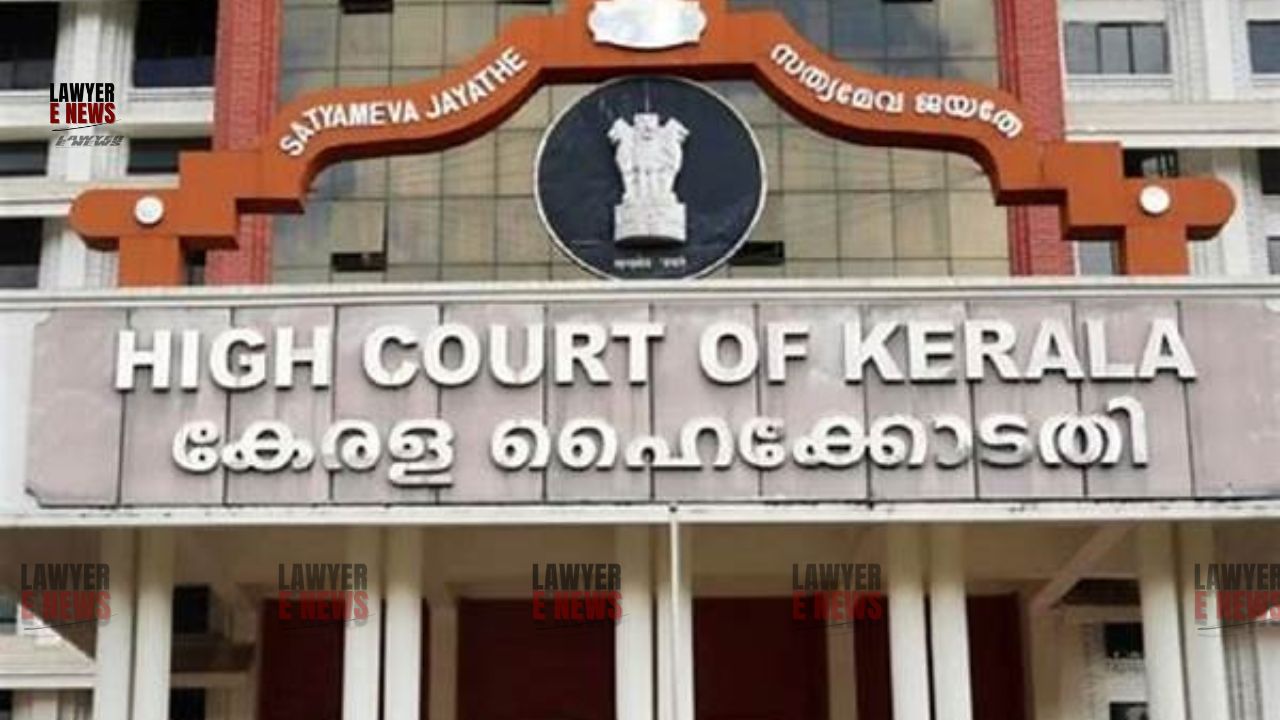
“Compliance with Rules of Business Under Article 166(3) Is Mandatory, Especially When Public Finance Is Involved”, In a significant constitutional ruling on executive accountability and fiscal discipline, the Kerala High Court set aside the Government Order launching the “Nava Keralam – Citizen Response Programme” to the extent it authorised utilisation of ₹20 Crores under the head “2220-01-001-96 – Special PR Campaign.”
A Division Bench comprising Chief Justice Soumen Sen and Justice Syam Kumar V.M. held that while the Government is free to undertake welfare studies, public funds cannot be deployed “de hors the financial rules” and in violation of the Rules of Business framed under Article 166(3) of the Constitution.
The Court directed that all steps pursuant to Exhibit P1 Government Order dated 10.10.2025 be kept in abeyance and set aside the consequential orders.
“Court Not Examining Wisdom of Programme, But Legality of Expenditure”
At the outset, the Bench acknowledged its initial reluctance to enter into policy matters:
“We place on record our initial reluctance to enter into the business of the Government and into matters concerning the allocations of funds… unless the same are starkly arbitrary, unreasonable and violative of constitutional or legal mandates.”
However, given the allegation that ₹20 Crores from the public exchequer had been allocated in violation of constitutional provisions and the Rules of Business, the Court held that judicial scrutiny was warranted.
The Bench clarified:
“We are not questioning the wisdom of the Cabinet to undertake such study, but for executing and implementing such study, funds de hors the financial rules are utilized… the court has a duty to declare such utilisation of funds as illegal.”
Political Communication Preceded Government Order
A crucial factual element noted by the Court was the existence of a letter dated 23.09.2025 issued by the Secretary of a political party, calling upon party cadres to register on the “Social Volunteer Force” portal for participation in the programme — even before the Government Order dated 10.10.2025 was issued.
The Court recorded that this communication “much before Exhibit P1 order” lent “apparent credence to the allegations of oblique motives.” The counter-affidavit filed by the political party was described as “sketchy” and evasive.
While the Court did not base its decision solely on political motive, it found the chronology troubling in the context of financial and administrative irregularities.
Allocation to Information & Public Relations Department Held Contrary to Rules of Business
The Programme was implemented through the Information and Public Relations (I&PR) Department under the head “Special PR Campaign.”
However, the Court undertook a detailed comparison of the Rules of Business and found that:
“Matters like Database for Planning, Formulation of Development Plans, Monitoring and Evaluation of Planned Programs… fall squarely within the allocated business of the Planning and Economic Affairs Department or Programme Implementation, Evaluation and Monitoring Department.”
The Nava Keralam Programme, by its own description, aimed to collect development suggestions, assess welfare schemes, and form public opinion on development and employment. These functions, the Court held, were not within the domain of I&PR.
Thus, allocation of ₹20 Crores to the I&PR Department under “Special PR Campaign” was held to run “contrary to the Rules of Business of the Government of Kerala.”
“Compliance with Rules of Business… Is Mandatory”
Relying on MRF Ltd. v. Manohar Parrikar, the Court reiterated:
“Compliance with the rules of business framed under Article 166(3), especially where public finance is involved, is mandatory and goes to the root of executive decision-making.”
The State’s argument that Cabinet approval cured any defect was rejected. The Court held that:
“Prior approval of the cabinet or post facto justification… will not cure the inherent defect.”
Thus, even Cabinet approval dated 08.10.2025 could not validate a decision that was structurally contrary to the allocation of business.
Budgetary Allocation and Constitutional Mandate
The Court then examined Articles 203, 204, 205 and 266(3) of the Constitution, emphasizing that:
“No money shall be withdrawn from the Consolidated Fund of the State, except under appropriation made by law.”
It further referred to the Kerala Budget Manual, which mandates that expenditure beyond the scope of a sanctioned grant constitutes a “new service” and requires legislative approval.
The Manual explicitly states:
“Without a vote the legislature, money shall not be spent beyond the scope of the grant sanctioned by the legislature.”
The Advocate General argued that the Manual did not have statutory force. The Court, however, expressed concern that even self-imposed fiscal norms were being disregarded:
“Much is left to be desired when it comes to fiscal discipline that is expected to be followed by the Government while handling public funds.”
Use of Disaster Volunteer Portal Questioned
The Programme was implemented using the “Samoohya Sannadha Sena Portal,” originally created in 2020 to mobilize volunteers for natural disasters and local crises such as floods and cyclones.
The Court noted that:
“Presently, the State is not faced with any such natural disaster or any local crises.”
The use of the portal for a development survey, without wide publicity or fresh enlistment process tailored to the new objective, raised transparency concerns. The Court observed that adequate steps were not shown to have been taken to inform the public that the portal would now be used for a fundamentally different purpose.
“Allocation… Points to a Colourable Exercise of Executive Power”
In one of its strongest observations, the Bench held:
“The allocation of 20 Crores under the head ‘Special PR campaign’ to the Department of Information, Public Relations, for a business that essentially falls within the business of the Planning and Economic Affairs Department… does indeed point to a colourable exercise of executive power.”
The Court made it clear that budgetary heads cannot be used as a device to bypass the structural allocation of business among departments.
The Court directed that all proceedings pursuant to Exhibit P1 Government Order dated 10.10.2025 be kept in abeyance. It set aside Exhibit P1 to the extent it authorised utilisation of ₹20 Crores under “2220-01-001-96 – Special PR Campaign” by the I&PR Department. Consequential orders (Exhibits R1(a) and R1(b)) were also set aside.
The Public Interest Litigations were allowed.
The ruling reinforces a fundamental constitutional principle: executive enthusiasm cannot override procedural discipline in matters of public finance. The Government may design policies, conduct studies, and engage with citizens — but it must do so within the framework of Article 166(3), Articles 202–207, and established fiscal norms.
As the Court succinctly put it:
“The Government is not debarred from taking any welfare measures… however, any expenditure incurred must have a financial sanction and pass muster the financial rules.”
Date of Decision: 17 February 2026





