-
by sayum
28 August 2026 2:11 PM







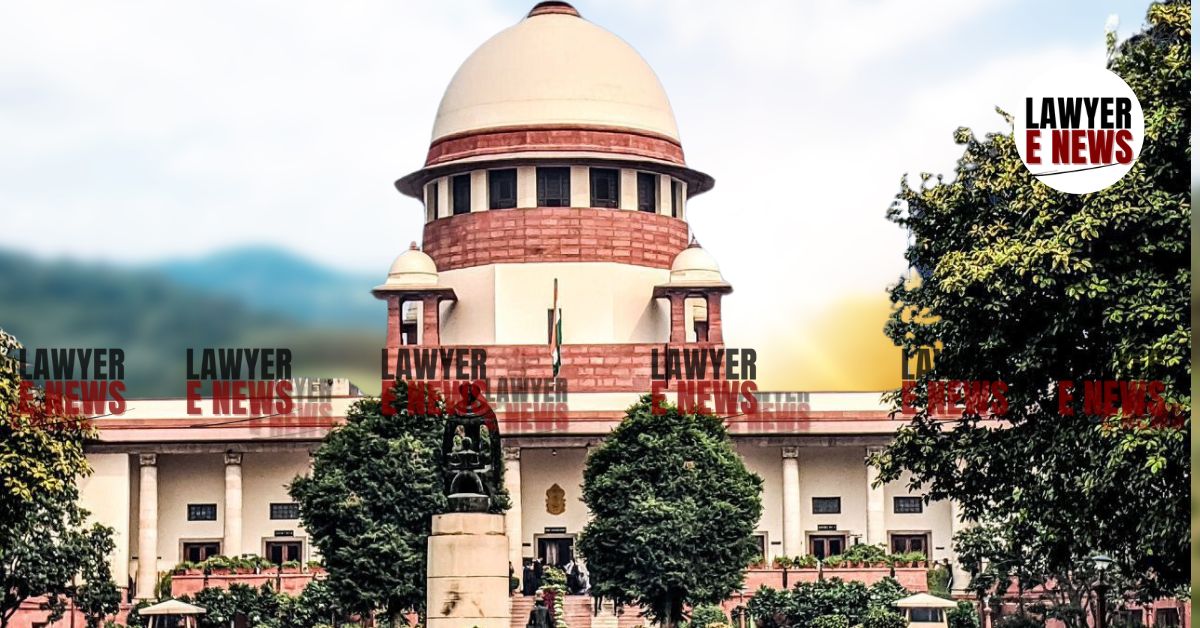
“Equity and fairness demand that the builder be put to the same rigours for delay, as it imposes on the buyer for default,” declared the Supreme Court on 24 September 2025, as it stepped in to correct what it called a “manifestly unjust bargain” between a homebuyer and a builder. Reversing the National Consumer Disputes Redressal Commission’s (NCDRC) grant of refund with 9% interest, the Court held that the developer must refund the entire principal amount with 18% simple interest, matching the same rate it had contractually imposed on the buyer for delay in payments.
The case arose from a 17-year-old housing transaction where the buyer was kept waiting for possession of a plot booked in 2006 and was then burdened with arbitrary charges when he sought possession over a decade later. The builder had charged interest at 18% per annum on delayed payments by the buyer but offered only 9% when returning the money after its own breach. The Court was categorical in rejecting this asymmetry.
“A Manifestly One-Sided Bargain Must Be Corrected by Courts”: Builder's Delay, Arbitrary Charges, and Unjust Refund Terms Lead to Reversal of NCDRC’s Order
The appellant, Rajnish Sharma, had booked a plot in 2006 for ₹36.03 lakhs and made payments over time amounting to ₹43.13 lakhs. A buyer agreement was executed in 2007, and the builder was obligated to hand over possession within 24 months of sanctioning the layout plan. However, not only was possession not offered until 2018, but the builder also changed the originally allotted plot citing layout alterations—without producing any record to show that such changes were necessitated by any statutory or governmental authority.
The Supreme Court pointedly noted: “The basis for offering such alternative allotment has not been disclosed… Whether or not the appellant raised a demur is not relevant for validation of the respondent’s conduct.”
The Court also criticised the fact that the developer, after over a decade of inaction, sought additional amounts from the buyer, including “enhanced EDC,” increased PLC, STP and electrification charges, and even GST—which was introduced much after the payments had been made.
“Builder Cannot Demand 18% For Buyer’s Default But Offer 9% For Its Own Delay”: Supreme Court Rejects Asymmetrical Refund Norms in Real Estate Contracts
What weighed heavily with the Court was the fact that the builder had, under the agreement, charged 18% interest on delayed instalments by the buyer—without explaining how those amounts were calculated—but was content to refund the money with only 9% interest when it failed to deliver the plot for over 12 years.
In its judgment, the Court held: “Although the rate of interest charged by the builder cannot be granted to the buyer as a rule of thumb, equity and fairness in this case demand that the respondent be put to the same rigours… If we hold otherwise, we will be perpetuating a manifestly wrong bargain.”
The NCDRC had disposed of the complaint solely on the basis of an offer made by the builder’s counsel during hearing—without even recording the buyer’s acceptance—and awarded only 9% simple interest. The Supreme Court found this to be legally flawed.
“The impugned order nowhere records that the appellant accepted such an offer,” it noted, making it clear that consent cannot be presumed merely because counsel made a statement in court.
“No Legal Principle Bars Courts From Granting the Same Rate of Interest Charged by Builders”: Supreme Court Discards Uniform 9% Compensation Approach
The respondent-builder relied on a series of precedents where the Supreme Court had awarded interest between 9% and 12% in housing delay cases. However, the Court clarified that there is no rigid standard or fixed percentage for delay compensation, and each case must be judged on its own factual matrix.
The judgment stated: “There is no principle of law that interest in default charged by the builder can never be granted to the buyer.”
Referring to IREO Grace Realtech, Vidya v. Parsvnath Developers, and Kolkata West International City v. Devasis Rudra, the Court emphasised that these were decisions based on unique facts—such as COVID-related disruptions or specific clauses—and did not constitute binding rules on what rate of interest must be granted across the board.
“Law is well settled that the amount of interest should be reasonable. What is reasonable varies from case to case,” the Court explained.
In the present matter, it found the NCDRC’s award of 9% interest entirely inadequate given the builder’s conduct.
“The Respondent’s Conduct Is Full of Blemishes—It Cannot Escape With Nominal Liability for Over a Decade of Delay”
The Supreme Court took note of the builder’s actions over the years: shifting the plot without disclosing the statutory basis, demanding unexplained charges, offering possession after 12 years, and then refusing to refund the money even after the NCDRC’s order by raising frivolous objections regarding power of attorney.
Describing this conduct as “writ large,” the Court observed:“The long wait that the appellant had to endure over a period of a decade, causing harassment and anxiety, is evident. The respondent cannot be permitted to escape with a nominal liability.”
While reiterating that compensation must not become a “windfall,” the Court clarified that this case was not about quantifying damages for property appreciation, but about restoring parity and fairness in refunding money withheld for years.Interest Enhanced to 18% Per Annum—Builder Directed to Refund Within Two Months
Holding that “justice must not become hostage to unequal bargaining power,” the Supreme Court enhanced the interest rate from 9% to 18% per annum on the principal amount of ₹43,13,212, payable from the date of each payment till refund. The rest of the NCDRC’s order was upheld.
“We, therefore, substitute the rate of interest awarded by the NCDRC and increase it from 9% to 18% per annum,” the Court declared, making it clear that “equity and fairness must inform even contractual relationships—especially when one party is in a dominant position.”
The appeal was allowed to that extent and the builder was directed to make the refund within two months.
Date of Decision: 24 September 2025