-
by sayum
29 August 2026 9:28 AM







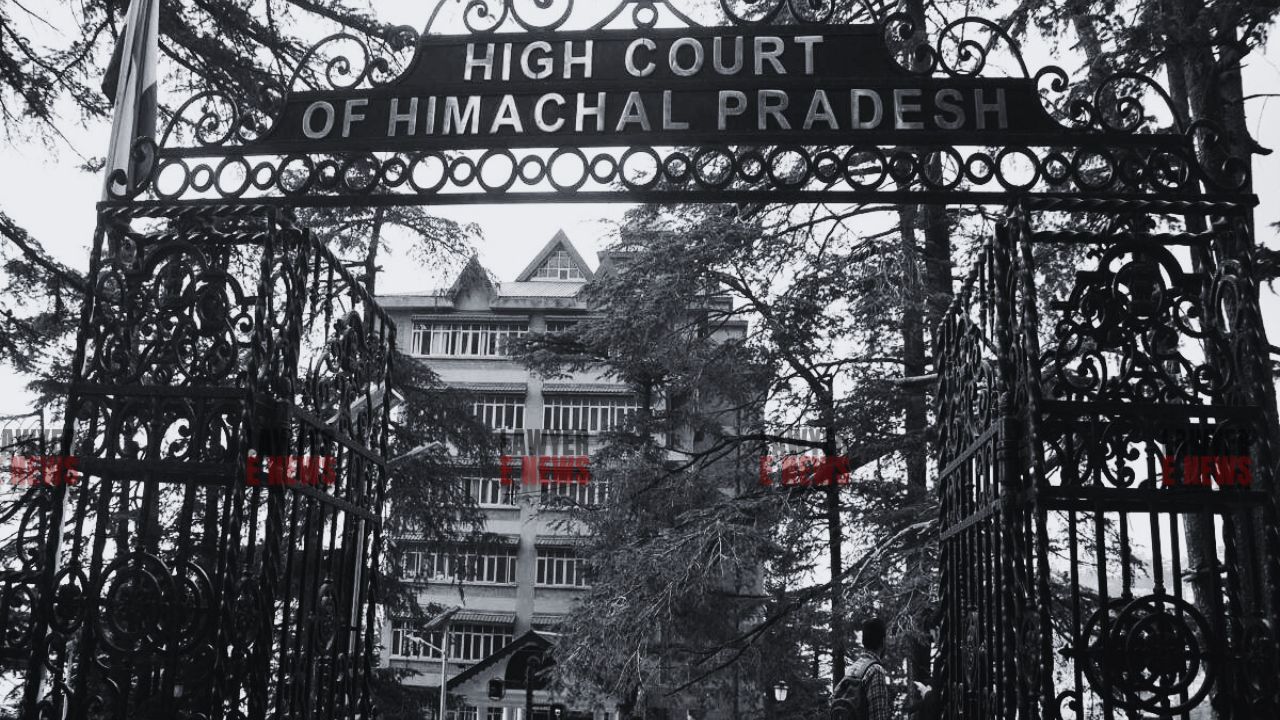
“Bail cannot be denied as a punishment to the accused before their conviction” — In a significant decision delivered Himachal Pradesh High Court allowed the petitions for regular bail filed by four accused in a case involving allegations of sexual harassment of two minor girls aged 13 and 14 years.
Justice Rakesh Kainthla held that despite the serious nature of the allegations and the trauma suffered by the victims, continued incarceration could not be justified when the investigation had concluded, the petitioners had spent over four months in custody, and there was no prior criminal record.
The Court made it clear that the presumption of innocence and liberty of the accused must be preserved, subject to appropriate conditions to safeguard the victims and the trial process.
“Jurisdiction of High Court Under Section 439 CrPC Is Concurrent and Original” — Rejection of Bail by Sessions Court No Bar to Petition Before High Court
The Court categorically rejected the objection raised by the informant’s counsel that the bail petitions were not maintainable before the High Court following their rejection by the Sessions Court, in the absence of a change in circumstances.
Justice Rakesh Kainthla ruled:
“It is now well-settled that there is no bar whatsoever for a party to approach either the High Court or the Sessions Court with an application for ordinary bail under Section 439 CrPC. The power given by Section 439 to the High Court or Sessions Court is an independent power.”
Relying on Devi Das Raghu Nath Naik v. State, (1988) 1 Bom CR 22, the Court emphasized:
“The High Court acts in exercise of its original special jurisdiction to grant bail, and although concurrent with the Sessions Court, it is not subordinate to it. The fact that bail was refused by the Sessions Court does not prevent the High Court from considering the same plea on the same facts.”
The Court observed that such objections are misconceived in law, and that the doctrine of hierarchy does not restrict bail jurisdiction under Section 439 CrPC.
“Bail Must Not Be Denied on Account of Public Emotion or Moral Panic” — High Court Relies on Supreme Court Precedents to Uphold Individual Liberty
Dealing with the argument of trauma suffered by the victims and public interest, the Court clarified that:
“The petitioners would be convicted and sentenced for the offence committed by them, if found guilty, but bail cannot be denied as a punishment to them before their conviction.”
Justice Kainthla cited the landmark principles laid down by the Supreme Court in Ajwar v. Waseem, (2024) 10 SCC 768, and Ramratan v. State of M.P., 2024 SCC OnLine SC 3068, that bail must be decided on objective criteria, including the nature of the offence, the risk of tampering with evidence, flight risk, and the stage of investigation.
The Court emphasized that continued custody without any investigative necessity violates the right to liberty and the principle of fair trial:
“The fundamental purpose of bail is to ensure the accused's presence during the investigation and trial. Any conditions imposed must be reasonable and directly related to this objective.”
“Victim Safety Must Be Balanced With Bail Liberty Through Stringent Conditions” — Petitioners Barred From Contacting Victims or Visiting Their Village
Though the Court acknowledged that the victims were traumatised by the acts of the petitioners, it held that such concern, though serious, can be adequately addressed by stringent bail conditions rather than outright denial of bail.
The order directed the petitioners to:
Refrain from contacting or visiting the village of the victims
Surrender their passports
Share mobile numbers and social media account details
Comply with all summons and remain present during trial
Not leave their address for more than seven days without prior intimation
The Court underlined:
“Such protective measures justify release despite the seriousness of the offence. Liberty of the accused must be weighed with the right of the victim, and a balance must be maintained.”
It was further held that in case of violation of any bail condition, the prosecution will have the right to seek cancellation of bail.
“Prolonged Custody Without Purpose is Arbitrary” — Bail Granted With ₹1 Lakh Bond and Surety
Taking note that the petitioners had been in custody since 4th April 2025 and the charge sheet was already filed, the Court found no justification to keep them further incarcerated.
The judgment concluded: “The petitioners were arrested on 04.04.2025 and have already spent more than 04 months in prison. They deserve a chance to reform themselves… I am of the opinion that their continued detention is not warranted in the present facts.”
The petitioners were directed to be released on bail on furnishing personal bonds of ₹1,00,000 each with one surety each of the like amount, to the satisfaction of the trial court.
The Court expressly noted: “The observations made hereinabove are regarding the disposal of the petitions and will have no bearing, whatsoever, on the merits of the case.”
This ruling is a measured reaffirmation of the constitutional balance between liberty and victim protection. While acknowledging the trauma and seriousness of the charges under POCSO, the Court refused to allow pre-trial custody to become a substitute for punishment.
By invoking a long line of Supreme Court precedents, the Himachal Pradesh High Court reasserted that bail is a right—not to be denied unless there is substantial reason backed by law and facts.
As Justice Rakesh Kainthla summed up:
“Bail cannot be denied as a punishment to them before their conviction… Every accused deserves a fair opportunity to defend, and liberty must be preserved under judicial control.”
Date of Decision: 27 August 2025