
-
by sayum
18 August 2026 1:32 PM







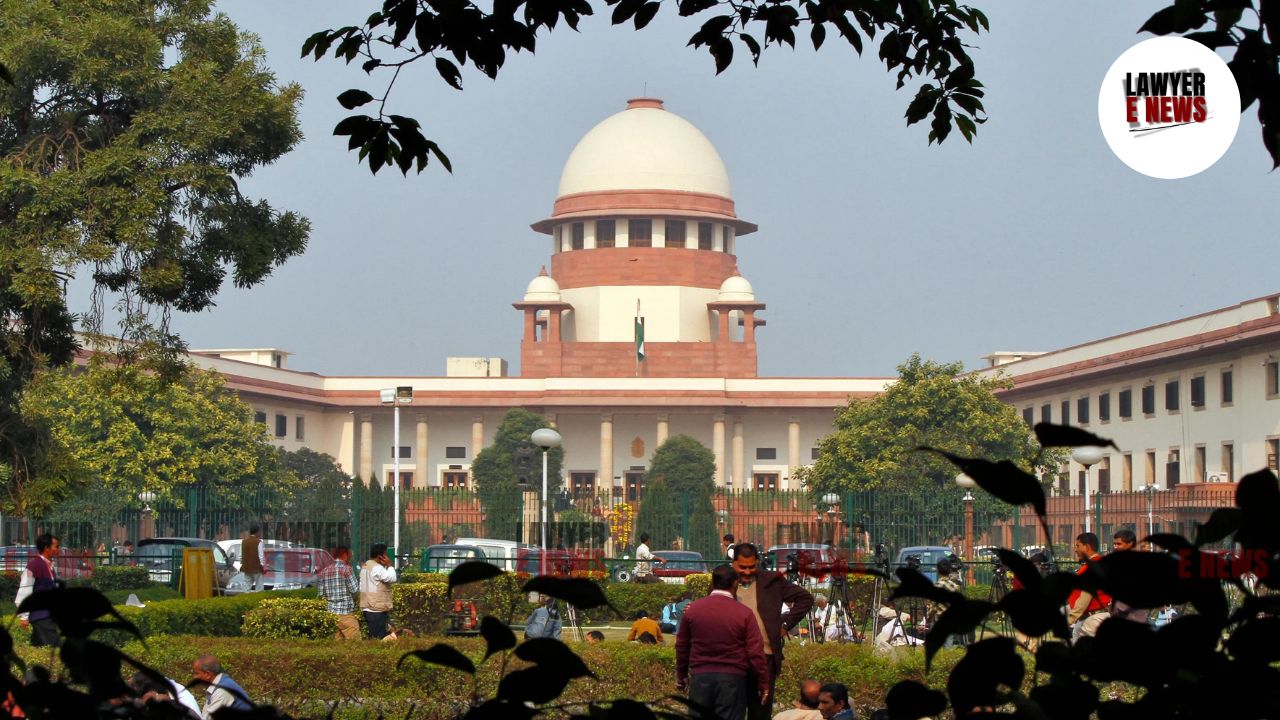
Supreme Court of India, in Deshraj @ Musa vs State of Rajasthan, granted bail to the appellant, Deshraj, overturning the decision of the Rajasthan High Court. The case revolved around accusations under several provisions of the Indian Penal Code and the Protection of Children from Sexual Offences (POCSO) Act. A crucial point in the case was the nature of the relationship between the appellant and the victim, with the defense arguing consensual involvement and the prosecution maintaining the charges of abduction and sexual offences.
The case originated with an FIR filed on April 28, 2024, accusing Deshraj of offenses under Sections 354(D), 506, 363, 366, 376, 511, and 34 of the IPC, and Sections 7/8 and 11/12 of the POCSO Act. The appellant, aged eighteen and a half, was arrested on May 8, 2024, and the chargesheet was filed on June 5, 2024, before the POCSO Court in Sikar, Rajasthan.
Deshraj had earlier approached the Special Judge and the High Court seeking bail but was denied on both occasions. The prosecution's main argument was that the victim was a minor (aged 16), making the case ineligible for consent as a defense under the POCSO Act.
The central issue was whether the alleged relationship between Deshraj and the victim could be considered consensual given the age of the parties involved. The defense argued that the victim was in a consensual relationship with Deshraj and that prolonging the trial would unduly harm the appellant, who had already been incarcerated for several months. The prosecution opposed the bail, asserting that the victim's age (below 18) negated the defense of consent and highlighted the gravity of the charges.
The Supreme Court, after hearing both parties, took into account the fact that the appellant had been in jail since May 2024 and that the trial could take considerable time to conclude. The Court also considered that the appellant and the victim had a prior relationship and that the appellant was a young adult.
“Considering the facts on record, in our view, the case for bail is made out.”
The Court further emphasized that stringent conditions would be imposed to ensure the appellant’s cooperation with the trial and to prevent any contact with the victim:
"The appellant shall not misuse his liberty in any manner or influence the witnesses... [nor] re-associate with the victim in any manner, either through a device or in-person."
With this ruling, the Supreme Court set aside the Rajasthan High Court’s rejection of bail, directing the trial court to release Deshraj on bail, subject to conditions.
The Supreme Court’s decision to grant bail highlighted the nuanced considerations of age and consent within the framework of the POCSO Act. It also reflected the Court's emphasis on ensuring a balance between prolonged pre-trial detention and the accused's rights, especially when young adults are involved in cases where consensual relationships are alleged.
Date of Decision: October 4, 2024
Deshraj @ Musa vs State of Rajasthan