
-
by sayum
26 August 2026 1:49 PM







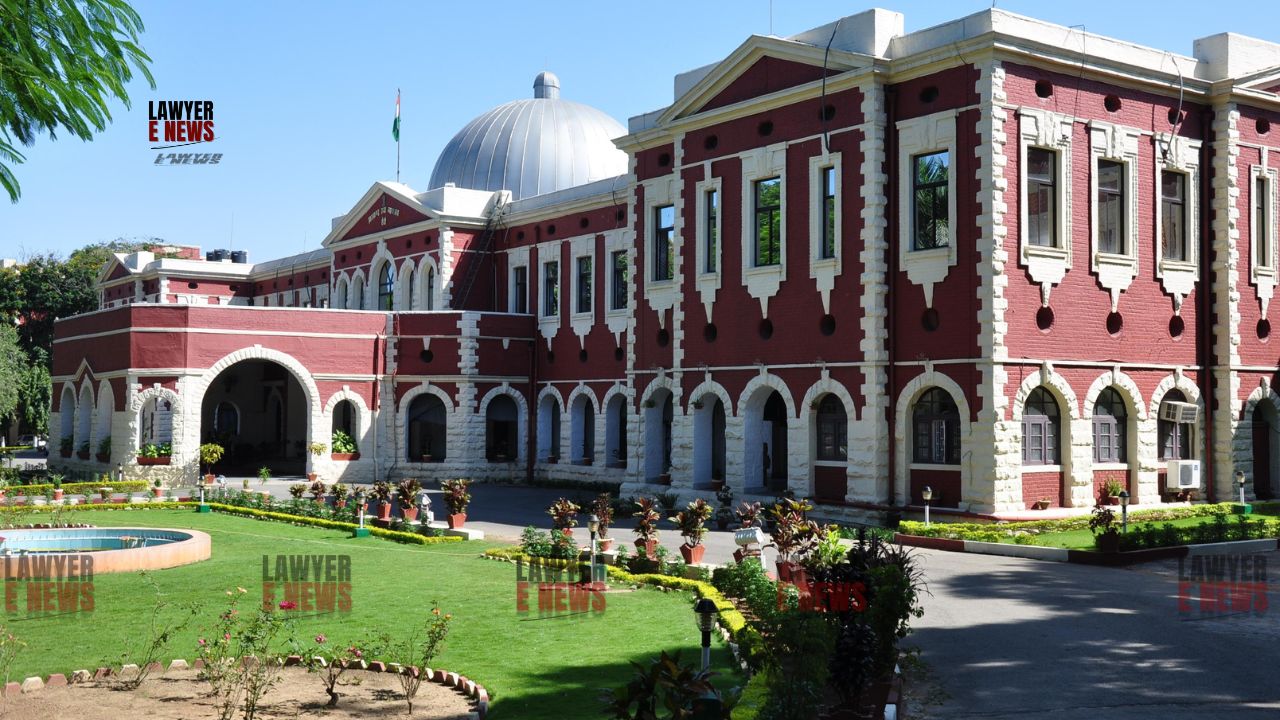
"Mere Allegation of Irregularity Is Not Sufficient — Where a Power Is Conferred to Do a Thing in a Certain Way, the Thing Must Be Done in That Way or Not at All", Jharkhand High Court dismissed two Letters Patent Appeals filed by the State of Jharkhand, upholding the quashing of orders that had deducted 5% pension of two retired engineers on the basis of show cause notices alone, without conducting full-fledged departmental proceedings. A Division Bench of Chief Justice M.S. Sonak and Justice Rajesh Shankar held that the State had fulfilled neither of the two conditions required under Rule 139 of the Jharkhand Pension Rules, 2000 before reducing a pensioner's pension.
The two respondents — an Engineer-in-Chief who retired on April 30, 2017, and a Chief Engineer who retired on January 31, 2018 — both served in the Water Resources Department of the Government of Jharkhand. No departmental proceedings were initiated against either of them during their service. After retirement, the State sought explanations regarding alleged irregularities in disposal of desilted soil under three schemes for the financial year 2014-15. On receiving their replies, second show cause notices were issued, and orders of 5% deduction from pension for two years were passed under Rule 139 of the Jharkhand Pension Rules, 2000. Both engineers challenged the orders before the Single Judge, who quashed them. The State appealed through Letters Patent Appeals before the Division Bench.
Two Conditions for Pension Deduction — Neither Met
The Court examined Rule 139 of the Jharkhand Pension Rules, 2000, which empowers the State Government to reduce pension in two circumstances: first, where the service of the pensioner was not thoroughly satisfactory; and second, where there is proof of grave misconduct established in a departmental or judicial proceeding.
On the first condition, the Court held that the word "thoroughly satisfactory" requires the authority to examine the entire service record of the employee — not a single instance of irregularity. In this case, the State had cited only one specific incident from 2014-15. Neither respondent had ever faced departmental proceedings during their careers, and it was never alleged that their overall service was unsatisfactory.
"By looking to a single instance of irregularity, the authority cannot form an opinion that the service of an employee was thoroughly unsatisfactory so as to exercise the power under Rule 139(c) of the Rules, 2000, rather the authority has to examine the entire service record of such employee."
On the second condition, the Court found that neither full-fledged departmental proceedings were conducted nor were criminal proceedings set in motion against the respondents. No charge memos were issued, no inquiry officer was appointed, and no proper opportunity of hearing was given in a formal inquiry. In these circumstances, grave misconduct could not be said to have been proved — which is an essential pre-condition for exercising power under Rule 139(c).
"Mere allegation of irregularities is not sufficient to exercise the power conferred under Rule 139(c) of the Rules, 2000, rather the same has to be proved in a departmental proceeding or a criminal proceeding by giving due opportunity of hearing to the person concerned."
Procedure Under Rule 43(b) Is Mandatory
The Court further held that Rule 43(b) of the Jharkhand Pension Rules — which governs post-retirement departmental proceedings — requires that such proceedings must be conducted strictly in accordance with the procedure applicable to proceedings in which an order of dismissal from service may be made. This rigorous procedural standard applies equally when the State seeks to reduce pension under Rule 139(c).
Relying on the Supreme Court's judgment in State of Bihar v. Mohd. Idris Ansari (1995 Supp (3) SCC 56), the Court reiterated that proof of grave misconduct must be culled from departmental or judicial proceedings — whether conducted during service or initiated post-retirement in compliance with Rule 43(b). A mere exchange of show cause notices and replies does not constitute such a proceeding.
"It is a settled law that where a power is conferred to do a certain thing in a certain way, the thing must be done in that way or not at all."
The Division Bench dismissed both Letters Patent Appeals and confirmed the orders of the Single Judge quashing the pension deduction orders. The ruling makes clear that the State cannot bypass the formal machinery of departmental proceedings and reduce a retired government servant's pension on the strength of administrative correspondence alone. The condition precedent under Rule 139(c) having not been fulfilled, the orders of deduction were rightly set aside.
Date of Decision: March 17, 2026





