-
by sayum
29 August 2026 9:28 AM







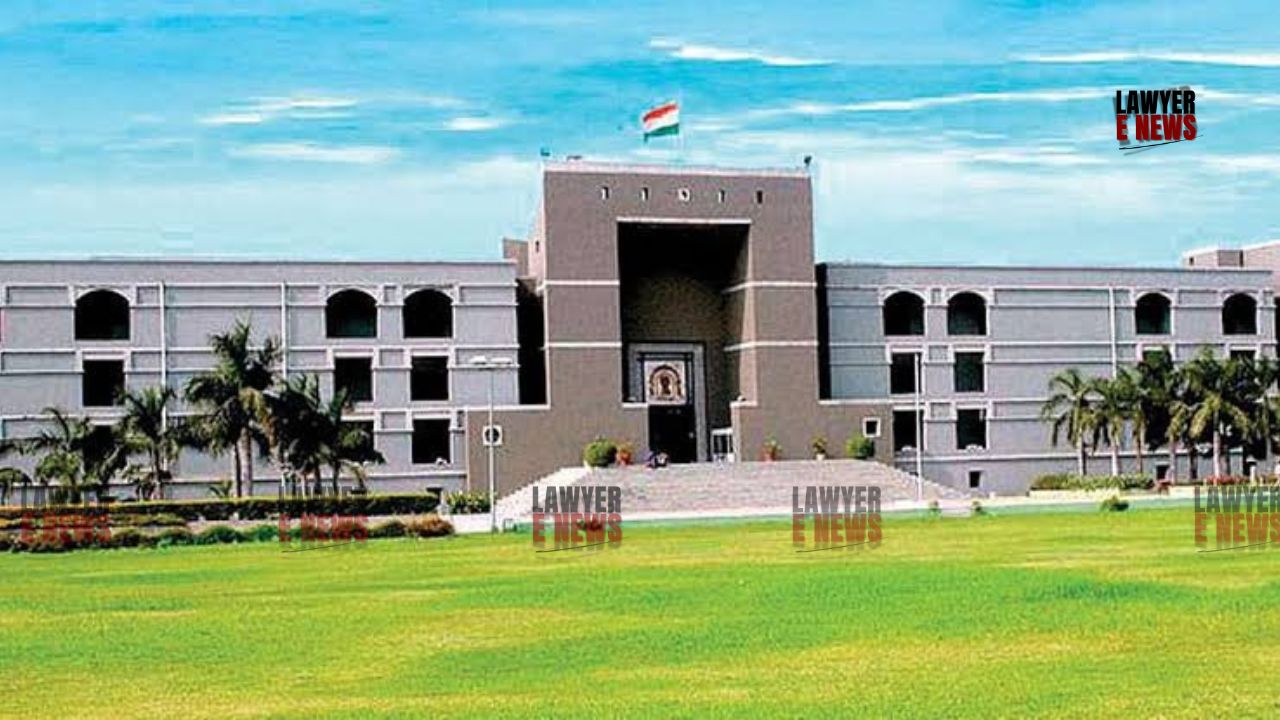
"Courts Cannot Shut Their Eyes to the Modus Operandi of Well-Orchestrated Financial Frauds Masquerading as Investment Schemes", Gujarat High Court rejecting an application for anticipatory bail filed under Section 482 of the Bharatiya Nagarik Suraksha Sanhita, 2023. The Court found that the applicant, allegedly involved in a systematic financial scam, failed to demonstrate any exceptional grounds to warrant pre-arrest protection. Justice Divyesh A. Joshi categorically observed that economic offences, by their very nature, must be dealt with a “different approach” in bail jurisprudence, especially when public trust and large sums of money are involved.
The ruling came in a case where the accused were alleged to have defrauded innocent investors of over ₹22 crores, under the guise of property-linked investment schemes promising lucrative returns. The Court held that custodial interrogation was not only justified but necessary, and anticipatory bail in such cases would "frustrate the very process of investigation."
"A Systematic Racket to Cheat Gullible Persons by Offering Illusory Schemes": How the Scam Unfolded
The case originated from FIR No.1120100125004/2024, registered at CID Crime Gandhinagar Zone. The prosecution alleged that during the period between January 1, 2023, and December 31, 2023, the accused, including applicant Kanubhai Sakabhai Patel, colluded to deceive hundreds of investors. They allegedly offered fake schemes promising high returns on investments in properties. Though initial returns were given to gain trust, the accused later defaulted.
The applicant claimed innocence, arguing that he had no direct contact with any investors and blamed accused no.1 Kanaiyalal Manilal Patel and Ramanpuri Chhaganpuri Goswami, who, according to him, signed promissory notes and received the money.
However, the Court was unconvinced. It remarked that: "The investigation carried out so far clearly goes on to show the involvement of the applicant in the commission of crime... it was the intention of the accused to cheat the innocent and gullible persons and as part of said conspiracy, they pocketed huge volume of amount."
“The Amount Reaches Up to ₹150 Crores – This Is a Huge Scam”: Gravity of Offence Bars Anticipatory Bail
Justice Joshi noted that the documents and statements from witnesses revealed that the total amount collected could be between ₹130 to ₹150 crores, far exceeding what was disclosed by the applicant. The scale of the fraud, combined with the GPID Act being invoked, weighed heavily against the grant of pre-arrest bail.
The Court stated: “Economic offences having deep-rooted conspiracies and involving huge loss of public funds need to be viewed seriously and considered as grave offences affecting the economy of the country.”
It referred to a long line of Supreme Court precedents including P. Chidambaram v. Directorate of Enforcement and Y.S. Jagan Mohan Reddy v. CBI, where the Apex Court warned that anticipatory bail in economic offences must be exercised "sparingly and only in exceptional cases."
“The Court of Original Criminal Jurisdiction Is Denuded of Power to Grant Anticipatory Bail under the GPID Act”: A Statutory Bar Reiterated
Crucially, the Court invoked its own previous ruling in Geetaben Manishkumar Shah v. State of Gujarat, where it had held that:
“The court of original criminal jurisdiction has been denuded of the power to grant anticipatory bail to an accused under Section 438 of the Cr.P.C. in offences under the GPID Act.”
Reiterating that the bar under Section 17(2) of the GPID Act was a statutory restriction, the Court emphasized that no amount of judicial discretion can override this legislative intent. Hence, the application was untenable on legal grounds alone.
“Anticipatory Bail Cannot Be Granted Merely Because Custodial Interrogation Is Not Sought”: Prima Facie Involvement Must Be the Focal Point
The Court also rejected the common defence that custodial interrogation was unnecessary. It quoted the Supreme Court in Sumitha Pradeep v. Arun Kumar:
"There appears to be a serious misconception of law that if no case for custodial interrogation is made out by the prosecution, then that alone would be a good ground to grant anticipatory bail."
Justice Joshi declared that “the first and foremost thing the court must consider is the prima facie case against the accused”, not whether the police explicitly seek custody. In this case, the materials placed on record, including witness statements, the scale of the scam, and the applicant's role in the partnership firm, were enough to deny relief.
“Such Offences Cannot Be Allowed to Go Unchecked — They Threaten the Economic Fabric of the Country”: Court’s Final Verdict
The Court concluded its 27-page detailed judgment by reiterating the danger posed by white-collar crimes:
"A murder may be committed in the heat of moment... An economic offence is committed with cool calculation and deliberate design with an eye on personal profit regardless of the consequence to the community."
Justice Joshi ultimately held that “no exceptional ground” existed to grant the “extraordinary remedy” of anticipatory bail under Section 482 BNSS, 2023. The application was dismissed, and the applicant directed to cooperate with the investigation.
Date of Decision: 2nd September 2025