-
by sayum
28 August 2026 2:11 PM







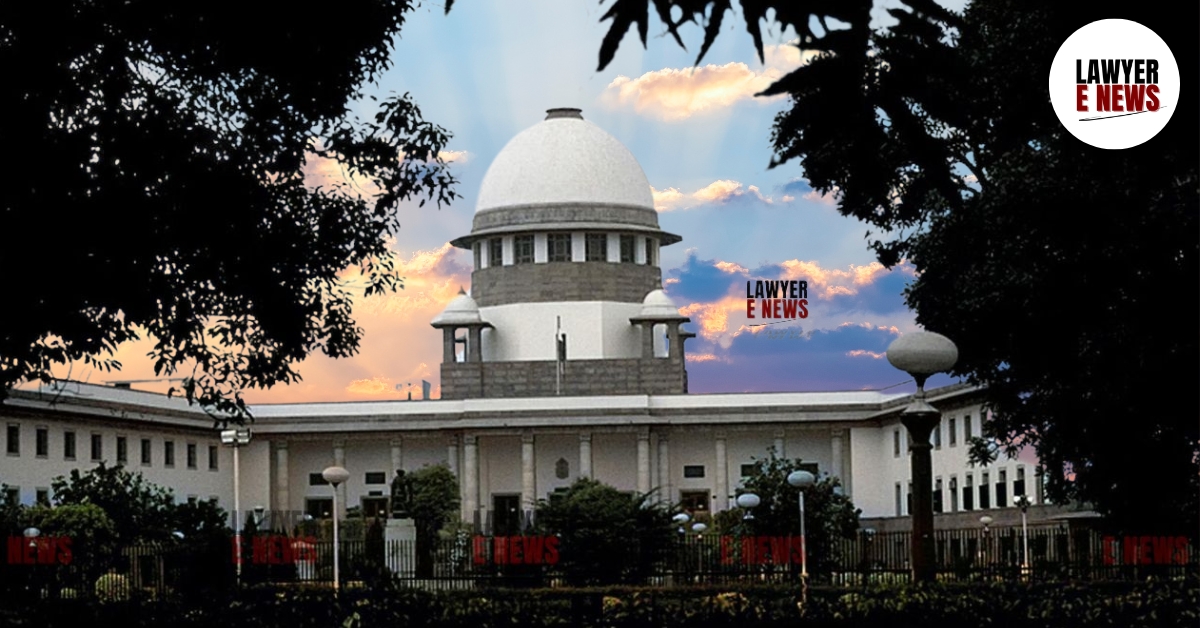
“Though the Policy Was Later Found Inapplicable, Insurer Failed to Prove Fraud During Trial”— In a nuanced judgment, the Supreme Court of India refused to interfere with the compensation awarded by the Motor Accident Claims Tribunal and upheld by the High Court of Uttarakhand, while granting partial relief to the insurer. Supreme Court permitted the insurer to recover 50% of the compensation amount from the vehicle owner and driver, despite the policy appearing valid at the time of trial.
The issue arose from a fatal accident that occurred on June 21, 2006, in which a 21-year-old security guard Hem Singh Mehta was killed after being hit by a truck while waiting at Tanda Chowk. The Tribunal awarded ₹3,87,000 to the claimants with 7% interest, and the liability was fixed on the insurer. However, the insurance company later claimed that the policy was not valid on the date of the accident, accusing the owner of manipulating policy dates—an allegation that was not substantiated with evidence during the original trial.
“The Tribunal Proceeded on Valid Documents Before It” – No Fault Found in Compensation Award
The owner of the offending truck had produced a policy document showing validity from June 17, 2006 to June 16, 2007, which covered the date of the accident. Based on this, the Motor Accident Claims Tribunal, Haldwani, accepted the coverage and awarded compensation. The insurer did not raise objections or submit verification during the main trial proceedings.
Later, in a review petition, the insurer alleged that upon verification from the Rohtak office, the actual policy period was June 28, 2006 to June 27, 2007, and the dates were fraudulently altered by the owner. However, the Tribunal dismissed the review petition, stating it lacked power under the Motor Vehicles Act to entertain a review.
“Though the allegation of fraud is levelled, it could not be proved by the insurer,” observed the Supreme Court.
The review order dated October 12, 2007, was never challenged before the High Court. When the matter came before the High Court in appeal, both the insurer’s challenge and the cross-appeal by claimants seeking enhancement were dismissed.
“Claim of Fraud Raised Too Late, and Not Proven”—SC Grants Equitable Remedy Without Disturbing Award
Before the Supreme Court, the insurer reiterated the validity issue of the policy, claiming it had been misled due to fraud by the vehicle owner. The Court acknowledged the new information but clarified:
“This Court is not inclined to interfere with the judgment and order of the High Court. However… it would subserve the ends of justice if the appellant-Insurance Company is allowed to recover 50% of the compensation from the owner and the driver in accordance with law.”
Thus, while upholding the compensation to the victim’s family, the Court partially modified the High Court's judgment to balance the equities, recognizing the insurer’s belated—but factually supported—verification.
The Court made it clear that if any portion of the awarded amount is pending, the insurance company must deposit the balance within six weeks before the Tribunal. However, it would now be entitled to recover 50% of the amount paid from the owner and driver, using execution proceedings as per law.
“Failure to Contest Validity at the Right Stage Is Fatal in Law”—An Implicit Warning to Insurers
The judgment subtly emphasized a larger legal lesson: Defences not raised at the appropriate stage cannot be resurrected through review or appeal, especially when accompanied by allegations of fraud unsupported by trial evidence. The insurer’s own failure to challenge the review order or bring evidence during the main claim proceedings diminished the weight of their later objections.
The Supreme Court’s verdict strikes a balance between upholding claimants' rights to timely compensation and protecting insurers from total liability when fraud surfaces later—even if only partially established.
Date of Decision: September 26, 2025