-
by sayum
24 August 2026 10:50 AM







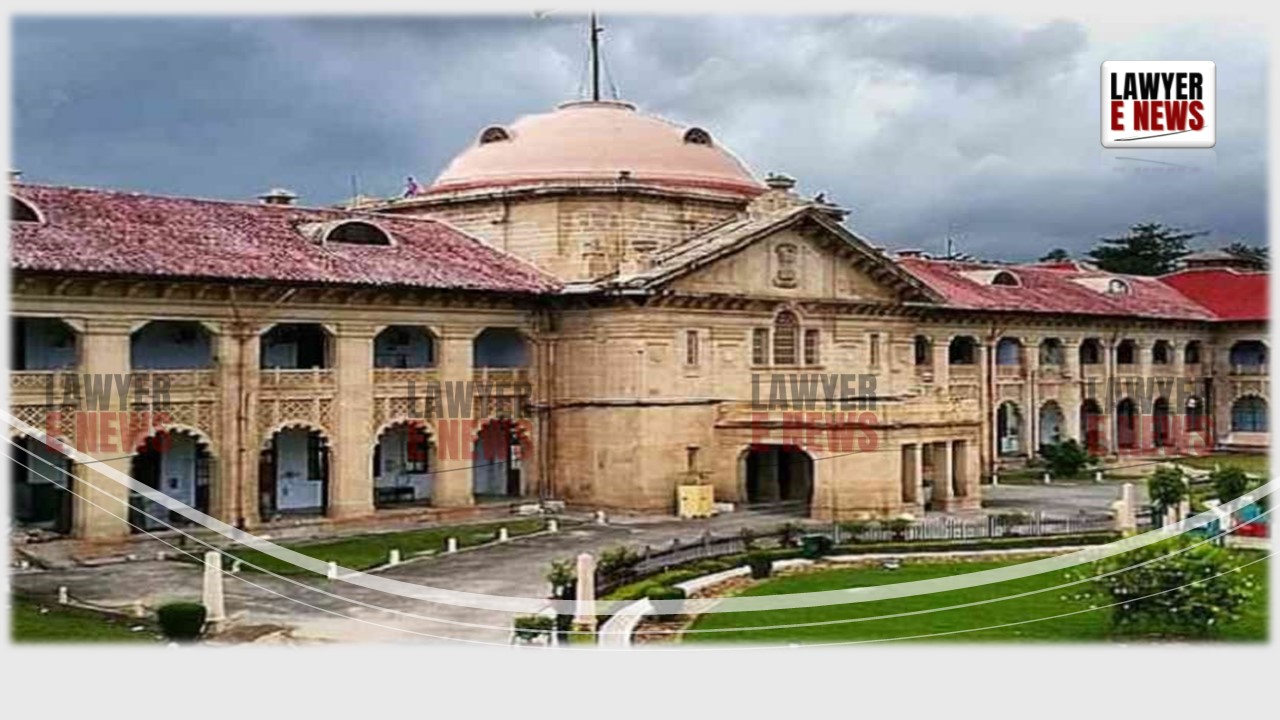
"A suit for cancellation of a sale deed executed on the basis of fraud and misrepresentation is maintainable before a Civil Court – Section 331 does not bar such jurisdiction unless the relief sought pertains exclusively to rights under the U.P. Zamindari Abolition and Land Reforms Act" – Allahabad High Court
Allahabad High Court dismissed a second appeal challenging the concurrent judgments of the Trial Court and First Appellate Court. The courts below had canceled a sale deed executed fraudulently on the basis of an unregistered and forged Power of Attorney. The High Court upheld that the Civil Court had jurisdiction to hear the matter and affirmed the cancellation of the sale deed, as no substantial question of law arose.
The plaintiff, Ram Pal, filed a suit in the Civil Court seeking cancellation of a sale deed executed on May 23, 1992. He alleged that the sale deed was executed based on a fraudulent and unregistered Power of Attorney (PoA) dated March 30, 1992, which he had never executed. The defendants, claiming title under the sale deed, contended that the suit was barred by Section 331 of the U.P. Zamindari Abolition and Land Reforms Act, 1950, as the dispute involved agricultural land and should have been filed in the Revenue Court.
The Trial Court decreed the suit on November 12, 2003, canceling the sale deed after finding that the PoA was forged. The First Appellate Court dismissed the defendants' appeal on January 27, 2016, affirming the Trial Court’s decision. Aggrieved, the defendants filed the present second appeal under Section 100 of the Code of Civil Procedure, 1908.
"Fraudulent Power of Attorney confers no title; sale deed executed based on such a document is void"
The High Court upheld the findings of the lower courts that the Power of Attorney used to execute the sale deed was not executed by the plaintiff and was fraudulent. It stated, “An unregistered Power of Attorney, which was not executed by the plaintiff but was fraudulently used to execute the sale deed, confers no title or authority. The sale deed executed based on such a document is void.”
The court referred to the Supreme Court judgment in Shakeel Ahmed vs. Syed Akhlaq Hussain (2023 SCC OnLine SC 1526), which held that “no right, title, or interest in immovable property can be transferred based on an unregistered Power of Attorney.” Applying this principle, the court affirmed that the sale deed in question was void ab initio.
Jurisdiction of Civil Court – Section 331 of the U.P. Zamindari Abolition and Land Reforms Act
The appellants argued that the suit was barred by Section 331 of the U.P. Zamindari Abolition and Land Reforms Act, 1950, which restricts Civil Courts from taking cognizance of suits or proceedings that can be decided by Revenue Courts. They contended that the plaintiff should have filed a suit for declaration under Section 229-B of the Act.
Rejecting this argument, the court held that Section 331 does not bar the jurisdiction of Civil Courts in suits for cancellation of sale deeds based on fraud or misrepresentation. It explained, “The plaintiff, a recorded bhumidhar, whose title was not under cloud, is entitled to seek cancellation of the sale deed in Civil Court as no declaration of title was necessary.”
Referring to the Supreme Court’s judgment in Shri Ram vs. Ist ADJ (2001) 3 SCC 24, the court observed, “Where a recorded tenure-holder with prima facie title seeks cancellation of a sale deed due to fraud or impersonation, the Civil Court has jurisdiction to entertain the suit, as the recorded tenure-holder’s title is not under cloud.”
"Section 331 does not deprive a party of their right to approach a competent court for cancellation of a fraudulent sale deed"
The court reiterated that Section 331 does not deprive individuals of their right to approach the Civil Court for cancellation of sale deeds executed on the basis of fraud or misrepresentation. It noted that the Revenue Courts do not have jurisdiction to grant such relief. Citing Narendra Kumar Mittal vs. Nupur Housing Development Pvt. Ltd. (2019), the court held, “Revenue Courts do not have jurisdiction to grant relief of cancellation of a deed on the ground of fraud and misrepresentation, especially when the recorded tenure-holder’s title is not under cloud.”
Non-Challenge to Power of Attorney – Effect on Suit Maintainability
The appellants argued that the plaintiff had not directly challenged the Power of Attorney used to execute the sale deed, rendering the suit non-maintainable. The court rejected this argument, holding, “Since the Power of Attorney was found to be forged and fraudulent, the sale deed executed on its basis was void, and no separate challenge to the Power of Attorney was required.”
The court emphasized that the fraudulent nature of the PoA rendered the sale deed void ab initio. “Even if the Power of Attorney was not directly challenged, its fraudulent nature and the consequent illegality of the sale deed have been conclusively established,” the court stated.
The Allahabad High Court dismissed the second appeal, affirming the jurisdiction of the Civil Court and upholding the cancellation of the fraudulent sale deed. It held that the plaintiff’s title as a recorded bhumidhar was not under cloud, and the Civil Court was the appropriate forum for seeking cancellation of the sale deed.
“There is no illegality or error in the findings of the courts below, which have been rendered in accordance with law. No substantial question of law arises in this appeal,” the court concluded.
Date of Decision: January 24, 2025