-
by Admin
17 December 2025 5:02 AM







“The Respondent's conduct shows complete disregard to the rule of law... A devil-may-care attitude in disciplinary proceedings is unacceptable,” says Bar Council while ordering six-month suspension
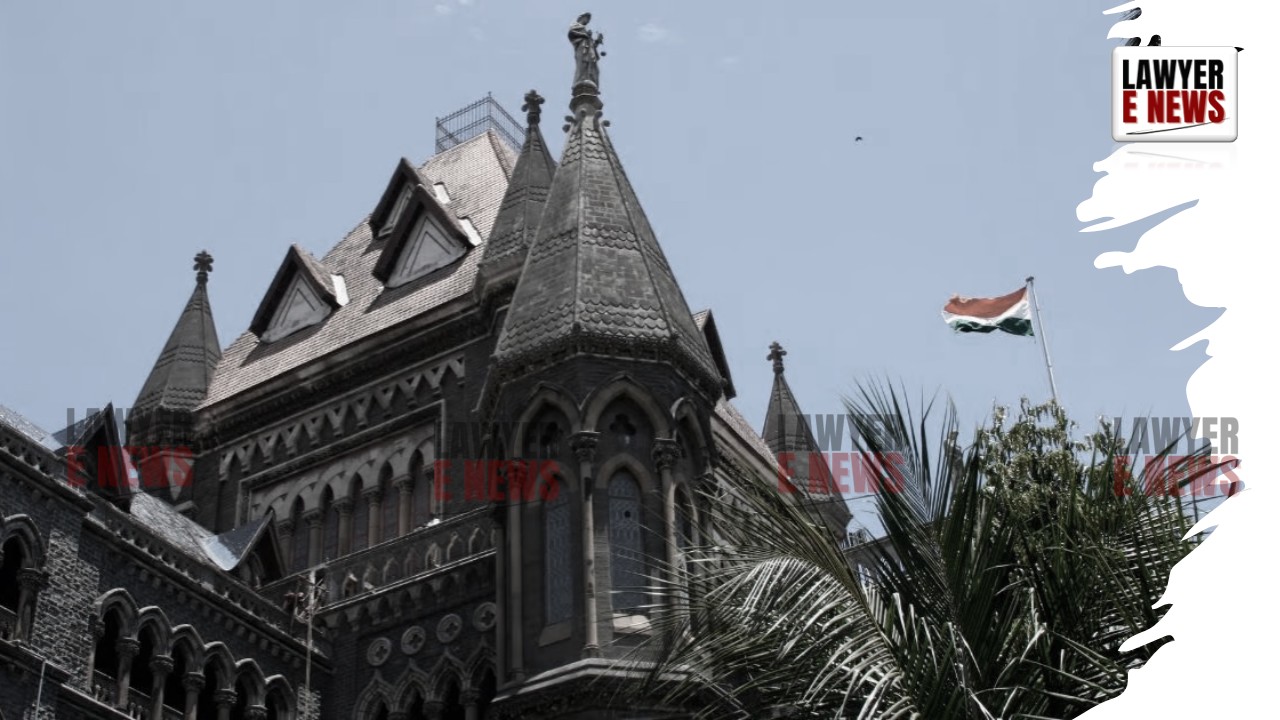
Bar Council of Maharashtra and Goa, through its Disciplinary Committee No. 4, passed a landmark judgment in Disciplinary Case No. 503 of 2024, holding Advocate Iva S. Bansal guilty of professional misconduct for accepting fees without rendering legal services and persistently avoiding participation in the disciplinary process. The Committee, headed by Hon’ble Shri Abhay S. Khandeparkar, with Shri Sudeep R. Pasbola and Shri Subhash J. Ghatge as members, suspended the Respondent from practice for six months, noting that “the Respondent is guilty of professional misconduct as contemplated under Section 35 of the Advocates Act, 1961.”
The decision underlines the accountability of legal professionals, particularly in situations where they accept fees with specific assurances, and then fail to act or engage with clients—or the disciplinary forum.
“Uncontroverted Allegations and Complete Absence of Defence Amount to Admission”: Advocate Found Guilty for Taking Fees but Failing to File Application
The proceedings arose from a complaint filed by Mr. Hitesh Thadeshwar, who alleged that Advocate Bansal, a long-time acquaintance, failed to file a Discharge Application before the Borivali Magistrate's Court despite charging him for it and later refusing to return the money. According to the complainant, after a criminal case (FIR No. 374 of 2019) was registered against him during a dispute in his housing society, he turned to the Respondent for legal assistance. Bansal agreed to handle both the FIR quashing through a Writ Petition and a separate civil suit for damages, and an MoU was allegedly entered into—though not produced on record.
An amount of approximately ₹5,09,000 was paid to her in January 2020. A portion was earmarked specifically as a retainer fee for filing a Discharge Application before the Magistrate. Though a writ petition was eventually filed in 2021 (W.P. No. 5220 of 2021), it was dismissed by the High Court with liberty to file the Discharge Application. The Complainant alleges that this Application was never filed, and repeated requests for refund went unanswered.
He further alleged financial and reputational loss due to inaction by the Respondent and produced bank statements and emails to substantiate his claims. Despite this, the Respondent neither responded adequately nor cross-examined the complainant. The Committee remarked:
“There is no cross-examination on the part of the Respondent. The Respondent has not offered to file either a reply to the Complaint nor has she led any evidence.”
“Six Chances Were Given — Yet Advocate Chose Silence Over Defence”: Disciplinary Committee Slams Respondent for Avoiding Proceedings
The Committee painstakingly documented the sequence of events between January 2025 and July 2025, where the Respondent either failed to appear or participated only virtually without advancing any substantial defence. On multiple occasions, she was directed to admit or deny documents, remain physically present, or file her reply and affidavit of evidence—none of which were complied with. Even after repeated indulgence and adjournments, the Respondent chose to remain absent on key dates including 11th June, 24th June, and 3rd July 2025, prompting the Committee to proceed ex-parte.
“Even thereafter, till date, the Respondent has not filed any application for setting aside the order proceeding ex-parte,” noted the Committee, highlighting the wilful disregard.
It was further stated that: “The conduct of the Respondent is serious in nature. We are left with no alternative but to suspend the Respondent from the rolls of the Bar Council of Maharashtra and Goa for a period of six months.”
The Committee emphasized that legal practitioners are not only accountable to their clients but also to the professional body that regulates them. Any indifference toward legal proceedings, particularly those concerning ethical standards, cannot be tolerated.
“The Bar Is Not A Shelter For Professionals Who Evade Accountability”: Court Rebukes “Devil-May-Care” Attitude Towards Professional Standards
One of the most scathing observations came when the Committee stated:
“It is not expected of an Advocate to ignore the proceedings and the devil-may-care attitude towards disciplinary legal proceedings under the Advocates Act.”
The Committee found that the Respondent’s actions—or more accurately, her inaction—constituted a serious breach of professional ethics, as she not only failed to refund the client’s money or file the agreed application, but also chose to ignore the Bar Council’s proceedings repeatedly.
The lack of evidence from the Respondent and the unrebutted documentary evidence submitted by the Complainant made the case straightforward in the eyes of the Committee.
In summation, the Committee said:
“The facts narrated in the Complaint thus show that the Respondent is guilty of professional misconduct.”