-
by sayum
24 August 2026 11:13 AM







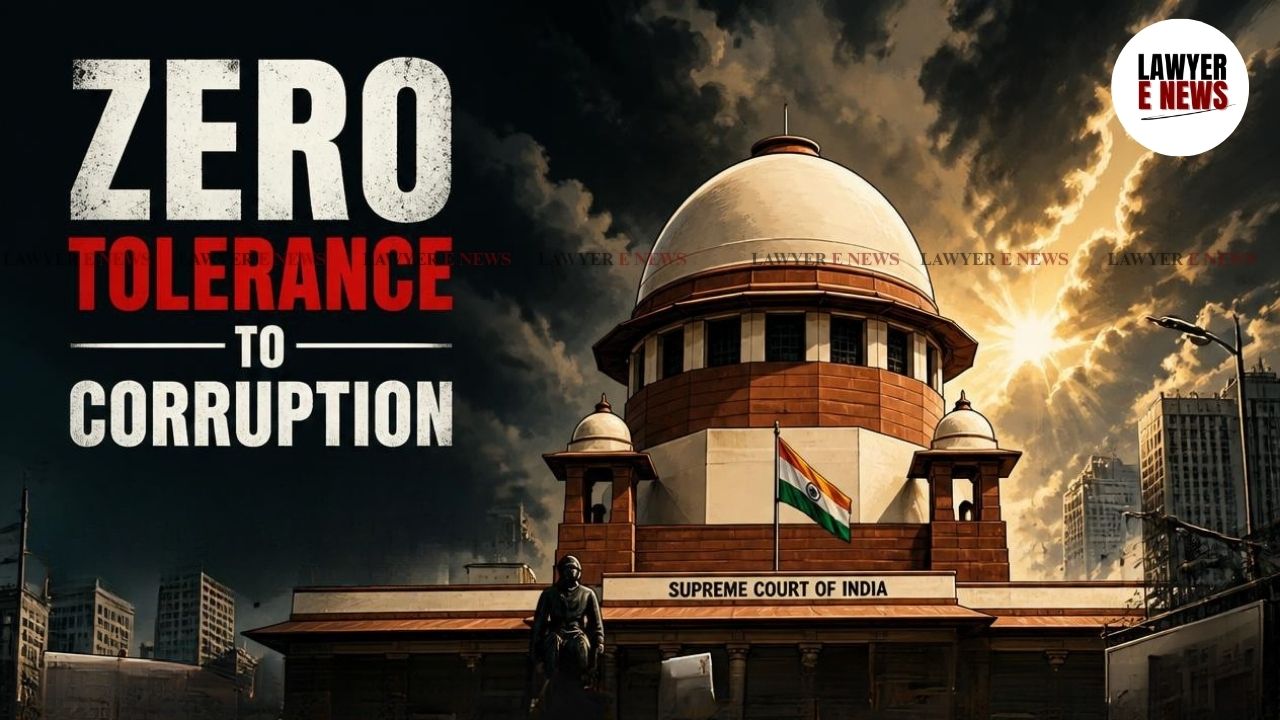
"By undertaking such a detailed examination, the High Court has in effect conducted a mini-trial, which is fundamentally contrary to the settled principles governing the exercise of the quashing jurisdiction." Supreme Court of India, in a significant ruling dated July 30, 2026, unequivocally set aside multiple orders of the High Court of Karnataka that had quashed First Information Reports (FIRs) against police officers, including an Assistant Commissioner of Police and a Police Inspector, in corruption and extortion cases.
A bench of Justices Sanjay Karol and Nongmeikapam Kotiswar Singh strongly rebuked the High Court for exceeding its jurisdiction under Section 482 of the Code of Criminal Procedure, 1973 (CrPC) by delving into evidentiary matters at the initial stage of quashing petitions, effectively conducting a "mini-trial."
Six FIRs were registered against the respondents, including Mr. Prabhu Shankar (Assistant Commissioner of Police) and Mr. Niranjan Kumar C. (Police Inspector), Central Crime Branch, Bengaluru. These FIRs alleged offenses under Sections 7(a), 13(1)(a) read with 13(2) of the Prevention of Corruption Act, 1988 (PC Act), and Section 384 read with Section 34 of the Indian Penal Code, 1860 (IPC). The High Court of Karnataka subsequently allowed criminal petitions under Section 482 CrPC, quashing these FIRs primarily on grounds of lack of prima facie material, unexplained delay, and alleged malafides. The State of Karnataka appealed against these quashing orders.
The primary questions before the Supreme Court were whether the High Court correctly exercised its power under Section 482 CrPC to quash FIRs by evaluating evidence and weighing the merits of allegations. The Court also examined if grounds such as delay in lodging FIRs, absence of direct proof of demand/acceptance of illegal gratification, or alleged malafides were sufficient to quash an FIR at the preliminary stage, and whether certain FIRs amounted to 'second FIRs' for the same offense.
High Court Overstepped S.482 CrPC Jurisdiction by Conducting Mini-Trial
The Supreme Court emphasized that the power to quash an FIR under Section 482 CrPC is an extraordinary and discretionary power, to be exercised sparingly and with great circumspection. It reiterated the consistent position that at the stage of considering a quashing petition, the High Court is not required to examine the merits of the allegations or evaluate the evidence that may ultimately be led at trial. The sole and limited inquiry at this threshold stage is whether the allegations set out in the FIR, taken at their face value and accepted in their entirety as true, prima facie disclose the commission of a cognizable offence against the accused. The Court noted that the High Court in the present case had traversed beyond these permissible limits.
Absence of Demand/Acceptance Not A Ground For Quashing FIR
The Court clarified that the absence of proof regarding the demand of illegal gratification and its recovery, while potentially grounds for discharge or ultimate acquittal during the trial, cannot serve as a basis for quashing an FIR at the preliminary stage. The inquiry into these aspects is a matter for the criminal trial process.
"Mere demand or solicitation, therefore, by a public servant may amount to commission of an offence under Section 7 of the PC Act. The word 'attempt' is to imply no more than a mere solicitation, which, again, may be made as effectually in implicit or in explicit terms. This Court further observed therein that “actual exchange of a bribe is not an essential requirement to be prosecuted under this law”"
Mere Solicitation Under PC Act is Sufficient
Citing its recent exposition in State v. K. Rangayya (2026 SCC OnLine SC 963), the Court highlighted that mere demand or solicitation by a public servant may amount to an offense under Section 7 of the PC Act. It was noted that actual exchange of a bribe is not an essential requirement, and public servants attempting to obtain undue advantage, whether for themselves or for another, directly or through intermediaries, are equally culpable under Section 7 read with Explanation 2 of the PC Act. The fact that the respondent may not have personally received or intended to receive any part of the illegal gratification was deemed immaterial to establishing the offense at the prima facie inquiry stage.
Delay In FIR Lodging Not A Basis To Interdict Investigation
Addressing the High Court's observation on the unexplained delay in lodging FIRs, the Supreme Court, relying on Punit Beriwala v. State of NCT of Delhi and Ors. (2025 SCC OnLine SC 983) and Skoda Auto Volkswagen (India) Private Limited v. State of Uttar Pradesh (2021) 5 SCC 795, reiterated that delay in registration of an FIR for offenses punishable with imprisonment of more than three years cannot be the sole basis for interdicting a criminal investigation. The plausibility of the explanation for delay is a matter to be decided by the Trial Court after recording evidence.
Registration of Second FIRs Permissible in Broader Corruption Scenarios
The Court rejected the High Court's reasoning that certain FIRs amounted to 'second FIRs' for the same offense. Referring to State of Rajasthan v. Surendra Singh Rathore (2025 SCC OnLine SC 358), it was observed that a second FIR is permissible if it pertains to a "larger issue of widespread corruption" within a department, thus having a broader scope than a previous FIR limited to a particular incident. Quashing such FIRs would 'nip the investigation in the bud' and go against societal interest.
Zero Tolerance To Corruption; Hands-Off Approach For PC Act Cases
The Supreme Court powerfully reiterated its observations from State of Chhattisgarh v. Aman Kumar Singh (2023) 6 SCC 559, emphasizing that constitutional courts owe a duty to show "zero tolerance to corruption" and "come down heavily against the perpetrators of the crime." The Court stressed that High Courts should generally maintain a "hands-off approach" and not quash FIRs pertaining to corruption cases, especially at the investigation stage. It acknowledged the possibility of motivated complaints and departmental infighting but stated that this "small price has to be paid if there is to be a society governed by the rule of law." Intervention in PC Act cases should be reserved for "very special features" where records reveal absolutely no material to support even a reasonable suspicion of illicit enrichment or where mala fide is the sole basis.
The Supreme Court allowed the appeals, setting aside the impugned orders of the High Court of Karnataka. This judgment firmly reinforces the limited scope of the High Court's power under Section 482 CrPC, particularly in cases involving corruption. The Court underscored the necessity for investigation to proceed in such matters, reiterating that evidentiary questions are to be resolved during trial, not at the FIR quashing stage, thereby upholding the principle of 'zero tolerance to corruption'. The respondents remain free to pursue their remedies in accordance with law, uninfluenced by the observations made in the quashing orders.
Date of Decision: July 30, 2026