-
by sayum
24 August 2026 11:13 AM







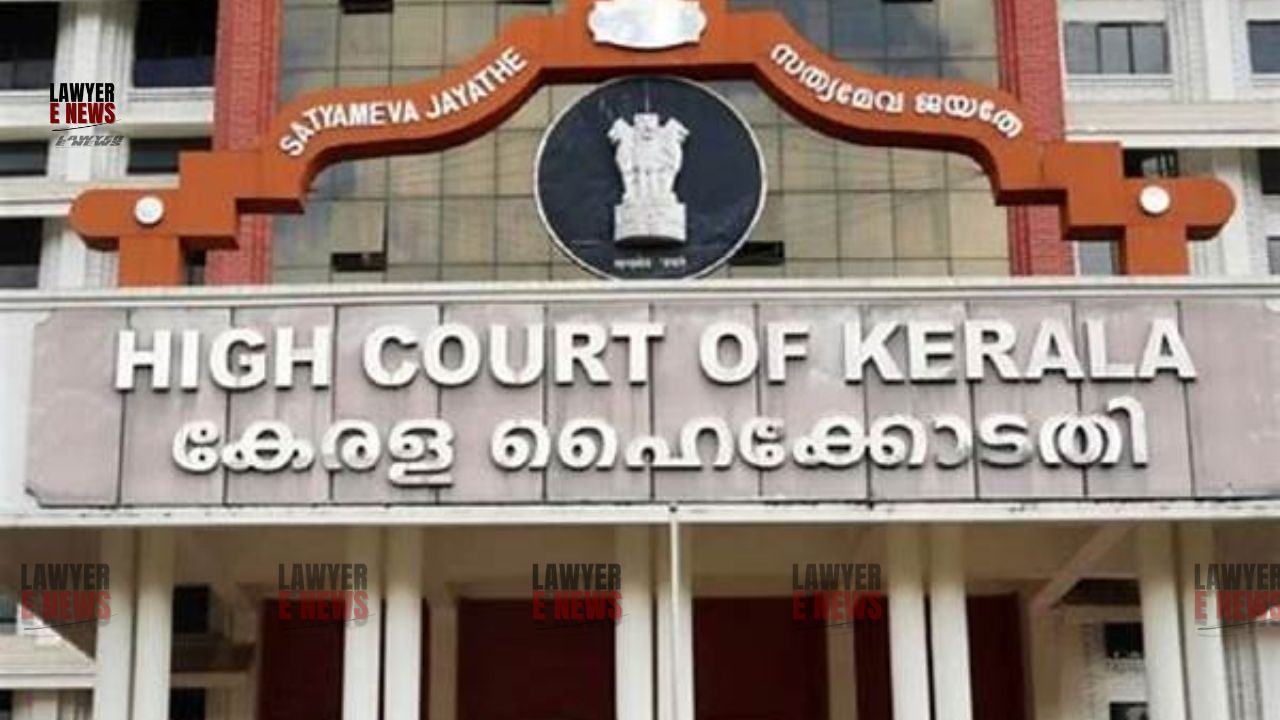
"It is well settled that the statements of facts as to what transpired at the hearing, recorded in the judgment of the court, are conclusive of the facts so stated and no one can contradict such statements by affidavit or other evidence. But if there is personal allegation of prejudice or malafides alleged against a judicial officer and if it is found that there is some substance in such allegation, the above general presumption may not be applicable." Kerala High Court, in an unprecedented ruling dated December 23, 2022, held that while judicial records ordinarily enjoy a conclusive presumption of correctness, such a presumption is rebutted when substantiated allegations of mala fides and personal bias are established by direct evidence.
A single bench of Justice P.V. Kunhikrishnan observed that "the magistrates, judges, and other presiding officers are not above the law," while directing the Administrator of the Union Territory of Lakshadweep to place a Chief Judicial Magistrate under immediate suspension for allegedly fabricating witness testimony to convict 15 individuals.
The petitioners, fifteen islanders from Agatti, were prosecuted in CC No. 24/2016 before the Chief Judicial Magistrate Court, Amini, for offences under Sections 143, 147, 186, 188, and 353 read with Section 149 of the Indian Penal Code, 1860, relating to an obstruction during government coconut harvesting. Having previously submitted an administrative complaint against the presiding Magistrate over alleged bias in a parallel civil suit, the accused claimed that the Magistrate harboured personal enmity towards them. The Magistrate allegedly concocted an unrecorded deposition of the Investigating Officer, rejected defence witness applications, and summarily convicted the petitioners to four and a half years of consecutive imprisonment, prompting them to approach the High Court under Article 227 of the Constitution of India and Section 482 of the Code of Criminal Procedure, 1973.
The primary question before the court was whether the inviolable presumption of correctness attached to judicial records and proceedings can be displaced by direct evidence demonstrating mala fide fabrications by a judicial officer. The court was also called upon to determine whether proceedings under Section 340 read with Section 195(1)(b) of the Code of Criminal Procedure, 1973 should be initiated against a presiding judge for forging court records.
Presumption Of Infallibility Of Judicial Records Is Rebuttable By Substantiated Evidence Of Mala Fides
The High Court acknowledged the well-settled principle of judicial finality, which dictates that statements of fact recorded by judges regarding courtroom proceedings are deemed conclusive and cannot ordinarily be contradicted by affidavits or external evidence. However, Justice Kunhikrishnan held that this general immunity does not apply when there are tangible, substantiated allegations of personal bias and mala fides on the part of the judicial officer.
"If there is personal allegation of prejudice or malafides alleged against a judicial officer and if it is found that there is some substance in such allegation, the above general presumption may not be applicable."
Investigating Officer's Affidavit Shatters The Presumption Of Correctness
The court examined the purported deposition of the Investigating Officer (PW-7), marked as Exhibit P2, which lacked the mandatory signature of the witness. Upon being summoned in person by the High Court, the Investigating Officer filed a sworn affidavit categorically stating that he had never mounted the witness box or given any evidence on the alleged date of examination.
The bench observed that this sworn denial, coupled with the absence of the witness's signature, completely dismantled the presumption that the judicial record was genuine. The court noted that the Magistrate's version claiming the witness slipped away without signing was an unacceptable afterthought that contradicted the record.
"PW7 who filed affidavit before this Court in which it is categorically stated that, he has not given any evidence before the Chief Judicial Magistrate Court, Amini on 24.3.2021. If that is the case, this Court has to presume prima facie that the additional 3rd respondent created or forged the evidence of PW7."
Strict Adherence To Section 278 CrPC And Rule 57 Is Mandatory
The bench underscored the statutory architecture governing the recording of evidence under Sections 275, 276, and 278 of the Code of Criminal Procedure, 1973, read alongside Rule 57 of the Criminal Rules of Practice, Kerala. The court stressed that reading over the deposition to the witness in the presence of the accused and obtaining their signature immediately is a mandatory safeguard designed to prevent precisely this type of judicial abuse.
Justice Kunhikrishnan pointed out that while trial courts face heavy caseloads, convenience cannot supersede statutory mandates. When judges are unable to read over the evidence personally, reasons must be recorded, and the process must take place under strict court supervision without the deposition ever leaving the courtroom.
"The procedure prescribed in Sections 275, 276 and 278 of the Code of Criminal Procedure and the Rule 57 of the Criminal Rules of Practice in Kerala are mandatory procedures to be adopted by the Magistrates/Judges."
Rejection Of Staff Defence And Prima Facie Findings Of Collusion
The court outright rejected the explanations submitted by the Bench Clerk and the Lower Division Clerk, who had claimed that the witness left the court hall hastily to catch a passenger boat. The bench found these claims to be prima facie attempts by court staff to shield their superior officer, observing that such conduct warranted an identical inquiry.
The bench concluded that the record demonstrated a prima facie case of forgery of judicial records by the Chief Judicial Magistrate, rendering him liable for prosecution and disciplinary action.
"The pen of a judicial officer is powerful, but it should be used with great caution, of course without fear and favour... If the allegation raised by the petitioners/accused against the Chief Judicial Magistrate, Amini is true, the said Magistrate is not fit to continue in any position, for a second."
Directing Suspension And Section 340 CrPC Preliminary Enquiry
Holding that extraordinary situations require extraordinary judicial remedies to preserve public faith in the judiciary, the High Court directed the Administrator of Lakshadweep to place the former Chief Judicial Magistrate under immediate suspension. The court emphasized that judicial officers do not enjoy absolute immunity from the consequences of official misconduct and dereliction of duty.
The bench initiated preliminary inquiry proceedings under Section 340 of the Code of Criminal Procedure, 1973 for offences under Section 195(1)(b) against the judicial officer, the Bench Clerk, and the Bench Assistant, appointing an Amicus Curiae to assist the court.
"The Magistrate, Judges and other presiding officers are not above the law and if they commit any dereliction of duty, they have to face the consequences. This should be a lesson to all."
The High Court stayed all coercive proceedings against the convicted petitioners for one month to allow them to pursue their statutory appeal against the conviction. Affirming that constitutional courts must intervene when judicial sanctity is compromised, the bench directed the immediate suspension of the judicial officer and initiated criminal preliminary inquiry proceedings under Section 340 CrPC against the Magistrate and court staff.
Date of Decision: 23 December 2022