-
by sayum
24 August 2026 11:13 AM







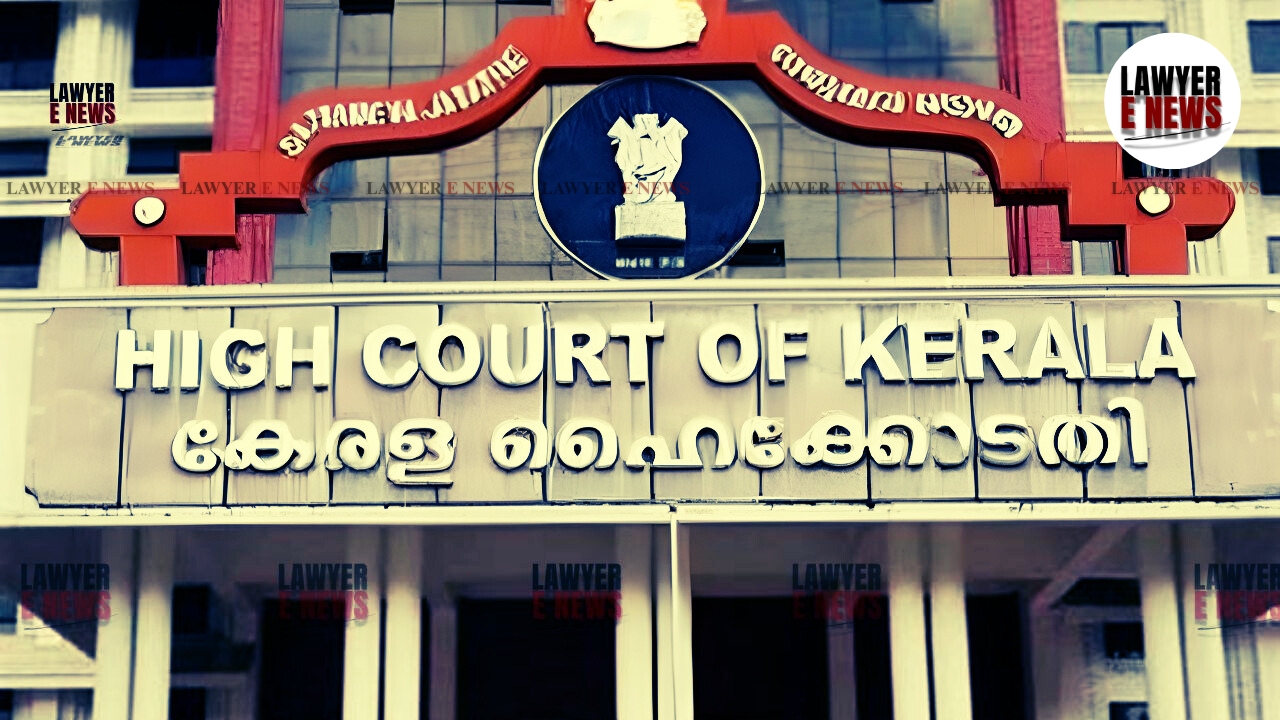
"The pen of a judicial officer is powerful, but it should be used with great caution, of course without fear and favour... If the allegation raised by the petitioners/accused against the Chief Judicial Magistrate, Amini is true, the said Magistrate is not fit to continue in any position, for a second." In an extraordinary ruling underscoring judicial accountability, the Kerala High Court on Friday (December 23) directed the Administrator of the Union Territory of Lakshadweep to place a Chief Judicial Magistrate under immediate suspension and initiated preliminary enquiry under Section 340 of the Code of Criminal Procedure (CrPC) against him for allegedly fabricating and forging the deposition of an Investigating Officer to convict fifteen accused persons.
Emphasizing that "even if a person is occupying the post of Magistrate or Judge, the law of the land is applicable to all," a single bench of Justice P.V. Kunhikrishnan held that constitutional courts are duty-bound to intervene when judicial integrity is severely compromised in order to protect public faith in the administration of justice.
The petitioners, who faced trial in C.C. No. 24/2016 before the Chief Judicial Magistrate Court, Amini, for alleged rioting and obstruction under the Indian Penal Code (IPC), approached the High Court alleging that the Magistrate harboured personal malice against them due to a prior administrative complaint they had filed against him. They claimed that the Magistrate forged the deposition of the Investigating Officer (PW7), shut down their defence applications under Section 311 CrPC, and hurriedly convicted them to 4.5 years of consecutive imprisonment in their absence before issuing non-bailable warrants. The High Court was called upon to intervene under its supervisory jurisdiction to examine the allegations and secure the records.
The primary questions before the High Court were whether a judicial officer can be prima facie proceeded against under Section 340 read with Section 195(1)(b) CrPC for fabricating judicial records, and whether the High Court in extraordinary circumstances can direct the disciplinary authority to suspend a sitting judicial officer to prevent tampering with witnesses and documents.
Judicial Officers Must Maintain Impeccable Integrity And Fair Play
The High Court began by underscoring that the immense faith of citizens in the Indian Judiciary forms the very bedrock of the legal system, requiring judicial officers to be entirely above board. Quoting Roman philosopher Marcus Tullius Cicero, the Court observed that magistrates are ministers of the laws and judges their interpreters. The Court noted that while judges need not respond to criticisms, they must prove their integrity and fair play during the decision-making process, cautioning that a judge's pen must be exercised strictly without fear or favour.
Presumption Of Correctness Of Judicial Records Rebutted By Direct Evidence
"If there is personal allegation of prejudice or malafides alleged against a judicial officer and if it is found that there is some substance in such allegation, the general presumption may not be applicable."
Addressing the settled principle that statements made by judges regarding court proceedings are normally treated as conclusive, Justice Kunhikrishnan observed that such a presumption collapses when substantial allegations of prejudice, malafide actions, and personal enmity are demonstrated. The Court noted that the Registrar (District Judiciary) had already confirmed the pendency of a prior complaint filed by the accused against the concerned Magistrate in relation to a connected civil matter, thereby establishing a prima facie motive for vindictive action.
Mandatory Statutory Procedure For Recording Depositions Under Section 278 CrPC
The Court meticulously analyzed the mandatory procedures delineated in Section 275 and Section 278 of the CrPC, read with Rule 57 of the Criminal Rules of Practice in Kerala. It emphasized that once the evidence of a witness is recorded, it must be read over to the witness in the presence of the accused or their pleader, corrected if necessary, and signed on the last page by the witness, followed by the presiding judge's certificate. The Bench observed that while trial courts frequently bypass this procedure due to heavy caseloads, omitting these safeguards without recording reasons violates the statutory scheme.
Investigating Officer Denies Deposing In Court Via Personal Affidavit
The High Court highlighted the startling fact that the alleged deposition sheet of the Investigating Officer (PW7) lacked the signature of the witness entirely. Upon being summoned in person by the High Court, the Investigating Officer categorically stated, and subsequently affirmed through a sworn affidavit, that he had never tendered any evidence on the disputed date of March 24, 2021. The Bench noted that the officer’s solemn affirmation completely shattered the defence set up by the Magistrate, raising inescapable doubts regarding the genuine recording of evidence.
Court Rejects Magistrate's Attempt To Shift Blame Onto Staff
Rejecting the Magistrate's explanation that the witness rushed out to catch a boat before the staff could obtain his signature, the Court termed the explanation unacceptable and an attempt to shift blame onto subordinate staff. The Court observed that the Magistrate had himself affixed the mandatory certificate under Rule 57 certifying that the evidence was read over and admitted as correct, without verifying whether the witness had signed it. The Court noted that the explanatory letters submitted by the Bench Clerk and LD Clerk prima facie appeared to be acts of collusion to shield their superior officer.
"The Magistrate, Judges and other presiding officers are not above the law and if they commit any dereliction of duty, they have to face the consequences. This should be a lesson to all."
Directions For Immediate Suspension And Section 340 CrPC Enquiry
Finding a clear prima facie case of forgery and fabrication of judicial records, the High Court held that it was expedient in the interest of justice to order a preliminary enquiry under Section 340 read with Section 195(1)(b) CrPC against the former Chief Judicial Magistrate, the Bench Clerk, and the LD Clerk. Emphasizing the need for extraordinary remedies in extraordinary situations, the Court directed the Administrator of Lakshadweep to suspend the officer forthwith to prevent any interference with witnesses or court records, while appointing an Amicus Curiae to assist the Court in the Section 340 proceedings.
The High Court allowed the petitioners to challenge their conviction and sentence before the appellate court, extending interim protection from coercive steps for one month. The Court firmly established that judicial immunity does not shield officers from accountability when they commit deliberate acts of misconduct and fabrication of records.
Date of Decision: 23 December 2022