-
by sayum
28 August 2026 6:47 AM








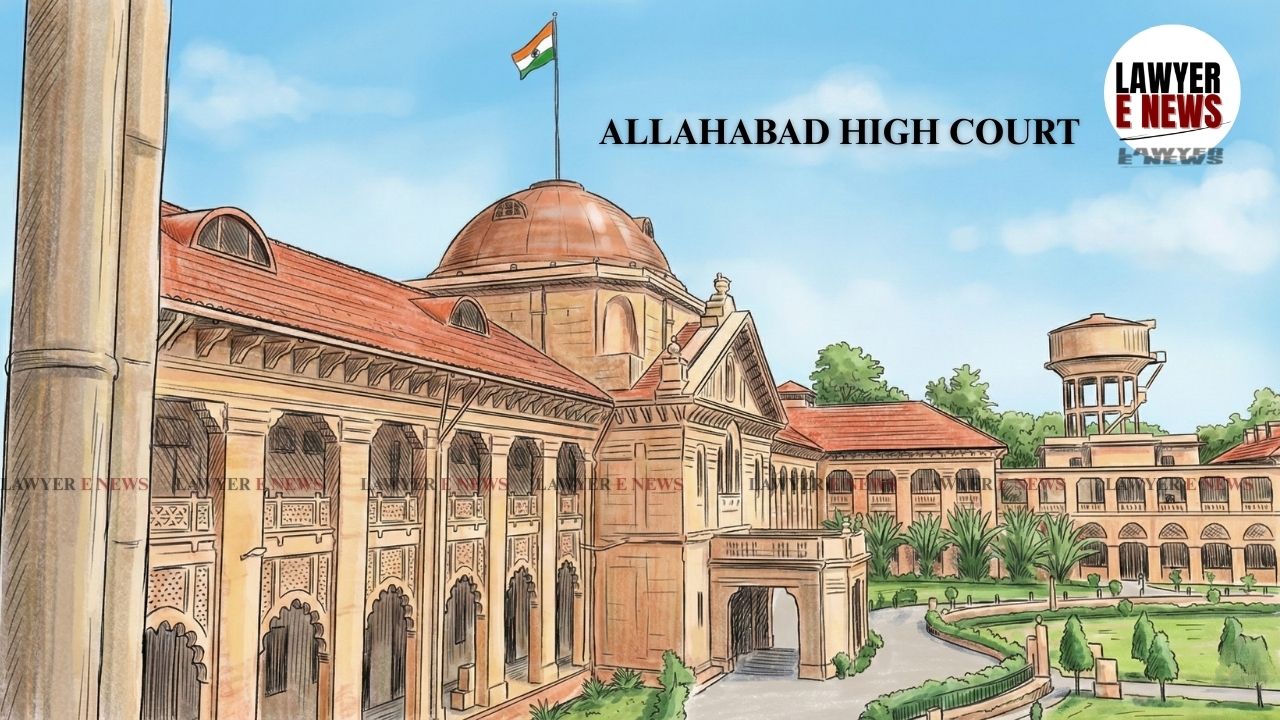
"If the very entry or the crossing of threshold into the area of the civil service of the State or the Union is put in issue and door is barred against him, the cloak of protection under Article 311 is not attracted," Allahabad High Court, in a significant ruling, held that individuals who secure government appointments through forged or fabricated educational certificates cannot claim the constitutional protection afforded to civil servants under Article 311.
A Division Bench comprising Chief Justice Arun Bhansali and Justice Kshitij Shailendra observed that an appointment obtained by practicing fraud or deceit is "no appointment in law." The Court emphasized that since the very entry into service is vitiated, the employer is justified in terminating such employees without a full-fledged departmental inquiry.
The appellants were appointed as Excise Constables in 2010 after submitting 'Adhikari Pariksha' (High School) certificates issued by Gurukul Vishwavidyalaya, Vrindavan. Subsequent departmental inquiries revealed that the university had conducted no academic activities or examinations during the relevant period and that the certificates were fictitious. Following their termination, the appellants filed writ petitions which were dismissed by a Single Judge, leading to the present special appeals.
The primary question before the court was whether the termination of services on the grounds of forged educational certificates requires a full departmental inquiry under Article 311 of the Constitution of India. The court was also called upon to determine if an appointment procured through fraud creates any legal equity or estoppel in favor of the employee.
Fraud Vitiates The Sanctity Of Appointment
The Court began by reiterating the settled legal principle that fraud and justice cannot coexist. It noted that the appellants had secured their positions as Excise Constables by submitting documents that the authorities, upon extensive verification, found to be forged. The inquiry revealed that the letterheads and seals of the Registrar were utilized during a period when no Registrar was even appointed at the concerned institution.
"Fraud vitiates even the most solemn act and fraud and justice never dwell together."
No Protection Under Article 311 For Fraudulent Entrants
Addressing the contention regarding the necessity of a departmental inquiry, the Bench relied on the Supreme Court's decision in R. Vishwantha Pillai v. State of Kerala. The Court observed that the constitutional protection under Article 311 is intended for validly appointed civil servants. If the initial entry into the service is found to be based on forgery or crime, the "cloak of protection" is simply not attracted because the legal threshold was never validly crossed.
"If the very appointment to the civil posts is vitiated by fraud, forgery or crime or illegality, it would necessarily follow that no constitutional rights under Article 311 of the Constitution can possibly flow."
Termination Without Inquiry Justified In Cases Of Deceit
The Court further noted that when an appointment is procured on the basis of bogus documents, it constitutes a gross misrepresentation and fraud upon the employer. Citing Union of India v. M. Bhaskaran and Indian Oil Corporation Ltd. v. Rajendra D. Harmalkar, the bench held that for such misconduct, termination is justified without a domestic inquiry. The intention of the applicant in submitting a fake document is irrelevant to the validity of the termination.
"Continued service on the basis of fraudulently obtained employment creates no equity in favour of the employee and raises no estoppel against the employer."
Equivalence Of Degrees Becomes Redundant
The appellants had argued that the 'Adhikari Pariksha' was equivalent to the High School Examination of the U.P. Board. However, the Court dismissed this line of reasoning, stating that the question of equivalence is irrelevant once the specific certificates produced by the individuals are found to be fabricated. The Court emphasized that it need not delve into the validity of the degree itself when the documents presented were never actually issued by the institution.
Final Orders And Dismissal Of Appeals
The Court found no error in the findings of the Single Judge who had previously upheld the termination. It concluded that the appellants had failed to demonstrate any legal right to continue in service given the fraudulent nature of their entry. Consequently, the Division Bench dismissed all three special appeals, confirming the dismissal of the Excise Constables from their services.
The Allahabad High Court has reinforced the principle that fraud at the entry level of public employment disentitles an individual from any procedural or constitutional safeguards. The ruling clarifies that Article 311 cannot be used as a shield by those who have bypassed the legitimate selection process through forgery. The decision underscores that appointments based on deceit are voidable at the option of the employer.
Date of Decision: 29 April 2026