-
by sayum
24 August 2026 3:22 PM








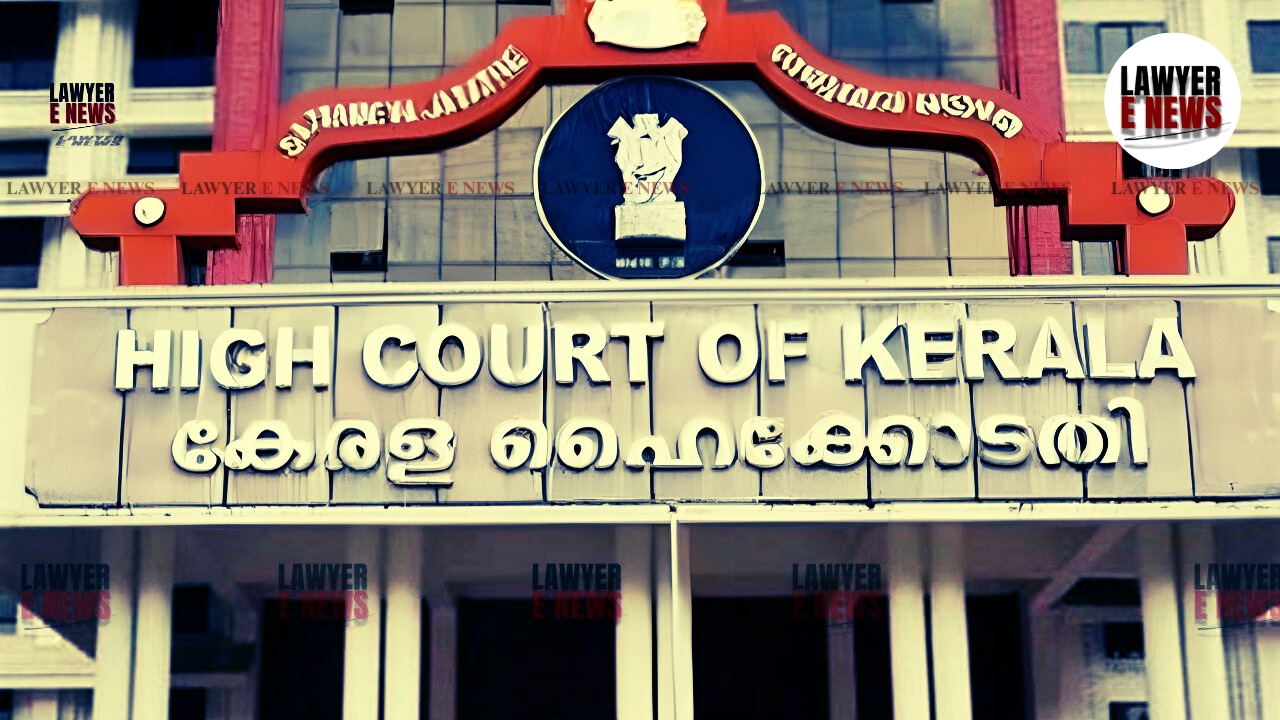
Kerala High Court partially modifying the Family Court's decree. While the High Court upheld the Family Court's findings on the wife’s entitlement to recover 30 sovereigns of gold, ₹50,000/- as Acharam, ₹1,00,000/- as pocket money, and ₹3,500/- per month as past maintenance, it set aside the decree granting the wife ₹45,000/- towards the value of a scooter, citing lack of evidence to support her claim.
The appeal arose out of the Family Court's judgment, which granted substantial relief to the wife, Laila Beevi, who alleged misappropriation of gold and money by her husband, Nassimudheen. The court held that the wife's claims were supported by credible evidence, but the scooter claim was inconsistent with her pleadings.
"Credible Testimony and Evidence Support Wife’s Claim for Recovery of Gold and Money"
The wife had alleged that at the time of her marriage on January 22, 1978, she was provided 35 sovereigns of gold, ₹50,000/- as Acharam, and ₹1,00,000/- as pocket money, which were misappropriated by her husband. While the husband denied these claims and contended that the wife had only 10 sovereigns of gold, the High Court upheld the Family Court’s findings, which were based on the credible testimony of witnesses.
The husband admitted during cross-examination that his estimation of the gold was merely an approximation. The court observed: “The Family Court, which had the opportunity to assess the demeanor of the witnesses, found the evidence of PWs 1 and 2 reliable. Their testimonies regarding the financial and familial background of the wife were consistent and supported her claims.”
Further, the court considered the fact that the wife’s father, a police constable, and her uncles, who were involved in business, had the financial capability to provide the gold and money. The court held:
“Given the wife’s family background and the vague approximations of the husband, the conclusions of the Family Court regarding the recovery of 30 sovereigns of gold and the monetary claims are justified.”
"Past Maintenance of ₹3,500/- Per Month Upheld as Reasonable"
The Family Court had awarded the wife ₹3,500/- per month as past maintenance from February 2008, noting that the husband had ceased providing financial support since December 2010, apart from a token amount of ₹1,000/-. The husband, now residing with his second wife, admitted that his monthly expenses were ₹5,000/- for himself and ₹3,000/- for food and medicine.
Rejecting the husband’s appeal against the maintenance order, the High Court observed: “The maintenance amount of ₹3,500/- per month is reasonable, especially in light of the husband’s admitted expenses and his responsibility to provide for his wife, who had no independent income.”
The court reiterated that the husband’s obligation to maintain his wife remains paramount, particularly as no evidence was produced to show that he had adequately supported her after their separation.
"Decree For ₹45,000/- Towards Scooter Value Set Aside Due To Inconsistent Pleadings"
One of the contentious issues in the appeal was the Family Court’s award of ₹45,000/- to the wife for the value of a scooter purchased on a bank loan. The wife had claimed that she had repaid the loan herself, but the High Court found this claim inconsistent with her own pleadings, where she stated she had no source of income.
The court noted: “It is the wife’s specific case that she has no independent income, and this was the basis for her claim for monthly maintenance. In such circumstances, her contention that she repaid the bank loan for the scooter is unsustainable. The Family Court erred in granting her claim for the scooter's value.”
The court, therefore, set aside the decree for ₹45,000/-, reducing the total amount awarded to the wife by this amount.
"Evidence Assessment Over Decades: Court Balances Claims After Long Lapse Of Time"
The High Court highlighted the challenges of assessing evidence in matrimonial disputes filed after a significant lapse of time. The parties had married in 1978, and the original petition for recovery was filed in 2011, more than 33 years later. The court remarked:
“Given the long lapse of time, the nature of evidence available to substantiate claims would inevitably be limited. The Family Court appropriately relied on credible testimony and financial evidence to assess the claims.”
The appeal is partly allowed, with no costs awarded.
Recovery of Istridhan Supported by Evidence: “The testimony of PWs 1 and 2, coupled with the financial and familial background of the wife, justified the recovery claims for gold and money. The husband’s vague approximations did not refute her claims.”
Reasonableness of Maintenance: “The award of ₹3,500/- per month as past maintenance is reasonable, particularly given the husband’s admitted expenses and his obligation to support the wife.”
Inconsistent Pleadings on Scooter Claim: “The wife’s assertion that she repaid the scooter loan was inconsistent with her pleadings that she had no independent income. The claim could not be sustained.”
Challenges of Long-Delayed Disputes: “After 33 years of marriage, the Family Court’s reliance on credible testimony and evidence was appropriate, given the limitations inherent in such delayed disputes.”
The judgment balances the competing claims of the parties, affirming the wife’s rights to recover her Istridhan and past maintenance while addressing inconsistencies in her scooter claim. By modifying the Family Court’s decree, the High Court ensures that the relief granted aligns with the evidence on record.
This ruling reiterates the principle that recovery of Istridhan is a legal right of women, and maintenance is a measure of social justice. At the same time, it underscores the importance of consistent and credible pleadings in matrimonial litigation.
Date of Decision: 27 January 2025