-
by sayum
04 August 2026 1:39 PM







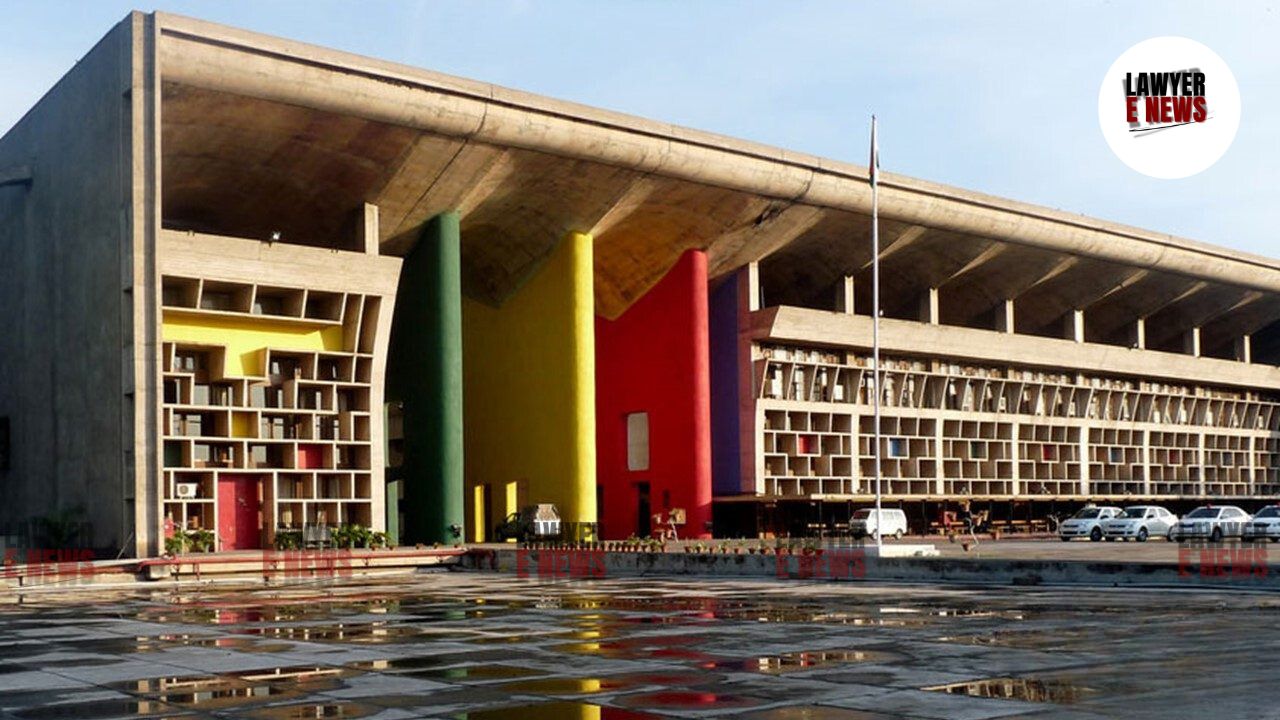
“Solatium and Interest Are Not a Matter of Government Grace — They Are a Right Flowing from the Constitution”: - In a pathbreaking judgment Punjab and Haryana High Court emphatically upheld the constitutional right of landowners to receive solatium and interest when their land is acquired under the National Highways Act, 1956. Referring to the Supreme Court’s decision in Union of India v. Tarsem Singh, the Division Bench of Justice Sureshwar Thakur and Justice Vikas Suri held that denial of benefits under Sections 23(1A), 23(2), and 28 of the Land Acquisition Act is arbitrary and violative of Article 14.
The Court declared, “The rendering of the decision in Tarsem Singh (supra) prospective, rather than retrospective, would create a horrendous situation, whereupon the landowners, even if acquiring parity in all respects with those whose lands were acquired under the National Highways Act, would rather be unreasonably treated unequally.”
The petitioners’ agricultural land in Hisar district was acquired more than a decade ago by the National Highways Authority of India for the purpose of road widening under NH-10. However, they were not paid solatium or interest as provided under the Land Acquisition Act, 1894, because Section 3J of the National Highways Act excluded the application of such provisions.
After suffering rejection of their enhancement claims by the arbitrator under Section 3G(5) of the NH Act and exhausting alternative remedies, they filed writ petitions seeking parity with other similarly situated landowners who had already been granted such benefits by the Court.
The Court made it clear that the Supreme Court’s ruling in Tarsem Singh, which declared Section 3J of the NH Act unconstitutional, must be given retrospective effect, not just limited to the parties in that case. The Bench held:
“The exposition of law in Tarsem Singh has to be considered as one in rem and not in personam. Therefore, it would attract binding force to all similarly circumstanced litigants.”
Rejecting the contention of the State that only the Tarsem Singh petitioners could benefit from the judgment, the Court observed:
“When a provision of law is struck down for being unconstitutional, it is deemed to have never existed. The benefits flowing from such a declaration cannot be confined to a few.”
On the issue of statutory arbitration under Section 3G, the Court minced no words:
“The arbitration contemplated under Section 3G(5) is not an arbitration in the true sense. There is no consent. It is neither contractual nor voluntary. It is a unilateral, statutorily forced process lacking mutual agreement — a fundamental element of arbitration.”
The Court called this model of dispute resolution “a force majeure arbitration lacking legal tenacity” and observed that it deprives landowners of a meaningful mechanism for contesting compensation.
Further, the Court underlined that solatium and interest are not mere statutory concessions, but are grounded in the principle of just compensation:
“Solatium and interest form part of the right to property, now a constitutional right under Article 300A. Their denial offends the mandate of Article 14.”
The High Court concluded that the petitioners were wrongly denied full compensation for their acquired lands and that the benefits of solatium and interest must be extended to them at par with others, as per the Supreme Court’s Tarsem Singh ruling.
The Court summed up its reasoning with clarity:
“The petitioners stand exactly on the same pedestal as others who have received such benefits. Their exclusion is an affront to the equality clause of Article 14.”
The Court allowed the petitions, directed that the benefits be extended accordingly, and declared that the 2019 Supreme Court judgment in Tarsem Singh is binding on all courts and authorities.
Date of Decision: 20 March 2025