-
by sayum
04 August 2026 1:39 PM







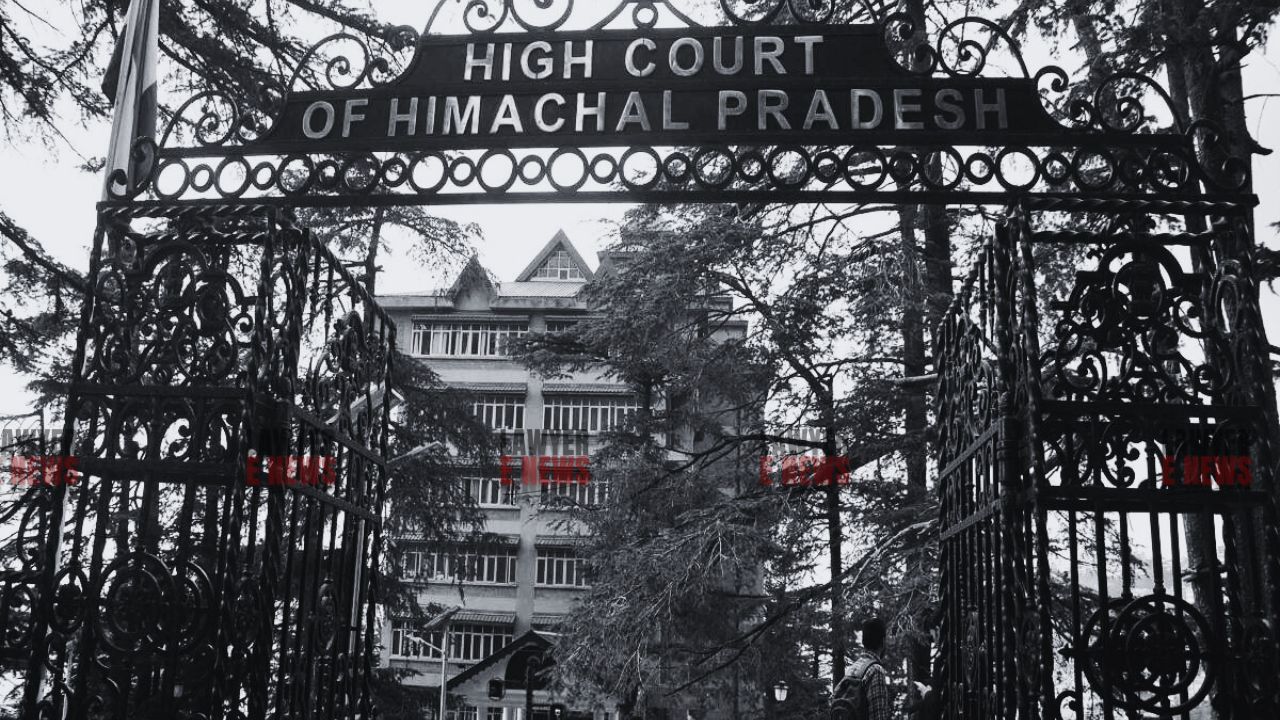
Anticipatory Bail Cannot Thwart Investigation When Commercial Quantity of Narcotics is Involved”: Himachal Pradesh High Court in Cr.MP(M) No. 994 of 2025 (Shyam Lal v. State of Himachal Pradesh) refused to grant anticipatory bail to the petitioner accused under Sections 20 and 29 of the Narcotic Drugs and Psychotropic Substances Act, 1985, in a case involving the recovery of 4.36 kilograms of charas, categorically holding that the rigours of Section 37 NDPS Act applied, and that custodial interrogation was essential to uncover the wider conspiracy.
Justice Rakesh Kainthla, while rejecting the bail plea, observed:
“The petitioner was stated to be present in the vehicle in which the charas was being transported. Therefore, prima facie, he is involved in the commission of an offence… The quantity of charas recovered… is a commercial quantity.”
An FIR was registered on 12 December 2024, at Police Station Nurpur, District Kangra, based on secret information about the transportation of charas in a vehicle. The vehicle tried to flee and was intercepted at a secluded location. Upon search, the police recovered 4.36 kg of charas. The occupants ran away. The arrested co-accused, Raj Kumar, confessed that Shyam Lal, the present petitioner, was with him in the vehicle and had instructed him to evade the police. They were allegedly transporting the contraband for delivery to another accused, Banti Kumar alias Baba, who too was later arrested.
The police claim that Shyam Lal fled the scene, and the key of the vehicle is yet to be recovered from him. The investigation is still ongoing and involves forensic examination of seized mobile phones.
The Court meticulously addressed the petitioner’s argument that the only evidence against him was the co-accused’s disclosure, which is inadmissible in evidence, citing the Supreme Court’s ruling in Tofan Singh v. State of Tamil Nadu. However, the Court clarified that at the stage of bail, such statements still carry evidentiary relevance, relying on recent precedents including:
Union of India v. Khaliludeen (2022 SC 1247):
“In the face of the mandate of Section 37 of the Act, the High Court could not and ought not to have released the accused on bail.”
State of Haryana v. Samarth Kumar (2022 SCC OnLine SC 2087):
“To grant anticipatory bail in a case of this nature is not really warranted… Advantage of Tofan Singh may be claimed only at regular bail or trial stage.”
The Court emphasized that the offence is of serious nature, and the statements under Section 67, even if contested, provide prima facie material sufficient to deny pre-arrest bail at this stage.
Further, the Court relied heavily on the principle laid down in State v. Anil Sharma (1997) 7 SCC 187, asserting:
“Custodial interrogation is qualitatively more elicitation-oriented… Success in interrogation would elude if the accused knows he is protected by a pre-arrest bail.”
The Bench also noted that grant of anticipatory bail in NDPS offences may hamper investigation, reiterating that this exceptional relief should only be granted in truly exceptional circumstances, and none existed in this case.
Reaffirming the seriousness of NDPS offences and the necessity for thorough investigation through custodial interrogation, the High Court denied the petitioner the benefit of anticipatory bail. The judgment serves as a reaffirmation of the Supreme Court’s consistent view that NDPS offences involving commercial quantity invoke a stricter threshold for bail, especially when investigation is incomplete and other accused are involved.
Justice Rakesh Kainthla concluded: “Keeping in view the quantity of narcotics recovered and the material collected by the police, the petitioner is not entitled to the concession of pre-arrest bail. Hence, the present petition fails and the same is dismissed.”
Date of Decision: 13 May 2025