
-
by kapil
27 October 2026 6:21 AM







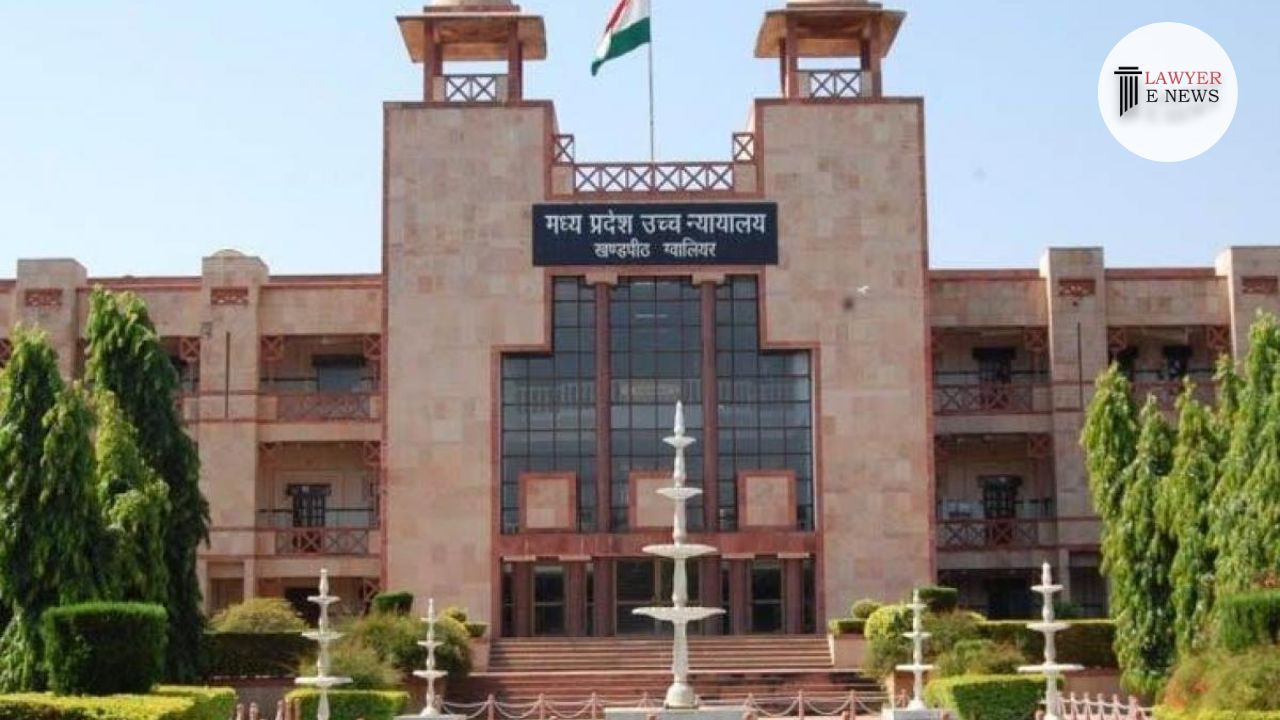
The High Court of Madhya Pradesh, in a significant judgment, has quashed the FIR and subsequent legal proceedings against K.C. Bhalse, a retired Executive Engineer, involved in a case concerning alleged misuse of funds under the Mahatma Gandhi National Rural Employment Guarantee Act (MGNREGA). The bench, presided over by Hon’ble Justice Subodh Abhyankar, underscored the absence of embezzlement and the delay in filing charges as critical factors in its decision.
Court Observations and Views:
Application of Rule 9(3) of Pension Rules, 1976: The court's analysis centered on the applicability of Rule 9(3) of the Madhya Pradesh Civil Service (Pension) Rules, 1976. According to this rule, no judicial proceedings can be initiated against a government servant for actions taken more than four years prior to their retirement if such proceedings were not instituted while they were in service. Justice Abhyankar noted, "The FIR was lodged on 20th June 2014, and the petitioner retired on 31st March 2023. As no charge-sheet has been filed to date, judicial proceedings are time-barred under Rule 9(3)."
Facts and Irregularity – Not Embezzlement: The court found no evidence of criminal intent or embezzlement. The allegations against Bhalse pertained to using a JCB machine instead of manual labor for work sanctioned under MGNREGA, with the payment duly recorded in the FIR. Justice Abhyankar remarked, "The payment for JCB services, amounting to Rs. 3,358, was appropriately made, reflecting procedural irregularity rather than criminality."
Clean Chit from Departmental Inquiry: Bhalse had already been exonerated in a departmental inquiry. The court took this into account, emphasizing that the departmental clean chit further diminished the grounds for criminal proceedings. "The departmental inquiry has absolved the petitioner, indicating no misuse of funds for personal gain," the judgment noted.
Legal Reasoning:
The court meticulously dissected the legal provisions, particularly focusing on the absence of mens rea, or criminal intent, a crucial element for sustaining charges of fraud and forgery. "The procedural lapse in using a JCB machine, as opposed to manual labor, does not constitute a criminal offense under Sections 420, 467, 468, 471, and 120-B of IPC," the judgment clarified.
Justice Abhyankar stated, "The enforcement of Rule 9(3) is imperative to ensure that retired officials are not unduly harassed for procedural lapses that do not amount to criminal conduct."
Decision: High Court's decision to quash the FIR and related proceedings against K.C. Bhalse underscores the judiciary's role in distinguishing between procedural irregularities and genuine criminal conduct. By applying Rule 9(3) of the Pension Rules, 1976, the court protected the retired engineer from prolonged legal harassment, setting a precedent for similar cases. This judgment reinforces the importance of timely judicial action and the necessity of mens rea for criminal prosecution.
Date of Decision: 27th May 2024
K.C. Bhalse v. State of Madhya Pradesh and Others