
-
by sayum
25 August 2026 12:32 PM







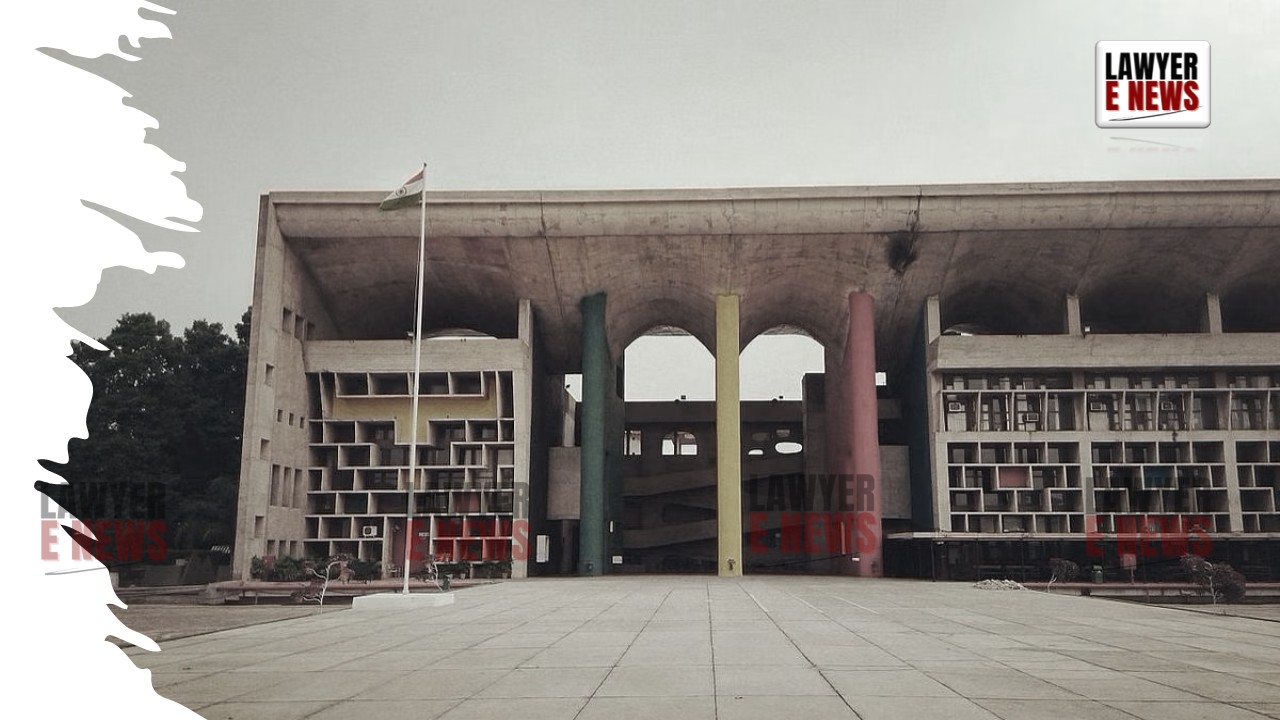
"Justice Must Be Based on Law, Not Assumptions": In a scathing rebuke to the State authorities, the Punjab & Haryana High Court has quashed the rejection of parole for an NDPS convict, declaring that "parole cannot be refused merely on vague apprehensions of potential misconduct." Justice Mahabir Singh Sindhu, while granting eight weeks of parole to Balvir Singh @ Dhira, condemned the administrative decision as arbitrary, stating that "a prisoner’s temporary release cannot be curtailed on the basis of unfounded fears and conjectures."
The petitioner, convicted under Section 22(c) of the Narcotic Drugs and Psychotropic Substances Act, 1985, was serving a ten-year sentence in Central Jail, Bathinda. He had sought parole to meet his family, but the Deputy Commissioner-cum-District Magistrate, Bathinda, rejected the request, citing a police report that warned he might resume drug smuggling and disrupt elections. The rejection was also based on instructions from the Election Commission of India (ECI), allegedly prohibiting parole in NDPS cases during election periods.
The High Court was unequivocal in its rejection of these grounds, observing that "denying a prisoner parole based purely on speculation, without any supporting evidence, is a violation of fair process." The Court noted that the report submitted by the police contained no concrete material, nor did it cite any input from local authorities, responsible individuals, or community leaders. Justice Sindhu remarked, "A decision of such significance cannot rest on empty suspicions. If the State believes a convict poses a risk, it must substantiate its claims with credible evidence. Here, there is none."
The Court also dismissed the reliance on the Election Commission's 2019 instructions, which were used to argue for a blanket prohibition on parole in NDPS cases during elections. It found no merit in the argument, observing that "these guidelines applied to the 2019 elections, and there is no evidence that they remain in force for the 2024 elections. The State has failed to produce any fresh directive barring parole in such cases." The judgment made it clear that government authorities cannot use outdated instructions as a pretext to deny statutory rights.
Citing key precedents, including Sunil Fulchand Shah v. Union of India (2000) 3 SCC 409 and Dadu v. State of Maharashtra (2000) 8 SCC 437, the Court reiterated that parole is not a discretionary favor but a fundamental aspect of the prison reform system. It emphasized that "the purpose of parole is to allow convicts temporary relief for legitimate personal reasons, and it cannot be withheld arbitrarily." The judgment further declared that "the State cannot assume that every NDPS convict will return to crime upon release unless there is concrete proof to support such a claim."
Justice Sindhu also took strong exception to the unnecessary burden placed on the judiciary due to the administration’s refusal to act fairly. The Court noted that the petitioner had been forced to approach the High Court for relief that should have been granted at the administrative level. Expressing displeasure, Justice Sindhu remarked, "The petitioner, a poor man, has had to fight for what should have been his legal entitlement. The State must be reminded that its decisions must be rooted in law, not convenience."
Although the Court initially considered imposing costs on the authorities for their arbitrary actions, it refrained from doing so after the State assured that "future parole decisions will be made strictly in accordance with law, based on material evidence, and not on conjecture."
Granting relief to the petitioner, the Court set aside the rejection order and granted him parole from February 20, 2025, to April 17, 2025, subject to furnishing surety bonds. It directed him to surrender before the jail authorities on April 18, 2025, at 11:00 AM. The judgment concluded with a pointed reminder to the State: "Parole decisions must be made on legal principles, not on administrative whims."
The ruling serves as a strong warning against arbitrary and baseless decision-making in parole matters. The High Court’s intervention has reaffirmed that justice cannot be sacrificed at the altar of mere assumptions, and the fundamental rights of convicts must be protected against administrative overreach.
Date of decision: 15 February 2025





