-
by sayum
27 July 2026 3:39 PM







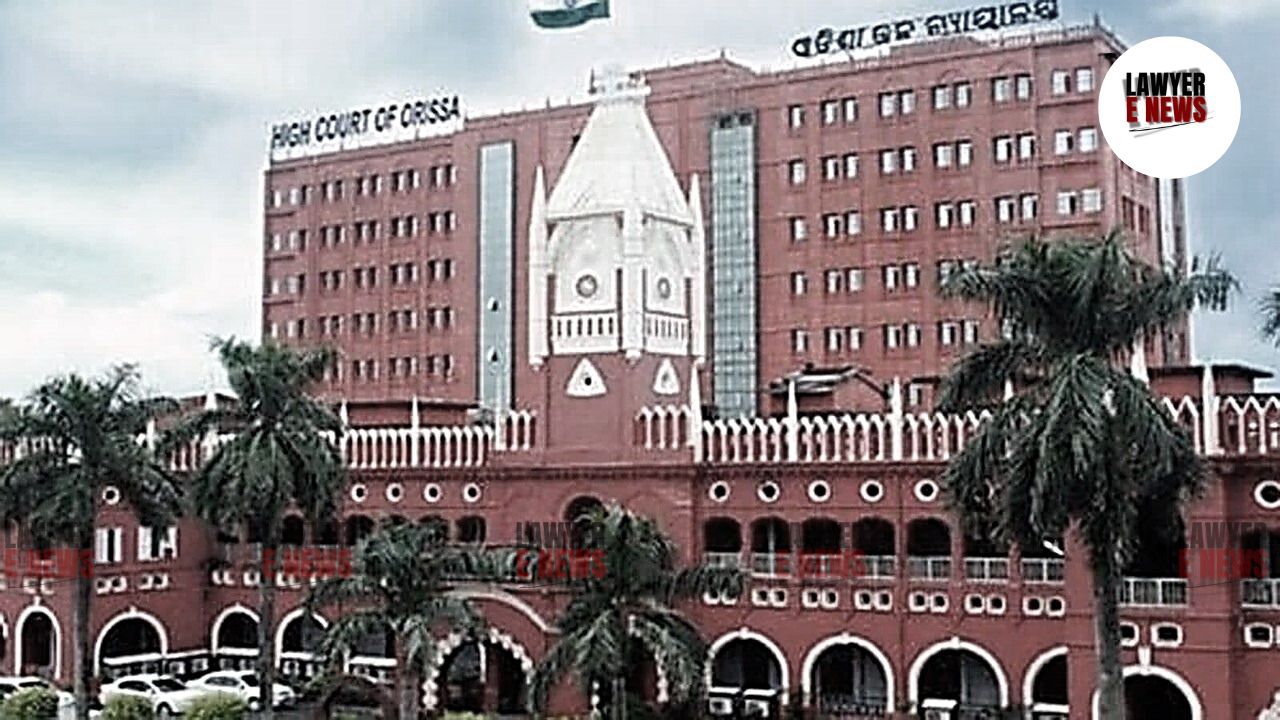
"Having itself issued the order it is not open to the University to turn around and subsequently say that the same has no effect being contrary to the Manual," High Court of Orissa, in a significant ruling, held that a University cannot deny the benefit of make-up examinations to Under-Graduate (UG) students after having previously issued an official communication extending such a facility.
A division bench comprising Justice B.P. Routray and Justice Sashikanta Mishra observed that educational institutions must not take an unnecessarily rigid stance when a student’s absence is necessitated by genuine medical exigencies.
The Court noted that while academic discipline regarding attendance is essential, the authorities are duty-bound to consider whether the lack of attendance was deliberate or due to circumstances beyond the student's control. The bench emphasized that the power to condone attendance should be exercised in favor of the student when severe consequences, such as the loss of an academic year, are at stake.
The petitioner, Omm Patnaik, a BBM (Hons) student at XIM University, Bhubaneswar, was debarred from appearing in his first-year End-Semester Examination for the subject ‘Introduction to OB & HR’ due to a shortage of attendance. The petitioner had sustained a back injury from an accidental fall and later suffered from an acute respiratory infection, leading to his absence from certain classes. Despite submitting medical certificates and seeking leave, his attendance was recorded at 64.41%, falling short of the mandatory 75% requirement.
The primary question before the court was whether the University was justified in debarring the student and refusing a make-up examination despite having issued an e-mail order extending such facilities to UG programmes. The court was also called upon to determine if the student’s absence on medical grounds, which was duly intimated, could be condoned to meet the attendance criteria.
Court Explains Condonation Of Attendance On Medical Grounds
The Court observed that the petitioner’s absence in nine classes was due to documented ill-health, which was not disputed by the University. The record of attendance specifically mentioned the petitioner as ‘Absent Medical’ for those dates. The bench calculated that if these nine classes were condoned, the petitioner’s attendance would rise from 64.41% to 79%, crossing the 75% threshold.
The bench found that the petitioner had complied with the spirit of the University’s Student Manual of Policies by seeking leave of absence with documentary evidence. The Court noted that the Manual generally prohibits exemption from classes for reasons other than physical illness or tragedy, but specifically allows for the provision of 25% absence to accommodate such reasons.
Court Highlights University's Power To Modify Policies - University Bound By Its Own Communication To Students
The University argued that make-up examinations were strictly for Post-Graduate students as per the Manual. However, the Court pointed to an e-mail sent by the Controller of Examinations on March 16, 2026, which extended the make-up examination facility to all UG programmes after approval from the Vice Chancellor. The bench rejected the University's contention that this order should not be acted upon because it contradicted the Manual.
The Court referred to the 'Disclaimer' in the Manual, which reserved the University’s right to make changes to policies at any time. The bench held that once the University exercised this power and communicated the change to the students, it could not later claim the change was invalid to the detriment of a student.
"Since the additional facility of make-up examination is available, there is no reason why the same shall not be extended in an appropriate case."
Attendance Rules Should Not Be Punitive In Nature - Court Cites Precedents On Discretionary Power To Condone Shortfall
The Court relied on the Patna High Court’s decision in All India Students Federation v. State of Bihar, which held that attendance regulations should not automatically trigger penal consequences. The bench noted that authorities must consider whether the lack of attendance was a "conscious disregard" of policy or an unavoidable situation.
The Court distinguished the present case from the Supreme Court's ruling in Regional Engineering College, Hamimpur v. Ashutosh Pandey, noting that unlike the student in that case, the petitioner here had applied for leave at the appropriate time and his total absence remained within the permissible 25% limit.
"The discretion to condone the attendance has to be, ordinarily, exercised in favour of the student in view of the severe consequences likely to follow if such discretion is not exercised."
Final Directions Of The Court
The Court concluded that the debarment order was contrary to the University's own updated policies and was otherwise unjustified. The bench ruled that the petitioner should not be forced to wait for a supplementary examination with a junior batch, which would prejudice his career.
Consequently, the High Court quashed the debarment notice dated April 7, 2026. The University authorities were directed to conduct a make-up examination for the petitioner in the concerned subject within a period of two weeks, without requiring him to appear in the forthcoming supplementary examinations.
The ruling reinforces the principle that educational institutions are bound by their representations and official communications to students. By prioritizing the student's right to a fair opportunity over a rigid interpretation of a Manual—especially when a contrary administrative order existed—the Court ensured that a genuine medical crisis did not result in an irreparable academic loss.
Date of Decision: 29 June 2026